Residential Septic Tank Pumping
Professional septic tank pumping keeps your home’s wastewater system running clean, safe, and trouble free. Our experienced team will help you maintain a functioning septic system designed for efficiency, giving you peace of mind and saving you from costly emergency plumbing situations. Contact our expert plumbing service for same-day assistance and high-quality cleaning services.
Licensed & Insured
NOWRA certified technicians on every job
24/7 Emergency Service
Available whenever you need us most
Nationwide Coverage
Serving all 50 states across the USA
Transparent Pricing
Flat rates with no hidden fees
Get Immediate Service
Speak directly with our team – no automated systems
24 Hours – 7 Days a Week
5 Highlights on Residential Septic Tank Pumping
Complete tank evacuation
Our vacuum trucks suction all sludge, scum layer, and effluent from every compartment in your septic tank, leaving it fully drained and ready for years of reliable service.
Access lid and riser inspection
Technicians inspect your tank lid, risers, baffles, and tee fittings during each pumping visit to catch cracked or corroded components before they cause backups.
Effluent filter cleaning
We remove and flush your effluent filter on site, preventing clogged lateral lines and protecting your drain field from premature saturation and biomat buildup.
Sludge depth measurement
Before pumping begins, we measure sludge and scum levels to document your tank’s accumulation rate and recommend a scheduled pumping interval tailored to your household.
Proper hauling and disposal
Every load of septage we haul goes to a licensed disposal site or municipal treatment plant, meeting all local health department regulations and permit requirements.
Need Immediate Septic Service?
Our team is standing by to help – same week appointments available.
Why Choose Our Residential Septic Tank Pumping
Residential septic tank pumping is a job that demands the right equipment, certified technicians, and strict adherence to local regulations. Action Septic Service delivers all three on every call. Our trained team ensures compliance with waste management standards while keeping your plumbing system functioning at its best.
We operate a fleet of late model vacuum trucks sized for residential work. Our crews pump concrete tanks, fiberglass tanks, and polyethylene tanks ranging from 750 to 2,000 gallons. Each technician holds current licensing and completes annual safety training on wastewater handling, confined space entry, and DOT hauling protocols. We serve both residential and business clients looking for quality service from an experienced contractor.
We guarantee transparent pricing. You’ll receive a flat rate quote before any work starts. No hidden fees for locating your access lid, no surprise charges for digging up risers. If we discover a cracked baffle or a leaky inlet pipe during the pump out, we document the issue with photos and provide a written repair estimate on the spot. Request a free plumbing estimate by phone and see how our on-site plumbing service delivers low-risk project management from start to end.
Action Septic Service has pumped residential septic tanks across the region for over fifteen years. Homeowners trust us because we show up on time, finish the job cleanly, and leave detailed service records they can reference for future maintenance. We back every pumping visit with a satisfaction guarantee. That’s the standard we hold ourselves to. Thank you for making us your trusted plumbers – we offer 24/7 emergency plumbing service because we know septic issues don’t wait for business hours.
States Served Nationwide
Emergency Availability
Licensed & Insured
Hidden Fees – Ever
Signs You Need Residential Septic Tank Pumping
Residential septic tank pumping is overdue when your system starts sending clear warning signals. Recognizing these signs early prevents raw sewage backups, contaminated groundwater, and costly drain field repairs. Don’t worry – quick action and inspections can help keep your sewer system and connected utility lines flowing properly.
Slow drains throughout the house:
When every sink, shower, and toilet drains sluggishly at the same time, your septic tank is likely full. Accumulated solids and sludge leave no room for incoming wastewater to settle and separate. The effluent can’t discharge to the drain field fast enough, and flow backs up into your plumbing. A kitchen sink backing up at the same time as your hot water drains is a clear sign you need a clean out – get in touch with a plumber to turn things around.
Foul odors near the tank or drain field:
Odorous gases escape when a septic tank reaches capacity. You’ll notice a sulfurous or sewage smell near the access lid, around the yard above the leach field, or even inside the house near floor drains. These gases indicate anaerobic decomposition is overwhelming the tank’s capacity.
Standing water or saturated soil over the drain field:
Wet, spongy ground above your lateral lines means effluent is surfacing instead of percolating through the absorption trench. A full tank pushes untreated wastewater into the distribution box and overloads the percolation bed.
Sewage backup in the lowest drains:
Blackwater pooling in a basement drain or ground floor bathtub signals a backed up system. Solids have accumulated past the outlet pipe, and wastewater has nowhere to go but back into the home.
Lush, unusually green grass over the septic area:
A strip of grass that’s greener and thicker than the surrounding lawn feeds on leaking effluent. This seepage means your tank is overflowing below grade, and the soil around the soakaway is absorbing untreated sewage.
Licensed & Bonded
Full compliance in all 50 states
Detailed Reports
Complete documentation every visit
Flat Rate Pricing
No hidden fees or surprises
Fast Scheduling
Same week appointments available
Our Residential Septic Tank Pumping Process
Residential septic tank pumping follows a precise sequence that protects your system and your property. Our well-trained team takes careful steps to ensure everything is done right, going through each stage with expertise gained from years of experience.
Locate and expose the tank
Our technician uses your property records or an electronic locator to find the septic tank. We dig down to the access lid or riser and remove the manhole cover. In some cases, drilling or excavation may be needed to expose buried components.
Measure sludge and scum levels
We insert a sludge judge into each compartment to record the depth of settled solids and the thickness of the floating scum layer. These measurements go into your service file and help us explain the amount of buildup and count how many months until your next service.
Pump the tank
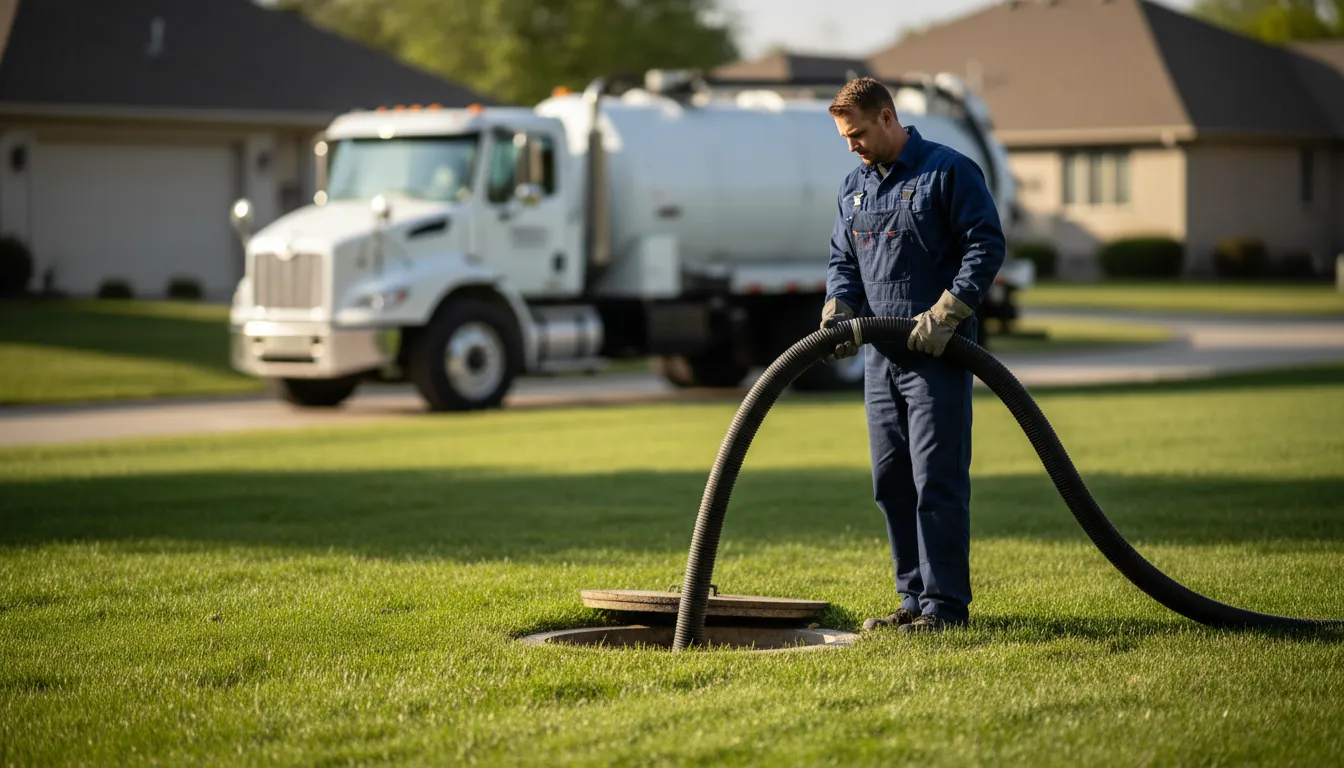
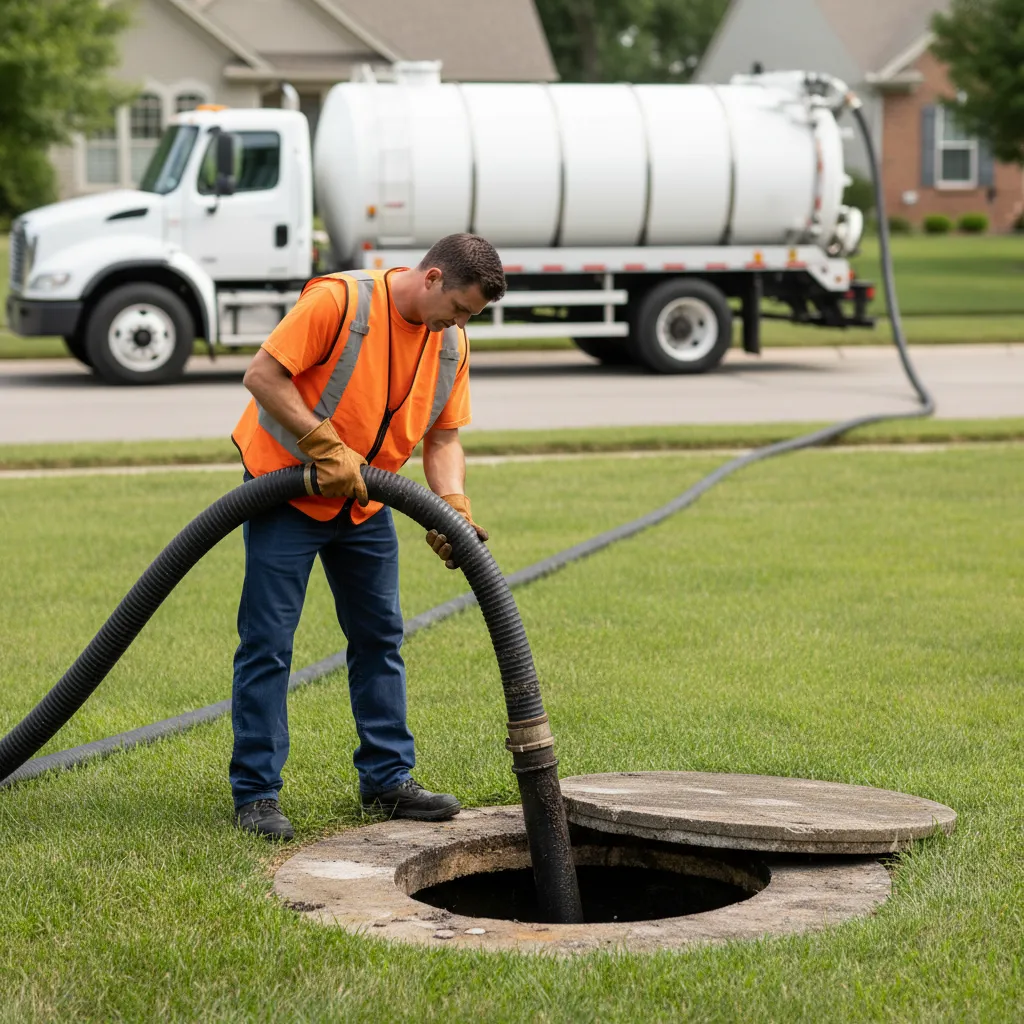
The vacuum truck’s suction hose goes into the first compartment. We agitate and stir the contents to break up compacted sludge, then vacuum the tank until it’s empty. Multi compartment tanks get pumped through each access point. Once the tank is cleared, waste management protocols ensure all material is hauled to an approved disposal facility.
Inspect internal components
With the tank drained, we visually inspect the baffles, divider wall, inlet pipe, outlet pipe, and tee fittings. We check for cracks, corrosion, and root intrusion. If a camera inspection is warranted, we note that in our report. Our inspections also assess whether tank installation or sewer line repair may be needed.
Clean the effluent filter
We pull the effluent filter from the outlet side, flush it with clean water, and reinstall it.
Reseal and backfill
We replace the access lid, reseal any gaskets, and backfill the excavated soil. You receive a written service report with sludge measurements, component condition notes, and a recommended next pumping date. Simply sit back while we fill you in on how your maintained ecosystem is functioning – then you can run with peace of mind.
Brands We Use
Residential septic tank pumping requires commercial grade equipment built for heavy daily use. Action Septic Service runs trusted brands across our entire operation.








Every piece of equipment undergoes routine maintenance and calibration.
Other Services
Residential septic tank pumping
Home septic tank pumping
Septic tank cleaning service
Septic pumping service
Septic tank pump out
Sludge removal residential
Septic tank maintenance
Routine septic pumping
Wastewater tank emptying
Residential septic cleaning
Household septic service
Effluent tank pumping
Septic tank pumping near me
Local septic pumping company
Drain field maintenance pumping
Emergency plumbing service
24/7 plumber
Same-day plumbing service
FAQs About Residential Septic Tank Pumping
What is residential septic tank pumping?
Residential septic tank pumping is the process of vacuuming all sludge, scum, and liquid effluent from a home’s underground septic tank using a vacuum truck. A certified technician suctions the contents, hauls the septage to a licensed disposal site, and inspects the tank’s internal components during the service. This essential waste management service helps keep your sewer system and connected line flowing properly.
When should I schedule septic tank pumping?
Most residential septic tanks need pumping every three to five years. Household size, tank capacity, water usage, and whether you use a garbage disposal all affect the accumulation rate. A family of four with a 1,000 gallon tank typically needs pumping closer to every three years. Getting on a regular schedule is the best way to keep your system maintained.
Why does my septic tank need regular pumping?
Solids accumulate on the bottom as sludge and float on top as scum. Over time, these layers thicken and reduce the tank’s working volume. Without pumping, solids escape through the outlet pipe, clog the effluent filter, and saturate the drain field with untreated waste. Replacing a failed leach field costs thousands of dollars. Routine pumping prevents that risk and saves you money in the long run.
How long does a septic tank pump out take?
A standard residential pump out takes 30 to 60 minutes once the access lid is exposed. Larger tanks, multiple compartments, or compacted sludge can extend the job. Locating and digging to a buried lid adds time if risers aren’t installed. Our same-day plumbing service means you won’t have to wait long to start the process.
Can I pump my own septic tank?
No. Septic tank pumping requires a licensed hauler with a vacuum truck and a permit to transport and dispose of septage. Opening a septic tank produces hazardous gases including hydrogen sulfide and methane. Professional technicians carry the training, equipment, and insurance to handle the job safely. An expert contractor will give you the help you need while ensuring compliance with all regulations.
Does pumping fix a slow drain field?
Pumping removes the excess load from a full tank and gives the drain field time to recover. If the percolation bed is already saturated with biomat or the soil has lost its permeability, the drain field may need separate remediation. Pumping is always the first step in diagnosing drain field problems. Our on-site plumbing service team can also assess whether tank installation service or sewer line installation may be needed for a complete solution.
Ready to Schedule Your Residential Septic Tank Pumping?
Call now for fast, professional service – available 24/7 across all 50 states.