Drain Field Installation
Professional drain field installation for residential and commercial properties across your service area – quality work, fast response, and highly rated service
Licensed & Insured
NOWRA certified technicians on every job
24/7 Emergency Service
Available whenever you need us most
Nationwide Coverage
Serving all 50 states across the USA
Transparent Pricing
Flat rates with no hidden fees
Get Immediate Service
Speak directly with our team – no automated systems
24 Hours – 7 Days a Week
5 Highlights on Drain Field Installation
Certified Septic Installers on Every Job
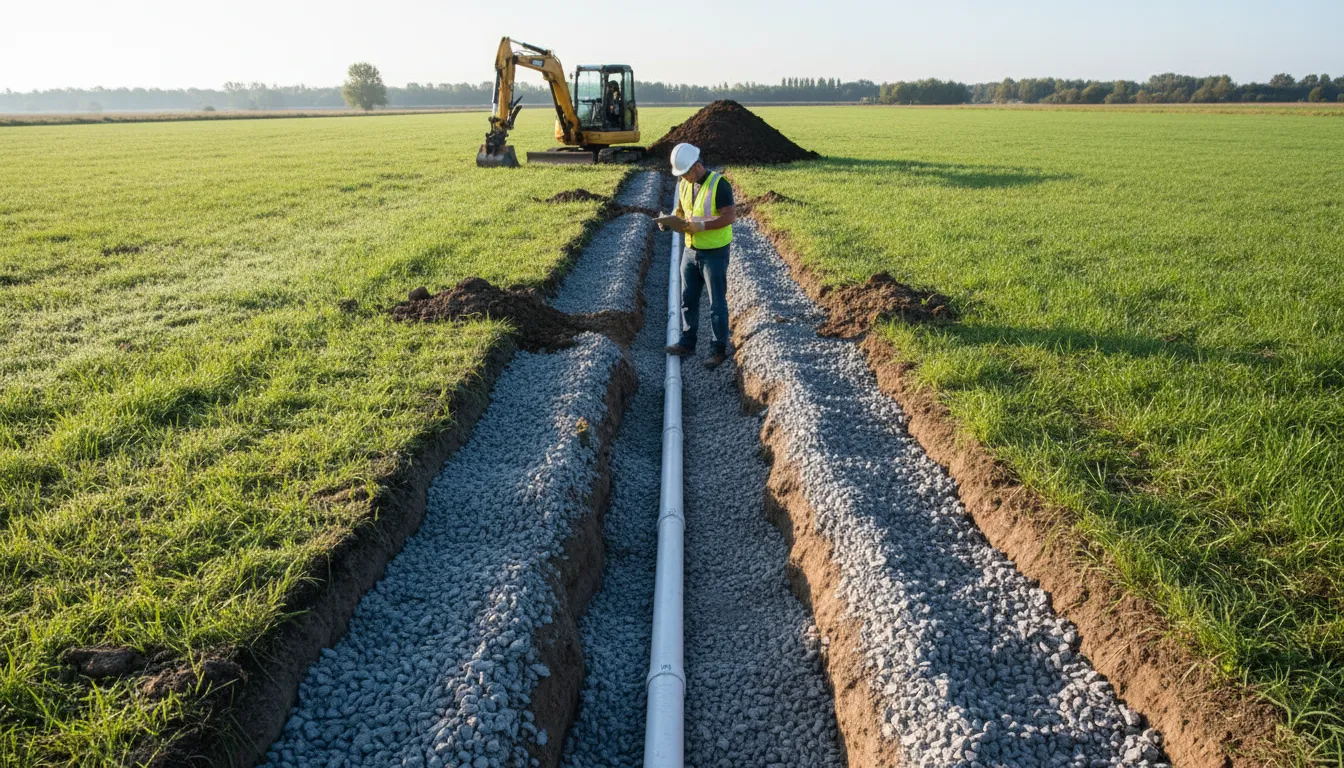
Our licensed crew excavates, grades, and installs every drain field component, from perforated pipe and distribution boxes to gravel beds and geotextile fabric, meeting all local and state code requirements. We provide top quality plumbing and sewer connections with every project.
Comprehensive Soil and Perc Testing
We conduct thorough percolation tests and soil evaluations before breaking ground. Sandy, loamy, or clayey conditions all dictate the absorption field design, and we match the system to your site’s infiltration rate. Our team will find the best location and help you understand your property’s needs.
Conventional and Alternative System Expertise
Action Septic Service installs gravity fed lateral line systems, mound systems, chamber systems, and pressurized drip irrigation configurations. We offer a full range of drain fields and fit the right type to your property’s hydraulic load and soil profile.
Full Permit Coordination
We survey your lot, prepare site plans, and handle permit applications so your new leach field installation stays compliant from day one. No guesswork. No delays. Call us for a free consultation and let our team get the job done right.
Backed by a Workmanship Guarantee
Every drain field we install comes with a written warranty covering materials, pipe connections, and grading. We stand behind the work long after the backfill settles. Our clients are pleased with the experience and thank us for getting the job done well.
Need Immediate Septic Service?
Our team is standing by to help – same week appointments available.
Why Choose Our Drain Field Installation
Drain field installation is the most critical phase of any onsite wastewater system. A poorly installed absorption field fails early, contaminates groundwater, and costs thousands to remediate. Action Septic Service eliminates that risk with highly trained technicians ready to help.
We’ve installed hundreds of leach fields across residential lots, commercial parcels, and rural acreage. Our septic installers hold current certifications and operate professional grade excavators, trenchers, laser levels, and compactors. We don’t subcontract the work. Our own crew digs every trench, sets every distribution box, and connects every lateral line. When the job is done and the work is completed, you can rest easy knowing it was made to last.
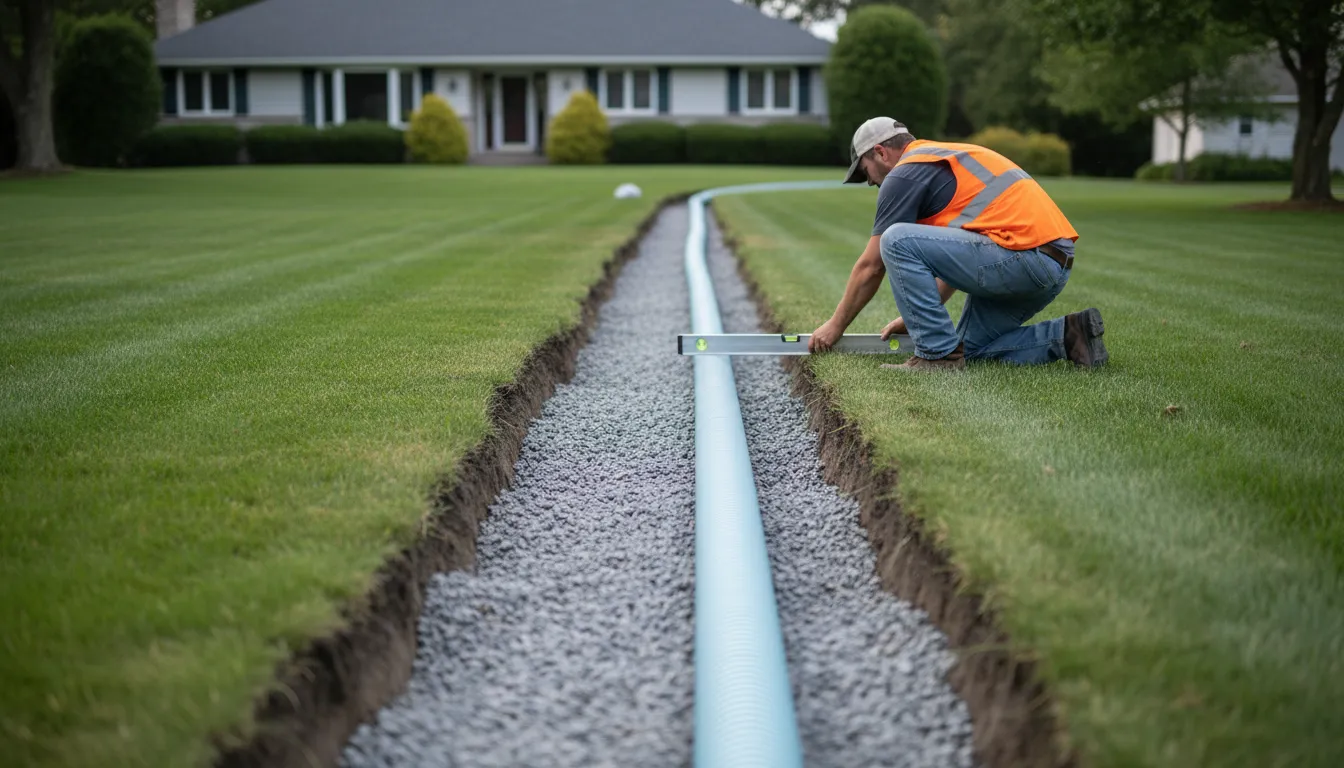
What separates us from other contractors? Precision and accountability. We calculate your property’s treatment capacity based on actual perc test data, not estimates. We size the drain field to handle your household or building’s organic load and peak water usage. We verify pipe slope with laser levels and inspect every fitting before backfilling a single inch of aggregate. We use camera inspections when needed to check for root intrusion from trees and identify any damaged pipes or leak points.
Our clients also get direct communication throughout the project. You’ll know when we pull the permit, when we excavate, and when the county inspector arrives. We schedule final inspections and provide all documentation for your records. Contact us any time – we’re ready to send our team to your location and start getting you back on track.
Action Septic Service is fully insured, bonded, and trusted by local health departments. We’re highly rated on Google and serving communities nationwide. Choose a qualified installer who treats your drain field like the long term investment it is.
States Served Nationwide
Emergency Availability
Licensed & Insured
Hidden Fees – Ever
Signs You Need Drain Field Installation
Drain field installation becomes necessary under several specific conditions. Recognizing these signs early saves you money and protects your property from sewage contamination. We offer fast response and 24 hours a day availability when you need help.
Your Existing Drain Field Has Failed:
Ponding on the surface above your leach lines is a clear failure indicator. When effluent breaks out at ground level, the soil beneath your lateral lines has become saturated or clogged with biofilm. A failing absorption field can’t be patched – repair is limited, and you need a new drain field installed in a designated replacement area. If you see standing water or wet spots in your yard, call for repairs right away.
You're Building a New Home or Structure:
New construction on a lot without municipal sewer requires a complete onsite septic system. The drain field is the largest component, and it must be designed, permitted, and installed before you receive an occupancy certificate. Our team can help you find the best point on your property and get the job finished on schedule.
Perc Test Results Show Your Current Field Is Undersized:
If your household has grown or you’ve added bathrooms, your original leach field may lack the absorption rate to handle the increased hydraulic load. A new, properly sized drain field installation corrects the capacity mismatch. We’ll provide a full range of options to replace your undersized system.
Sewage Odors Persist Near Your Yard:
Odorous conditions around your lateral lines suggest the subsurface soil can no longer filter and treat effluent. Coliform and nitrate levels in nearby monitoring wells may confirm contamination. Replacement installation is the only lasting fix. Don’t put off getting this issue covered – contact us today.
Your County Has Condemned the Existing System:
Health department inspections sometimes result in non compliant findings. A condemned septic system with a failed leach field requires permitted drain field installation on an approved site before the property can remain occupied. We’ll help you navigate the process from start to finished project.
Licensed & Bonded
Full compliance in all 50 states
Detailed Reports
Complete documentation every visit
Flat Rate Pricing
No hidden fees or surprises
Fast Scheduling
Same week appointments available
Our Drain Field Installation Process
Drain field installation follows a structured sequence that protects your investment and satisfies regulatory requirements. Here’s how Action Septic Service handles every project, keeping your mind at ease throughout the process.
Site Evaluation and Soil Testing
We survey your property, identify setbacks from wells, structures, and easements, and perform percolation tests. Soil probes reveal the depth to the water table and the composition of subsurface layers, including sand and fig soil types common in many areas.
System Design and Permitting
Based on perc test results and your building’s wastewater output, we design the absorption field layout. We select the appropriate system type, whether conventional gravel and pipe, chamber, or mound, and submit plans to the local permitting authority. We also offer trenchless and pipe lining solutions where applicable.
Excavation and Grading
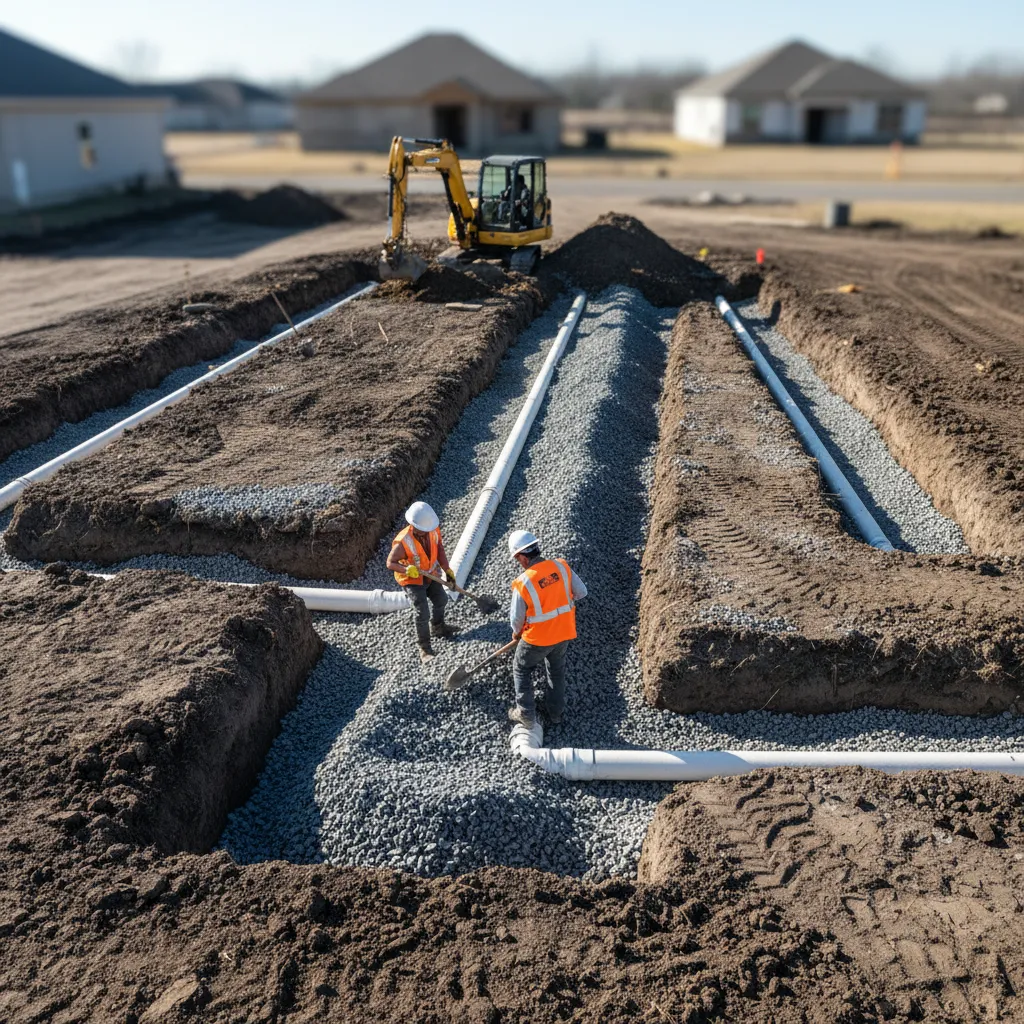
Our crew excavates trenches or beds to the specified depth and width. We grade the bottom to ensure consistent pipe slope and proper effluent distribution across every lateral line. We minimize the hole size and protect your landscaping wherever possible.
Material Installation
We place drainrock or aggregate, lay perforated pipe, install distribution boxes and header connections, and wrap assemblies in geotextile fabric where required. Every fitting gets inspected before we proceed. We also offer pipe bursting for replacing old sewer lines when needed.
Inspection, Backfill, and Final Grading
The county inspector verifies depth, spacing, materials, and slope. Once approved, we backfill and fill with native soil, compact lightly to prevent settling, and grade the surface for proper drainage away from the field. We clean up when we’re done and leave your property looking its best.
Brands We Use
Drain field installation demands reliable, code approved materials that perform for decades underground. Action Septic Service installs products from these trusted manufacturers:






We stock these products locally and verify every component meets your county’s specifications.
Other Services
Drain field installation
Leach field installation
Septic absorption field setup
Install drain field
New leach field construction
Perforated pipe and gravel bed system
Drain field replacement
Absorption field replacement
Septic lateral line installation
Residential drain field installer
Onsite wastewater field installer
Perc test and soil evaluation service
Drain field installation cost
Leach field installation pricing
Septic system drain field permit
FAQs About Drain Field Installation
What is drain field installation?
Drain field installation is the process of excavating trenches or beds, placing aggregate and perforated pipe, connecting distribution components, and backfilling the area to create a subsurface absorption field. This field receives effluent from your septic tank and allows it to percolate through soil, where microbial activity filters and treats the wastewater before it reaches groundwater. The water is cleaned naturally as it moves down through sand and soil layers.
When does a property need a new drain field?
You need a new drain field when your existing leach field has failed, when you’re constructing a new building without sewer access, or when your current system can’t handle increased hydraulic load from additions or higher occupancy. Call us to get started and we’ll provide a free assessment.
Why can't a failed drain field just be repaired?
Once the soil beneath lateral lines becomes saturated with biofilm and organic solids, its absorption rate drops permanently. The clogged zone won’t recover. A new drain field installed in undisturbed soil restores proper treatment capacity. Keep in mind that roots from nearby trees can also damage pipes beyond repair.
How long does drain field installation take?
Most residential installations take two to five days, depending on system type, soil conditions, and permit scheduling. Mound systems and pressurized designs may require additional time for grading and pump chamber connections. We work fast to get the job done and minimize time off your property.
Can you install a drain field in clay soil?
Yes, but clayey soils have low percolation rates. We often design mound systems or alternative configurations that compensate for slow infiltration. The perc test results determine which system type your site can support. We hired experienced engineers to ensure every design meets local codes.
Does the county need to inspect the drain field before backfilling?
Yes. Local health departments require an open trench inspection to verify pipe depth, aggregate coverage, slope, setback distances, and material compliance before any backfill occurs. Action Septic Service coordinates this inspection directly so nothing is left to chance.
Ready to Schedule Your Drain Field Installation?
Call now for fast, professional service – available 24/7 across all 50 states.