Septic System Inspection
Professional septic system inspection services and plumbing services from a trusted company serving homeowners and businesses nationwide – we provide quality solutions that protect your property and keep your wastewater system running smoothly and compliant
Licensed & Insured
NOWRA certified technicians on every job
24/7 Emergency Service
Available whenever you need us most
Nationwide Coverage
Serving all 50 states across the USA
Transparent Pricing
Flat rates with no hidden fees
Get Immediate Service
Speak directly with our team – no automated systems
24 Hours – 7 Days a Week
5 Highlights on Septic System Inspection
Comprehensive tank and drain field evaluation
Our certified technicians inspect every component of your septic system, from the inlet baffle and scum layer to the effluent filter and distribution box. We assess structural integrity, diagnose pipe and plumbing system issues, and evaluate hydraulic performance in a single visit.
Advanced camera inspection technology
We scope your drainpipes, lateral lines, and outlet connections using high resolution sewer cameras. This advanced detection technology lets us locate cracks, damaged pipe sections, blockages, and root intrusion without excavating your yard – providing clear answers and efficient work.
Detailed inspection reports
Every septic system inspection includes a complete written report documenting tank condition, sludge layer depth, scum layer thickness, and drain field absorption rates. Our detailed reports help you understand your system – homeowners and real estate agents rely on these reports for property transactions.
Health department compliance verification
We evaluate your system against local health department codes and permit requirements. Our inspectors confirm whether your septic tank, leach field, and reserve area meet current regulatory standards.
Real estate and pre-purchase inspections
Buying or selling a home with a septic system demands a qualified inspection. We perform point of sale evaluations that satisfy lenders, buyers, and county inspectors across our service area.
Our Septic System Inspection Services:
Pre-Purchase Septic Inspection
Ensure your plumbing and waste system will function properly
Septic Dye Test Inspection
Professional dye testing inspections that trace, detect, and diagnose
Annual Septic Compliance Inspection
Ensure septic systems meet all local and state regulations
Need Immediate Septic Service?
Our team is standing by to help – same week appointments available.
Why Choose Our Septic System Inspection
Septic system inspection is a specialized plumbing service that requires licensed, insured, and highly trained professionals with hands-on field experience. Action Septic Service employs certified inspectors and expert plumbers who have evaluated thousands of residential plumbing and commercial plumbing systems. We don’t cut corners. We probe, measure, camera, and test every accessible component.
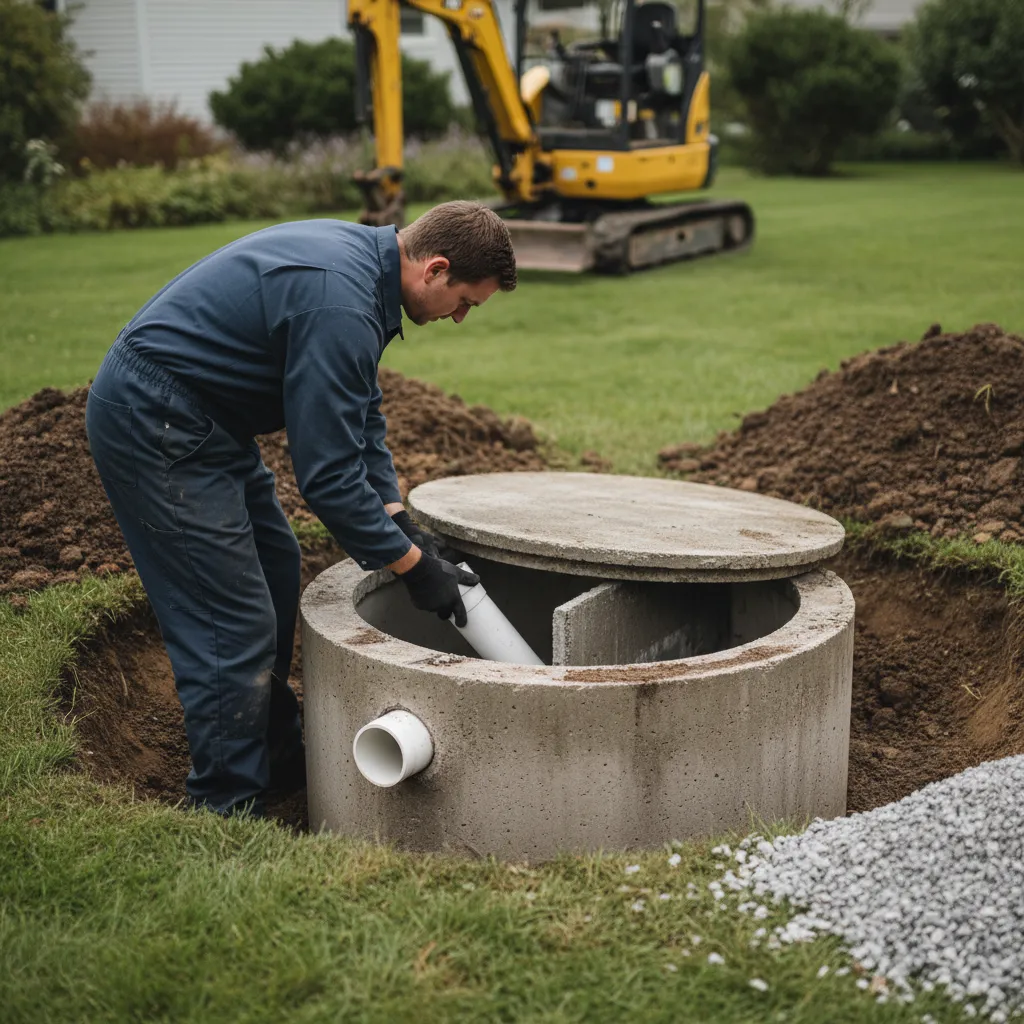
Our team carries professional liability coverage and maintains active certifications through state and county health departments. We stay current on conventional, alternative, and advanced treatment system designs – including mound systems, sand filters, pressurized drip irrigation systems, and chambered leach fields. We provide a full range of installation services and replacement services.
We guarantee same week scheduling for standard inspections and same day emergency service when you call. Our team will respond with prompt communication when you discover sewage backup, soggy ground over your drain field, or odorous conditions near your tank. Our pump trucks stand ready if we find an overfull or failing system during the inspection process.
Action Septic Service provides transparent, fair pricing with no hidden fees. Contact us for a free estimate. You’ll receive your completed inspection report within 48 hours, formatted for real estate closings, permit applications, or personal records. Every report includes photographs, diagrams, and professional recommendations – your customer satisfaction is our focus.
We’ve built our reputation on honest assessments. If your system is functional and compliant, we’ll tell you. If it needs line repair, repair work, replacement, or remediation, we’ll explain exactly what’s wrong and what it costs to get the job done right the first time – delivering lasting solutions.
States Served Nationwide
Emergency Availability
Licensed & Insured
Hidden Fees – Ever
Signs You Need Septic System Inspection
Septic system inspection becomes urgent when your property shows specific warning signs. These issues can disrupt your daily life. Ignoring these indicators leads to costly failures, groundwater contamination, and health code violations.
Slow drains throughout the house:
A single clogged drain might be a plumbing issue that needs drain cleaning. Multiple slow drains – sink drains, showers, and toilets backing up simultaneously – point to a saturated or failing septic tank. The cause may be that your sludge layer has exceeded safe levels, or your effluent filter could be blocked with accumulated solids.
Foul odors near the tank or drain field:
Odorous conditions around your septic tank lid, access port, or leach field indicate that anaerobic gases are escaping. This happens when baffles crack, riser seals deteriorate and leak, or the biomat in your absorption trenches becomes waterlogged and stops processing effluent properly. These issues affect your entire property if you don’t treat them promptly.
Standing water or soggy soil over the leach field:
Healthy drain fields absorb and percolate treated wastewater below the surface. When you see pooling water, lush green patches, or waterlogged ground above your lateral lines, the soil has reached saturation. This can lead to water damage if the problem is not found early. A professional inspection will determine whether the field has failed or can be rejuvenated to restore proper function.
Sewage backup into the home:
Raw sewage surfacing through floor drains or toilet overflows signals a serious blockage or system failure – one of the worst emergencies a homeowner can face. The pump chamber may have lost function, the distribution box could be clogged, or the entire system may need emergency evaluation and pumping. Call us immediately for help to stop the problem.
Your system hasn't been inspected in three or more years:
Most health departments recommend septic system inspection every one to three years. If you’ve gone beyond that window, sludge accumulation, structural corrosion, and aging component wear can progress undetected. Routine inspection catches small, recurring problems before they become five figure repairs – identifying what’s needed to get issues fixed right.
Licensed & Bonded
Full compliance in all 50 states
Detailed Reports
Complete documentation every visit
Flat Rate Pricing
No hidden fees or surprises
Fast Scheduling
Same week appointments available
Our Septic System Inspection Process
Septic system inspection at Action Septic Service follows a structured, repeatable process that covers every component from tank to drain field. Our efficient approach ensures each job and project is completed thoroughly.
Records review and site assessment
We pull your property’s septic permit, as-built drawings, and previous inspection reports to get the exact details. Our technician walks the site to locate the tank, distribution box, and drain field boundaries relative to your well, property line, and setback requirements.
Tank access and visual evaluation
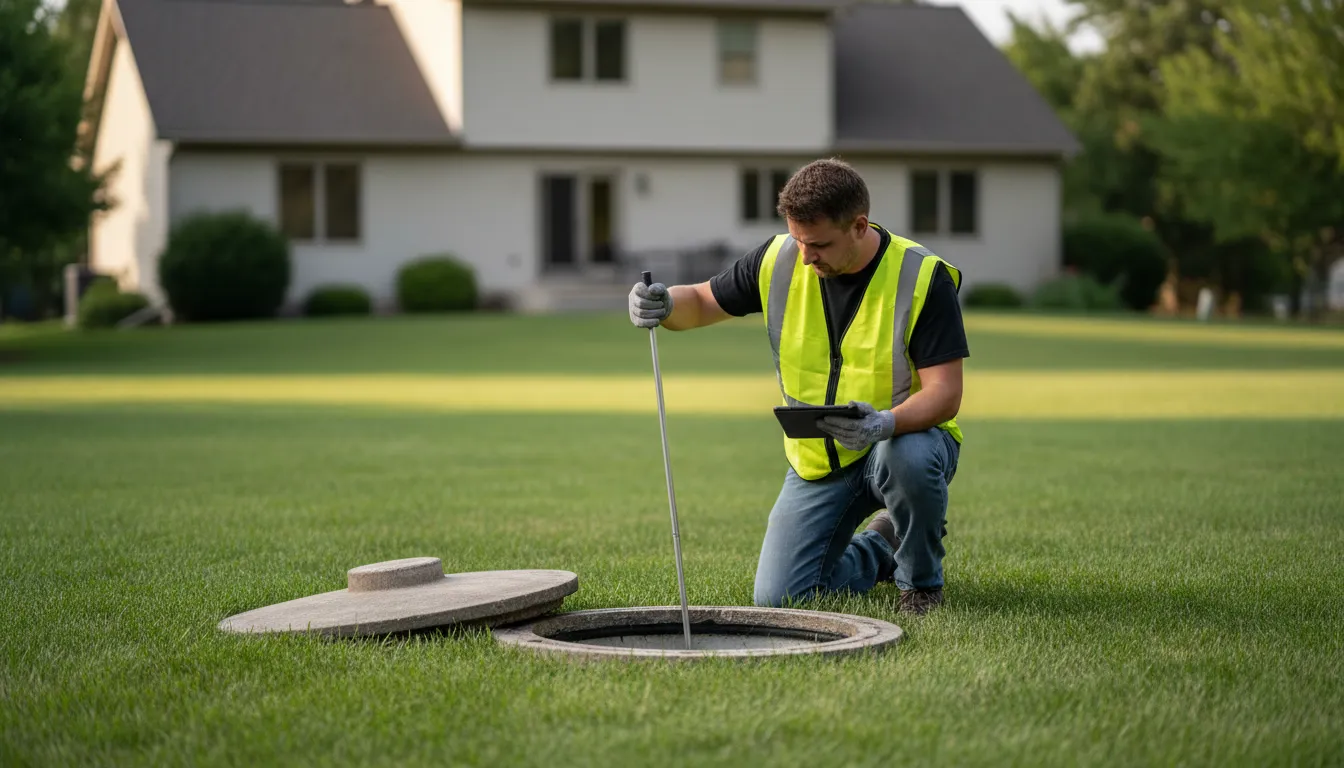
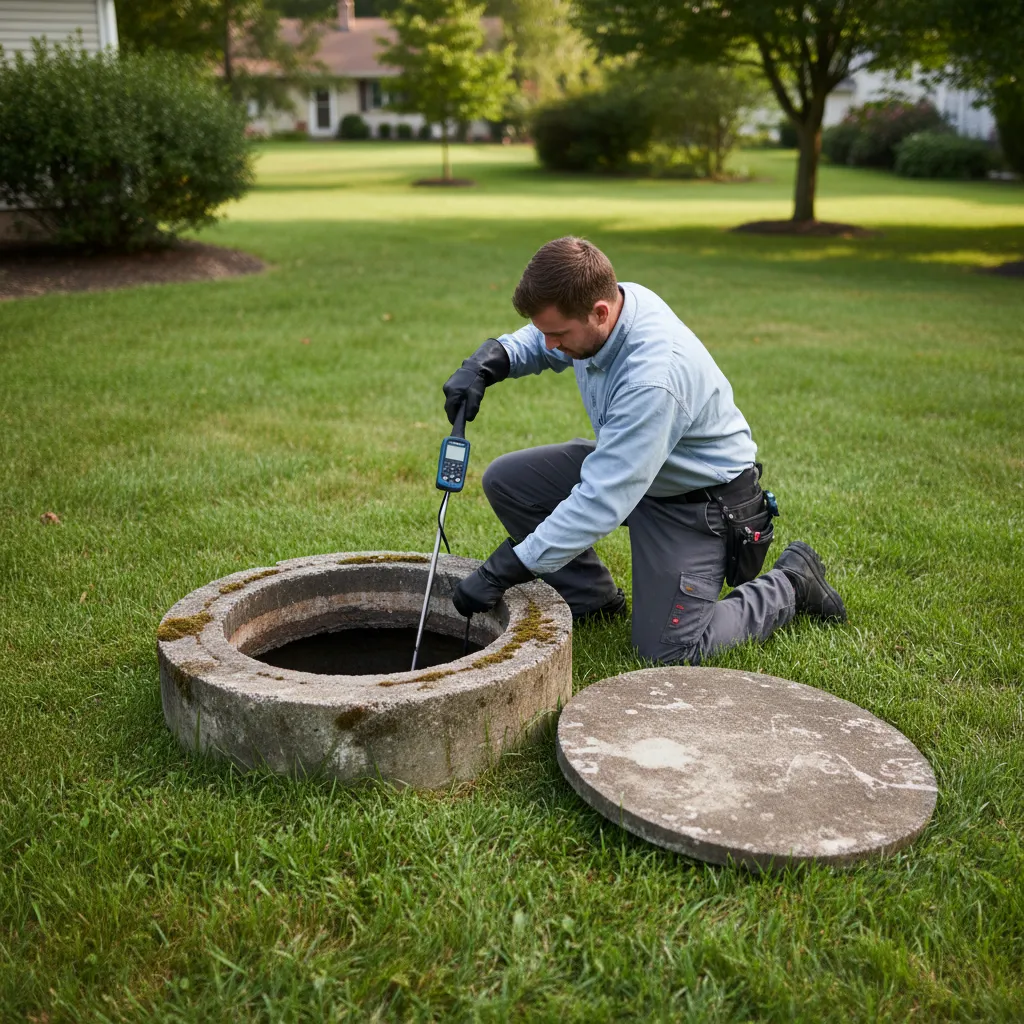
We uncover the septic tank lids and access ports. If risers aren’t installed, we excavate to reach the buried covers. Our inspector examines the inlet and outlet baffles, checks for cracks, leaks, or corrosion in the tank walls, and looks for signs of structural failure so you know the true condition.
Sludge and scum measurement
Using a calibrated probe, we measure the sludge layer at the tank bottom and the scum layer floating on top. We compare these readings against the clarified zone depth to determine whether the tank needs pumping and cleaning to keep it clean and functional.
Effluent filter and component check
We pull and inspect the effluent filter, test the float switch and alarm in pump chamber systems, and verify that the check valve and backflow preventer are working and running correctly. On aerobic systems, we confirm the aerator runs and dissolved oxygen levels fall within range.
Drain field and distribution box evaluation
We open the D-box to check effluent flow distribution across all lateral lines. We probe the drain field soil for saturation, inspect cleanouts, and camera the lines when blockage or root intrusion is suspected. If clearing is needed, we can remove obstructions using high pressure jetting.
Report delivery
We compile findings into a detailed inspection report with photos, measurements, and professional recommendations. You receive this document within 48 hours so you can learn about your system’s condition. Request a copy in any format you need.
Brands We Use
Septic system inspection demands reliable, professional grade equipment. Action Septic Service uses trusted brands that deliver accurate results in the field.



All inspection instruments are calibrated regularly and maintained to manufacturer specifications.
Other Services
Septic system inspection
Septic tank inspection
Wastewater system evaluation
Septic inspection service
Septic system assessment
Drain field condition report
Residential septic inspection
Home septic evaluation
Sludge level measurement
Commercial septic inspection
Septic compliance inspection
Effluent filter check
Real estate septic inspection
Pre purchase septic evaluation
Septic inspection report
FAQs About Septic System Inspection
What does a septic system inspection include?
We compile findings into a detailed inspection report with photos, measurements, and professional recommendations. You receive this document within 48 hours so you can learn about your system’s condition. Request a copy in any format you need.
When should I schedule a septic system inspection?
Schedule an inspection every one to three years for routine maintenance monitoring to ensure your system stays functional. Contact us if you have questions. You also need one before buying or selling a home, after a sewage backup, when you notice odorous conditions near the tank, or if your local health department requires periodic certification.
Why is septic system inspection necessary for real estate transactions?
Lenders and buyers need documented proof that the septic system is functional and compliant. A failed or noncompliant system can cost $10,000 to $30,000 to replace – an expense nobody wants when dealing with a real estate transaction. The inspection report protects both parties and satisfies county recording requirements. Whether you’re a homeowner or business, we care about getting this right.
How long does a septic system inspection take?
A standard residential septic system inspection takes two to three hours within a single day. Complex systems with aerobic treatment units, mound designs, or multiple tanks may require additional time for a thorough long term assessment. Camera inspections of drain field lines add roughly 30 to 60 minutes.
Can a septic system inspection detect a failing drain field?
Yes. Our inspectors use advanced water leak detection and leak detection techniques to probe for saturated soil, check for biomat buildup, measure effluent distribution across lateral lines, and camera the sewer line and pipes for structural damage. These tests reveal whether the leach field is absorbing properly or approaching failure.
Does pumping the tank happen during the inspection?
Pumping is a separate cleaning services option, but we often perform both on the same visit. If sludge and scum levels exceed safe thresholds during the inspection, we can pump the tank immediately with our vacuum truck and include the service in your appointment – keeping your system healthy and helping reduce future problems.
Ready to Schedule Your Septic System Inspection?
Call now for fast, professional service – available 24/7 across all 50 states.