Real Estate Septic Inspection
Professional septic inspections that protect buyers, sellers, and real estate transactions near you
Licensed & Insured
NOWRA certified technicians on every job
24/7 Emergency Service
Available whenever you need us most
Nationwide Coverage
Serving all 50 states across the USA
Transparent Pricing
Flat rates with no hidden fees
Get Immediate Service
Speak directly with our team – no automated systems
24 Hours – 7 Days a Week
5 Highlights on Real Estate Septic Inspection
Certified Title V inspections
Our licensed septic inspectors perform full Title V real estate inspections required by Massachusetts Board of Health regulations, covering the septic tank, distribution box, drain field, and all system components from inlet baffle to effluent filter to ensure your transaction proceeds smoothly.
Fast turnaround for closings
We complete most real estate septic inspections within 48 hours and deliver the certificate of compliance or conditional pass documentation directly to your listing agent, buyer, and lender so escrow stays on track. Contact us today for help with your inspection needs.
Comprehensive system evaluation
Every inspection includes measuring sludge layer and scum layer depths, probing the leach field for saturation or failure, checking the pump chamber, and camera inspecting the main sewer line and plumbing connections from the house to the tank to find any hidden issues.
Clear, detailed reporting
Our inspection reports document tank capacity, liquid level, baffle condition, riser integrity, and drain field absorption performance with photographs, so buyers and sellers understand exactly what they’re purchasing and can make informed decisions that add value to the negotiation process at every point.
Remediation guidance when systems fail
If your septic system receives a conditional pass or fails outright, we provide a corrective action plan with repair estimates, connect you with a licensed septic designer for engineering solutions, and coordinate with your local health department for permitting.
Need Immediate Septic Service?
Our team is standing by to help – same week appointments available.
Why Choose Our Real Estate Septic Inspection
Real estate septic inspection is a high stakes evaluation that directly affects whether a property sale closes or collapses. Action Septic Service, located in Ohio and serving clients nationwide, has performed thousands of these transfer inspections for homeowners, real estate agents, and attorneys who trust our expertise across the region.
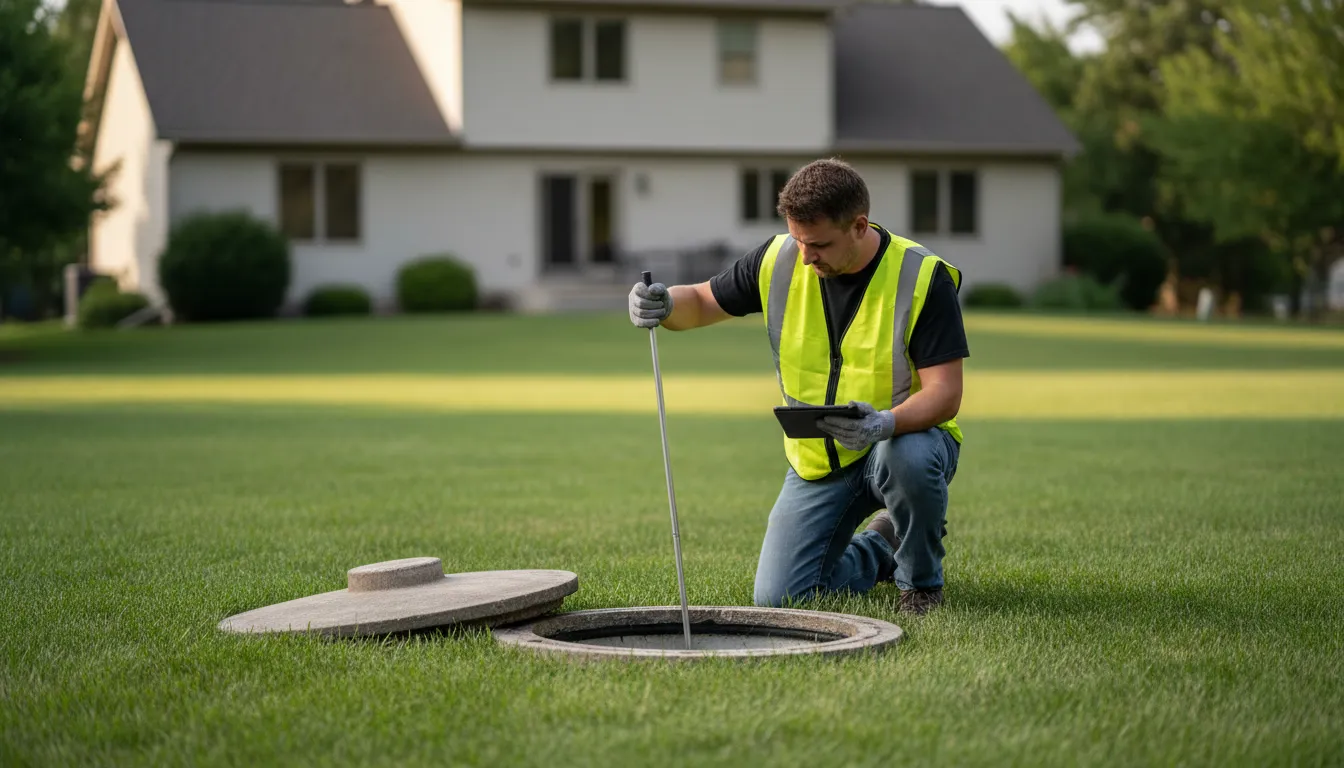
Our inspectors hold active licenses and carry the credentials your municipality requires. We don’t cut corners or try shortcuts. Every inspection follows the full Title V protocol, which means we physically uncover access lids, pump the tank, inspect baffles, probe the absorption area, and run a hydraulic load test when conditions demand it. Some companies skip steps to save time. We do the job right.
We work directly with buyers, sellers, listing agents, home inspectors, and lenders. Our reports are written in plain language with professional documentation that satisfies Board of Health requirements and lender underwriting standards. When a system passes, we issue the certificate of compliance the same day to confirm the results. When it doesn’t, we explain exactly what failed and what corrective action the seller needs to take so everyone stays informed.
Action Septic Service also provides repair permitting assistance, septic system design referrals, and pumping services. That means one trusted company can handle the inspection, identify the problem, and offer solutions to solve it. You won’t get bounced between three different contractors during a time sensitive closing.


States Served Nationwide
Emergency Availability
Licensed & Insured
Hidden Fees – Ever
Signs You Need Real Estate Septic Inspection
You're selling a property with a septic system:
Most states and municipalities require a transfer inspection before ownership changes hands. In Massachusetts, a Title V inspection must be completed within two years of the closing date. Sellers who skip this step risk deal cancellations, legal liability, and disclosure violations that can surface years after the sale. Learn more about requirements like these for your specific location.
Wet or soggy areas have appeared over the drain field:
Saturated soil above the leach field signals that effluent isn’t percolating properly through the absorption trenches. This could indicate a failed or clogged system caused by roots, sludge buildup, or other blockages. A real estate septic inspection will determine whether the drain field is functioning, compromised, or collapsed, and whether the buyer is inheriting a costly repair.
The septic tank hasn't been pumped in years:
A tank with excessive sludge buildup or a thick scum layer can push solids into the distribution box and lateral lines, damaging the entire subsurface system. Our inspectors measure these layers precisely and assess whether neglected maintenance and lack of regular cleaning has shortened the system’s remaining life. Proper pumping helps maintain long-term performance.
The property has an older cesspool or unpermitted system:
Cesspools, cesspit configurations, and systems installed without a septic permit often don’t meet current code. A real estate septic inspection identifies non compliant or obsolete systems known to cause problems that the health department may condemn, require upgrading, or demand decommissioning before the transfer can proceed. We explore all options with you.
Your lender or buyer's attorney is requesting documentation:
Banks, mortgage companies, and real estate attorneys routinely require a certificate of compliance or letter of compliance before funding a loan. Without a completed real estate septic inspection report, the lender won’t approve the mortgage and the closing stalls. Getting the inspection scheduled early prevents last minute delays that frustrate everyone involved. We can guide you through the process and provide a list of required documents.
Licensed & Bonded
Full compliance in all 50 states
Detailed Reports
Complete documentation every visit
Flat Rate Pricing
No hidden fees or surprises
Fast Scheduling
Same week appointments available
Our Real Estate Septic Inspection Process
Real estate septic inspection is a structured, multi step evaluation that follows a strict protocol. Every part of this project is designed to protect your investment.
Scheduling and records review
We coordinate with the seller or listing agent to schedule the inspection. Before arriving, we pull the property’s as built plan, site plan, and any previous inspection records from the local Board of Health. This tells us the system type, tank capacity, bedroom count, and design flow. We add notes about any special conditions.
Tank access and pumping
Our crew locates and uncovers all access lids, risers, and manholes. We pump the septic tank completely using our vacuum truck, then inspect the interior walls for cracks, corrosion, leak points, or structural compromise. We check the inlet baffle, outlet baffle, and effluent filter for damage or blockage.
Distribution system evaluation
We open and inspect the distribution box, checking for level flow to all lateral lines. We probe the drain field and absorption trenches to assess soil saturation at both upper and lower depths, measure setback distances to the well and property line, and look for signs of effluent surfacing or leaching failure.
Hydraulic load test
We run water back through the system at the rated gallons per day to verify the drain field can absorb the designed occupancy load without backup, overflow, or breakout.
Documentation and reporting
We compile all findings into a detailed inspection report with photographs, measurements, and a pass, conditional pass, or fail determination. We submit the report to the Board of Health and provide copies to the buyer, seller, listing agent, and lender.
Brands We Use
Real estate septic inspection requires professional grade equipment and testing instruments from manufacturers that meet industry standards. Action Septic Service uses products from these trusted brands:





All equipment is calibrated, maintained, and operated by trained technicians.
Other Services
Real estate septic inspection
Septic inspection for home sale
Title V inspection for property transfer
Septic system inspection for closing
Transfer septic inspection
Certificate of compliance septic
Septic tank inspection before buying
Pre purchase septic evaluation
Septic inspection report for lender
Home sale septic certification
Septic compliance inspection
Conditional pass septic system
Real estate septic testing
Septic inspection for real estate transaction
Drain field inspection for home sale
FAQs About Real Estate Septic Inspection
What is a real estate septic inspection?
A real estate septic inspection is a comprehensive evaluation of a property’s septic system performed during a home sale or ownership transfer. The inspector pumps the tank, examines all components including baffles, the distribution box, and the drain field, and determines whether the system passes, conditionally passes, or fails current health code requirements. This evaluation helps buyers and sellers make informed decisions.
When do I need a real estate septic inspection?
You need one before selling or purchasing a property served by a septic system. Most municipalities require the inspection within two years of the closing date. Lenders also require a passing inspection report or certificate of compliance before they’ll fund the mortgage. Contact us to find out the specific requirements near your property.
Why would a septic system fail a real estate inspection?
Systems fail for several reasons: a cracked or collapsed tank, a saturated or non functioning drain field, missing or damaged baffles, unpermitted modifications, inadequate setback from the well or property line, or a system that doesn’t meet current code for the home’s bedroom count and design flow. We help you understand each point of concern.
How long does the inspection take?
Most real estate septic inspections take three to five hours on site. Pumping the tank, probing the leach field, running the hydraulic load test, and documenting findings all require time to complete accurately. We typically deliver the final report within one to two business days.
Can a seller make repairs after a conditional pass?
Yes. A conditional pass means the system has specific deficiencies that the seller must remediate within a set timeframe. Common corrective actions include replacing a damaged baffle, installing a new effluent filter, pumping the tank, or repairing the distribution box. Once repairs are completed and verified, the Board of Health upgrades the status to a full pass. We can provide an estimate for any needed work.
Does the buyer or seller pay for the inspection?
State regulations typically place the responsibility on the seller, but the purchase and sale agreement between buyer and seller can assign the cost to either party. Your listing agent or real estate attorney can clarify who pays based on your specific transaction terms.
Ready to Schedule Your Real Estate Septic Inspection?
Call now for fast, professional service – available 24/7 across all 50 states.