Drain Field Replacement
Professional drain field replacement that restores your septic system to full working order – quality workmanship, effective solutions, and reliable service to ensure your property stays protected
Licensed & Insured
NOWRA certified technicians on every job
24/7 Emergency Service
Available whenever you need us most
Nationwide Coverage
Serving all 50 states across the USA
Transparent Pricing
Flat rates with no hidden fees
Get Immediate Service
Speak directly with our team – no automated systems
24 Hours – 7 Days a Week
5 Highlights on Drain Field Replacement
Complete Leach Field Removal and Reinstallation
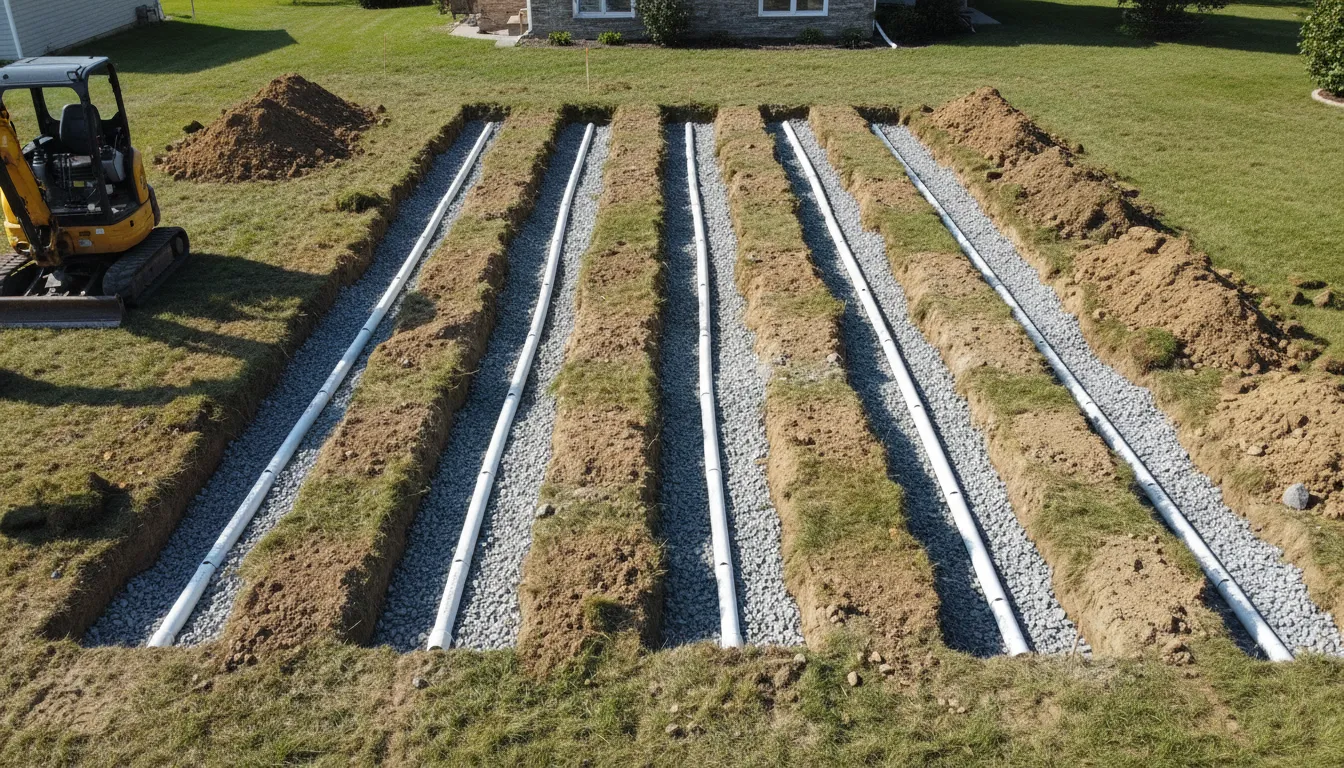
Our crew excavates the failing drain field, removes saturated gravel bed and clogged perforated pipe, and installs a brand new absorption field sized to your property’s hydraulic load and percolation rate. We handle all debris clearing and waste removal from the job site.
Soil Testing and Perc Test Coordination
Every drain field replacement starts with a fresh soil test and perc test to confirm the new leach field location can properly absorb and filter effluent before we trench a single foot. Our guide to site selection covers all types of leach fields and determines where your new system should be placed.
Permit Acquisition and Code Compliance
We handle all local permit applications, setback measurements, and easement reviews so your replacement drain field meets every current residential and commercial septic code requirement. We obtain all necessary permits and walk you through the steps involved.
Distribution Box and Lateral Upgrades
When we replace your septic field, we also inspect and replace the D-box, header pipe, and laterals if corroded or damaged, giving you a fully functional effluent distribution system. We inspect each line connection, sewer line tie-in, and plumbing interface.
Minimal Property Disruption
Our experienced excavator operators grade and backfill the site carefully, compact the soil to prevent settling, and restore your yard to pre-construction condition as quickly as possible. We take care to protect your property line boundaries and preserve your landscape value.
Need Immediate Septic Service?
Our team is standing by to help – same week appointments available.
Why Choose Our Drain Field Replacement
Drain field replacement is one of the most involved septic system services a homeowner will face. Action Septic Service has built a reputation as a trusted, licensed provider that handles every phase of the job from diagnosis through final inspection. We offer drain field replacement for a wide range of residential and commercial projects.
Our certified technicians diagnose drain field failure using sewer camera inspections, dye tests, and soil analysis – not guesswork. We pinpoint whether biomat buildup, saturated soil, root intrusion, or pipe collapse is causing the issues. That accurate diagnosis means we fix only what needs replacing and design the new leach field to avoid the same problems.
We carry full licensing and insurance for septic system excavation and installation. Our team stays current on state and county health department regulations, so your new absorption field passes inspection the first time. We don’t subcontract the work. Our own crews operate our own equipment on your property and ensure you have clear access to your system for regular maintenance.
Action Septic Service provides written estimates before any work begins. No surprise charges for permit fees, aggregate delivery, or geotextile fabric. We break down all costs including replacement cost for materials and labor so you understand the full scope. We guarantee our drain field installations with a workmanship warranty that covers pipe connections, gravel bed integrity, and distribution box function. The benefits of professional installation extend well beyond the initial project. When your septic field fails, you need a qualified team that can mobilize fast, work clean, and stand behind the finished product. That’s what we deliver on every drain field replacement.
States Served Nationwide
Emergency Availability
Licensed & Insured
Hidden Fees – Ever
Signs You Need Drain Field Replacement
Drain field failure rarely happens overnight. The system sends warning signs for weeks or months before it stops functioning. Understanding these signs and staying informed can save you from sewage backflow, groundwater contamination, and costly emergency repairs. Consult with our team if you notice any of the following.
Persistent Wet Spots Over the Leach Field:
Soggy, spongy ground directly above your septic field laterals signals that effluent is no longer percolating through the soil. When the gravel bed becomes clogged with biomat or the soil reaches full saturation, wastewater seeps to the surface. This could indicate a sewer line leak or system overload. Protecting your property means addressing these signs before treated wastewater becomes a surface hazard. This standing effluent creates a health hazard and confirms the absorption field can no longer disperse liquid at the required percolation rate.
Sewage Odor in the Yard:
A strong, odorous smell near the drain field area means untreated wastewater is pooling at or near ground level. Anaerobic decomposition of sewage solids produces hydrogen sulfide gas, which can form when effluent is not properly processed. If you smell it outdoors near the septic field, the subsurface drainage system has failed.
Slow Drains and Toilet Backups Throughout the House:
When every fixture in the home drains slowly at the same time, the problem usually sits downstream at the leach field rather than in individual drainpipes. A failing drain field creates backpressure through the outlet pipe, distribution box, and septic tank, pushing wastewater back toward the house. Professional diagnosis is needed to determine if a clear path to the drain field still exists.
Bright Green Grass Strips Over Lateral Lines:
Unusually lush, green grass growing in rows above the trenches indicates that nutrient-rich effluent is feeding plant roots at shallow depth. The drain field should disperse effluent deep enough that surface vegetation doesn’t respond this dramatically. While nutrients can enhance plant growth, visible growth patterns map the failing laterals below.
Dye Test or Camera Inspection Confirms Failure:
A professional dye test introduces colored tracer into the septic system. If dye surfaces in the yard or reaches nearby waterways, the drain field has lost containment. Camera inspection and leak detection of the perforated pipes may reveal collapsed sections, root blockages, or heavy sediment accumulation that indicates severe damage and cannot be remediated without full replacement.
Licensed & Bonded
Full compliance in all 50 states
Detailed Reports
Complete documentation every visit
Flat Rate Pricing
No hidden fees or surprises
Fast Scheduling
Same week appointments available
Our Drain Field Replacement Process
Drain field replacement is a structured, multi-step operation. Action Septic Service follows the same proven sequence on every project to deliver a compliant, long-lasting leach field.
Site Evaluation and Diagnosis
We perform a sewer camera inspection of existing laterals, run a dye test, and assess soil conditions. We measure the water table depth and review the property’s original perc test data alongside a new soil test if required by the permitting authority.
Design and Permitting
Our team designs the replacement drain field layout, calculating trench spacing, aggregate depth, and pipe diameter based on your home’s hydraulic load. We submit the design to the local health department and secure the permit before mobilizing equipment.
Excavation of the Failed System
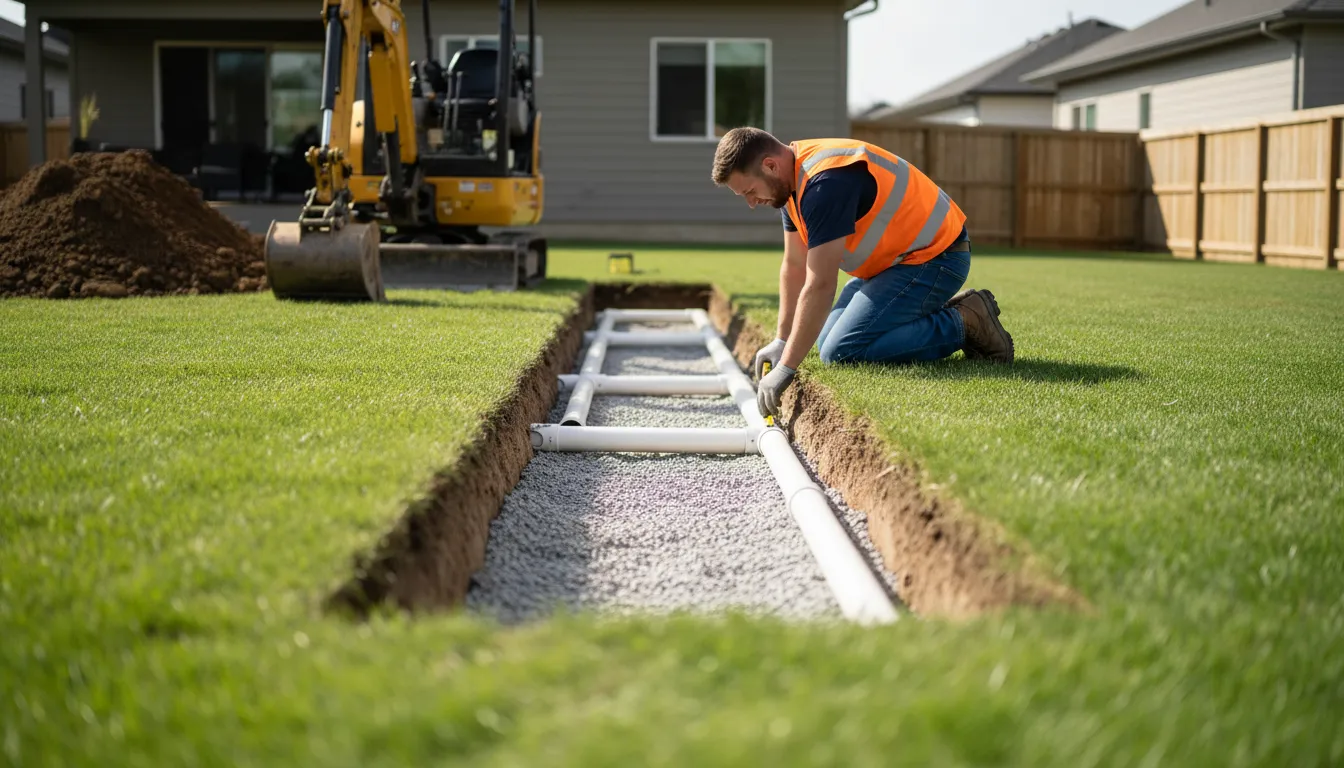
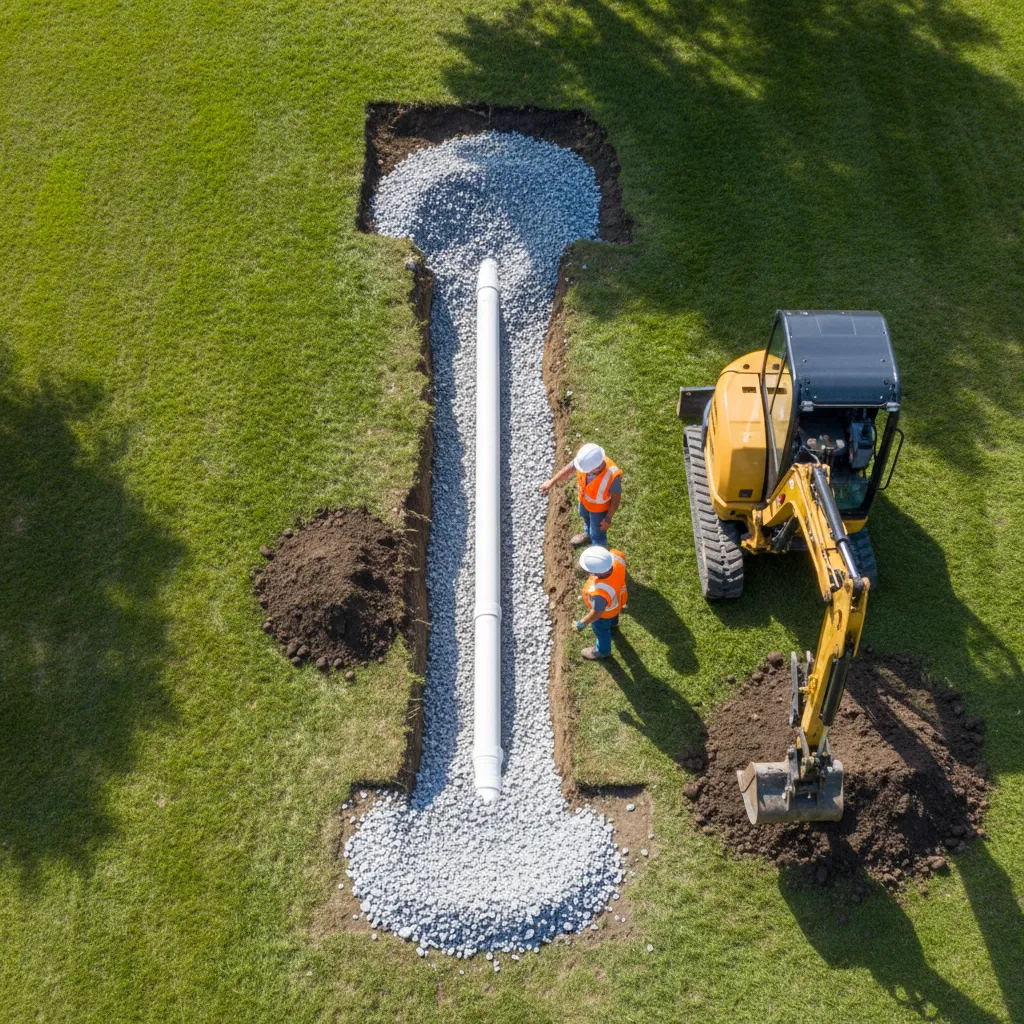
We bring in an excavator to remove the old perforated pipe, contaminated gravel, geotextile fabric, and the distribution box. All removed septage and materials get hauled off site for proper disposal.
New Drain Field Installation
We trench to the engineered depth, lay fresh aggregate, position new perforated pipe and laterals, connect the header pipe to a new D-box, and wrap the assembly in geotextile fabric. Every fitting and connection gets inspected before backfill.
Backfill, Grading, and Final Inspection
We backfill the trenches in lifts, compact the soil to specification, and grade the surface for proper drainage away from the field. The county inspector verifies compliance, and we walk you through the completed system.
Brands We Use
Drain field replacement demands materials that resist corrosion, handle continuous effluent exposure, and last for decades underground. Action Septic Service installs products from these top-rated manufacturers:







We select each component based on your soil type, system design, and local code requirements.
Other Services
Drain field replacement
Leach field replacement
Septic absorption field installation
Replace drain field
New drain field installation
Failing septic field repair
Drain field installation cost
Leach field install service
Perforated pipe and gravel bed replacement
Septic drain field replacement near me
Residential leach field replacement
Distribution box and lateral replacement
Professional drain field replacement
Absorption field replacement service
Septic system drain field excavation
FAQs About Drain Field Replacement
What is drain field replacement?
Drain field replacement is the complete removal of a failing leach field – including perforated pipes, gravel bed, distribution box, and laterals – and the installation of a new absorption field designed to properly filter and disperse effluent into the surrounding soil.
When does a drain field need to be replaced?
A drain field needs replacement when the soil becomes permanently saturated, the biomat layer clogs the gravel bed beyond remediation, pipes collapse or corrode, or a dye test confirms that effluent is surfacing or reaching groundwater. Most conventional drain fields last 20 to 30 years before they require full replacement.
Why can't a failing drain field just be repaired?
Once the soil beneath the trenches loses its ability to percolate wastewater – typically from years of biomat accumulation or compaction – no amount of jetting, snaking, or enzyme treatment will restore adequate drainage. The contaminated aggregate and soil must be excavated and replaced with fresh materials in properly engineered trenches.
How long does drain field replacement take?
Most residential drain field replacements take three to five working days from excavation through final grading. Permitting can add one to three weeks depending on your county’s review timeline. Action Septic Service handles the permit process so you don’t have to track it yourself.
Can I choose where the new drain field goes?
Location depends on soil test results, perc test data, setback distances from wells and property lines, and available space. If your property has a designated reserve area, we’ll test that site first. Our team works with you and the local health department to find the best qualified location.
Does homeowner's insurance cover drain field replacement?
Standard homeowner’s policies rarely cover septic system components. Some policies may cover damage caused by a sudden event but not gradual failure. We recommend checking with your insurance provider before scheduling work. Action Septic Service provides detailed invoices that document the scope of replacement for any claim you choose to file.
Ready to Schedule Your Drain Field Replacement?
Call now for fast, professional service – available 24/7 across all 50 states.