Residential Septic System Design
Professional septic system design tailored to your property, soil conditions, and household needs – we serve homeowners nationwide and help you access dependable onsite wastewater solutions
Licensed & Insured
NOWRA certified technicians on every job
24/7 Emergency Service
Available whenever you need us most
Nationwide Coverage
Serving all 50 states across the USA
Transparent Pricing
Flat rates with no hidden fees
Get Immediate Service
Speak directly with our team – no automated systems
24 Hours – 7 Days a Week
5 Highlights of Residential Septic System Design
Site specific engineering
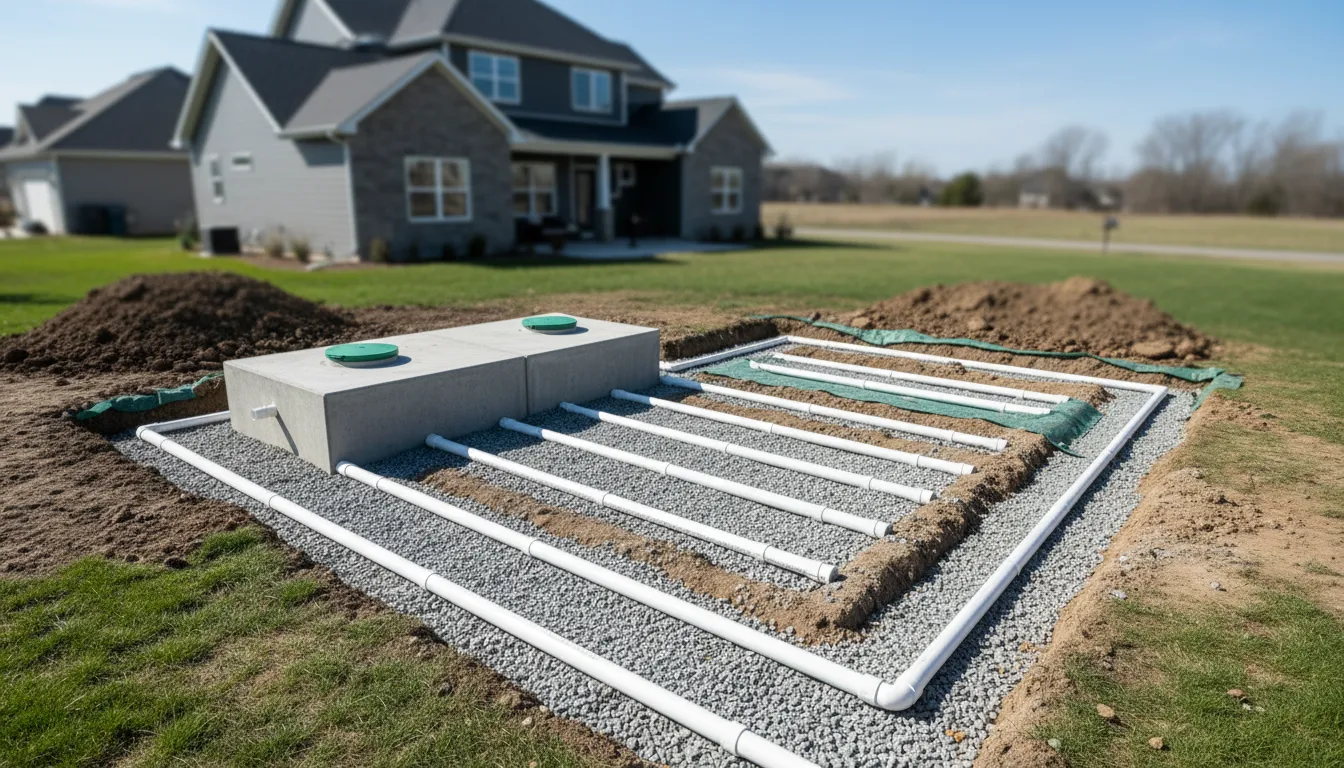
Every residential septic system design starts with a thorough site evaluation, including a percolation test, soil profile analysis, and topographic survey to determine the best placement for your septic tank, distribution box, and drain field on your property.
Code compliant plans
Our design team produces permitted, code compliant septic system plans that satisfy local health department requirements, setback distances from wells and property lines, well water protection, and state environmental regulations before any excavation begins.
Accurate hydraulic sizing
We calculate design flow based on bedroom count, daily gallons per day estimates, and hydraulic loading rate to size your tank capacity, absorption field, and lateral lines for reliable long term performance.
Soil matched absorption systems
Whether your lot has sandy, loamy, clayey, or silty soils, we design the right soil absorption system — conventional trench, mound system, chamber system, or pressure distribution system — matched to your measured perc rate and water table depth.
Complete documentation
You receive a full set of deliverables: site plan, as built drawing, soil test results, septic permit application, and a reserve area designation for future replacement, giving you a permanent record of your system layout.
Need Immediate Septic Service?
Our team is standing by to help – same week appointments available.
Why Choose Our Residential Septic System Design
Residential septic system design is the foundation of every functioning onsite wastewater treatment installation. Get it wrong, and you face drain field failure, groundwater contamination, or costly replacement within a few years. Get it right, and your system treats wastewater quietly underground for decades while helping prevent environmental damage and property issues.
Action Septic Service employs licensed installers and works alongside certified soil scientists and environmental engineers who specialize in subsurface wastewater disposal. We don’t guess at soil conditions. We test them. Every perc rate, soil horizon, and restrictive layer gets documented before we draft a single line on your site plan.
Our team has designed conventional gravity fed systems, pressurized dosing configurations, mound systems for high water table lots, and advanced aerobic treatment units for properties with challenging soil permeability. We’ve permitted residential septic designs across a wide range of lot sizes, slopes, and regulatory jurisdictions.
We stand behind our work. Every design we produce carries our professional certification and meets or exceeds local code requirements. If the health department requests revisions during the permit review, we handle those at no additional charge. We offer professional design services to homebuilders, property developers, and homeowners building on rural lots who need a qualified, trusted partner for their septic system design from first soil boring to final permit approval.

States Served Nationwide
Emergency Availability
Licensed & Insured
Hidden Fees – Ever
Signs You Need Residential Septic System Design
Residential septic system design isn’t just for new construction. Several situations call for a professional design or redesign of your onsite wastewater system. Here are five scenarios where you need expert help.
You're building a new home on undeveloped land:
No municipal sewer connection means you need a permitted septic system before the building department issues your construction permit. A soil test and percolation test must come first. Then a licensed designer engineers the tank size, drain field layout, and pipe routing based on your home’s projected daily flow and the site’s absorptive capacity.
Your existing system has failed:
Soggy ground over the leach field, sewage surfacing in the yard, or persistent backflow into household plumbing all signal drain field failure. A failed absorption field often requires repair or a completely new residential septic system design using the designated reserve area or an alternative technology like a mound system or drip irrigation system.
You're adding bedrooms or expanding your home:
Bedroom count directly determines design flow in gallons per day. Adding a bedroom, an accessory dwelling unit, or converting a basement into living space can push your current tank capacity and hydraulic loading rate beyond their rated limits. You’ll need a redesign to upsize the septic tank, pump chamber, or lateral lines.
Your property has changed:
Grading, new construction, tree roots encroaching on lateral lines, or changes to surface water drainage patterns can alter how effluent disperses through the soil absorption system. A new topographic survey and updated site evaluation will reveal whether your current design still functions as intended.
The health department requires it:
Property transfers, real estate transactions, and code enforcement actions sometimes trigger mandatory septic inspections. If your system doesn’t meet current standards, the health department may require a new permitted design before you can sell, occupy, or renovate the property – whether newly owned or long held.
Licensed & Bonded
Full compliance in all 50 states
Detailed Reports
Complete documentation every visit
Flat Rate Pricing
No hidden fees or surprises
Fast Scheduling
Same week appointments available
Our Residential Septic System Design Process
Residential septic system design follows a structured sequence. Each step builds on the last, and skipping any of them creates risk. Here’s how Action Septic Service handles every project.
Initial consultation
We discuss your project scope, property details, bedroom count, and any known site constraints like steep slopes, high water tables, or nearby wells. This conversation shapes the entire design approach.
Site evaluation and soil testing
Our soil scientist excavates test pits to examine the soil profile, identify each soil horizon, and locate bedrock or saturated layers. We conduct a percolation test to measure the perc rate in minutes per inch. We also complete a topographic survey to map elevations, setback distances, and existing structures.
System selection
Based on soil permeability, lot size, slope, and daily flow requirements, we select the appropriate system type. Options include conventional gravel bed trenches, gravelless chamber systems, pressure distribution systems, mound systems, or aerobic treatment units.
Engineering and drafting
We calculate tank capacity, retention time, hydraulic loading rate, and absorption rate. We draft the site plan showing septic tank placement, distribution box location, lateral line routing, building sewer connection, and the designated replacement area.
Permitting and approval
We submit the completed residential septic system design package to the local health department, including soil test data, the site plan, and the septic permit application form. We coordinate directly with regulators through approval.
Construction support
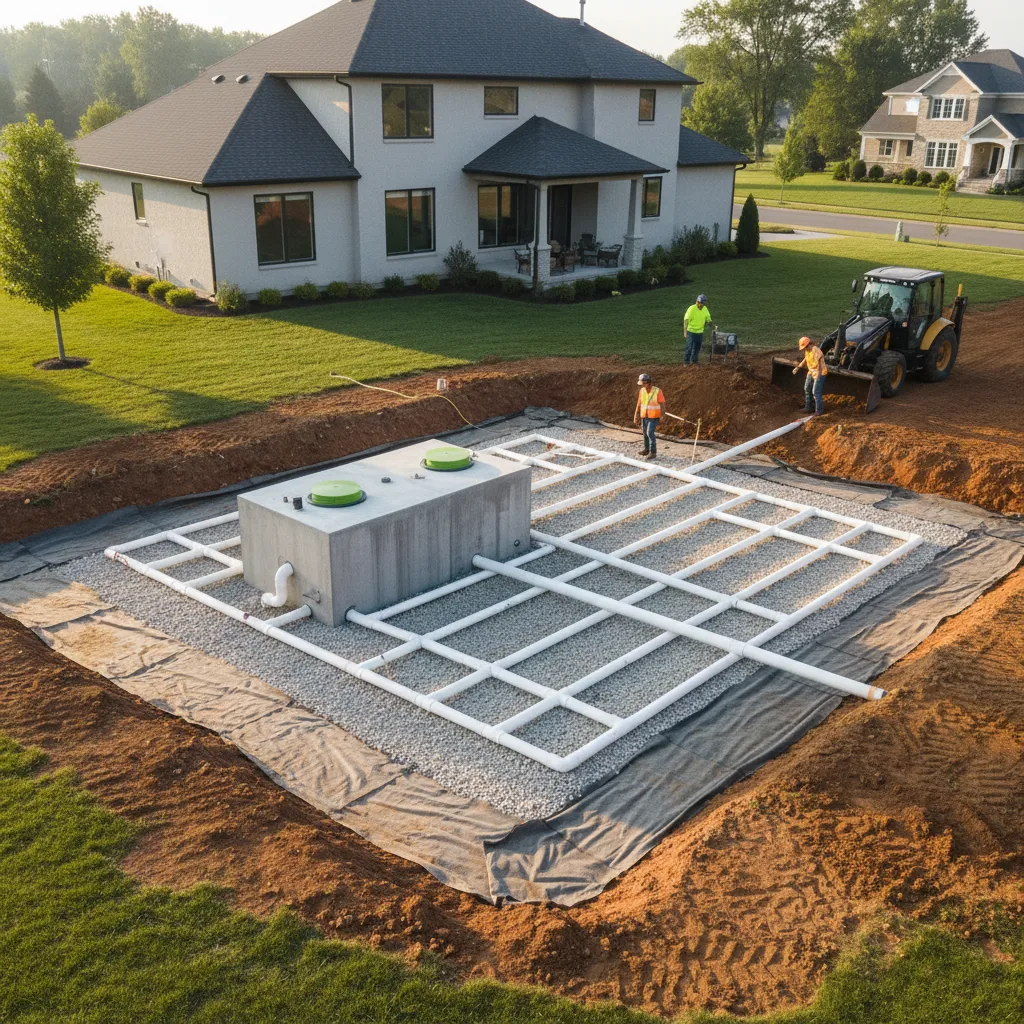
During installation, we verify that excavation depths, trench dimensions, gravel aggregate, geotextile fabric placement, and pipe grades match the approved design.
Brands We Use
Residential septic system design specifies real products. The components we call out in our plans come from manufacturers with proven track records in the onsite wastewater industry. Here are ten brands we regularly specify and install.








Using certified, name brand equipment protects your investment and ensures replacement parts remain available for the life of your system.
Other Services
Residential septic system design
Home septic design
Septic tank sizing for homes
Septic system design service
Onsite wastewater system design
Soil percolation test for septic
Septic design and permitting
Septic plan engineering
Drain field layout residential
Custom septic system design
Residential wastewater design
Septic permit application process
New septic system design
Septic field design residential
Hydraulic loading rate calculation
FAQs About Residential Septic System Design
What is residential septic system design?
Residential septic system design is the engineering process of planning an onsite wastewater treatment system for a home. It includes soil testing, site evaluation, system selection, hydraulic calculations, drafting a site plan, and obtaining a septic permit from the local health department. The finished design specifies tank capacity, drain field dimensions, pipe routing, and setback distances.
When do I need a new septic system design?
You need a new design when building a home on a lot without municipal sewer, when your existing drain field has failed and requires replacement, when you’re adding bedrooms that increase daily flow, or when the health department mandates a system upgrade during a property transfer or code enforcement action.
Why does soil testing matter for septic design?
Soil testing determines how quickly effluent percolates through the ground. The perc rate, soil texture — sandy, loamy, clayey, or silty — and depth to the water table or bedrock dictate which type of absorption field will work on your property. Without accurate soil data, a designer can’t calculate the correct hydraulic loading rate or absorption rate.
How long does the septic design process take?
Most residential septic system designs take two to four weeks from initial site evaluation through permit submission. Soil testing and the topographic survey typically happen within the first week. Drafting and engineering take another week. Health department review timelines vary by jurisdiction but generally run one to three weeks.
Can I design my own septic system?
Most states require a licensed installer, certified soil scientist, or environmental engineer to design and submit septic system plans. DIY designs rarely pass health department review because they lack the required soil test data, professional certification, and code compliant engineering calculations. Hiring a qualified septic contractor like Action Septic Service saves time and prevents permit denials.
How much does residential septic system design cost?
Design costs depend on lot complexity, soil conditions, system type, and local permitting fees. A straightforward conventional system design on a flat lot with permeable soil costs less than a mound system or pressure distribution design on a sloped lot with restrictive soils. Pricing varies by project, so contact Action Septic Service for a project specific estimate.
Ready to Schedule Your Residential Septic System Design?
Call now for fast, professional service – available 24/7 across all 50 states.