Drain Field Expansion
Professional drain field expansion services to increase your septic system’s capacity and ensure proper wastewater absorption for a fully functioning system
Licensed & Insured
NOWRA certified technicians on every job
24/7 Emergency Service
Available whenever you need us most
Nationwide Coverage
Serving all 50 states across the USA
Transparent Pricing
Flat rates with no hidden fees
Get Immediate Service
Speak directly with our team – no automated systems
24 Hours – 7 Days a Week
5 Highlights on Drain Field Expansion
Increased Absorption Capacity
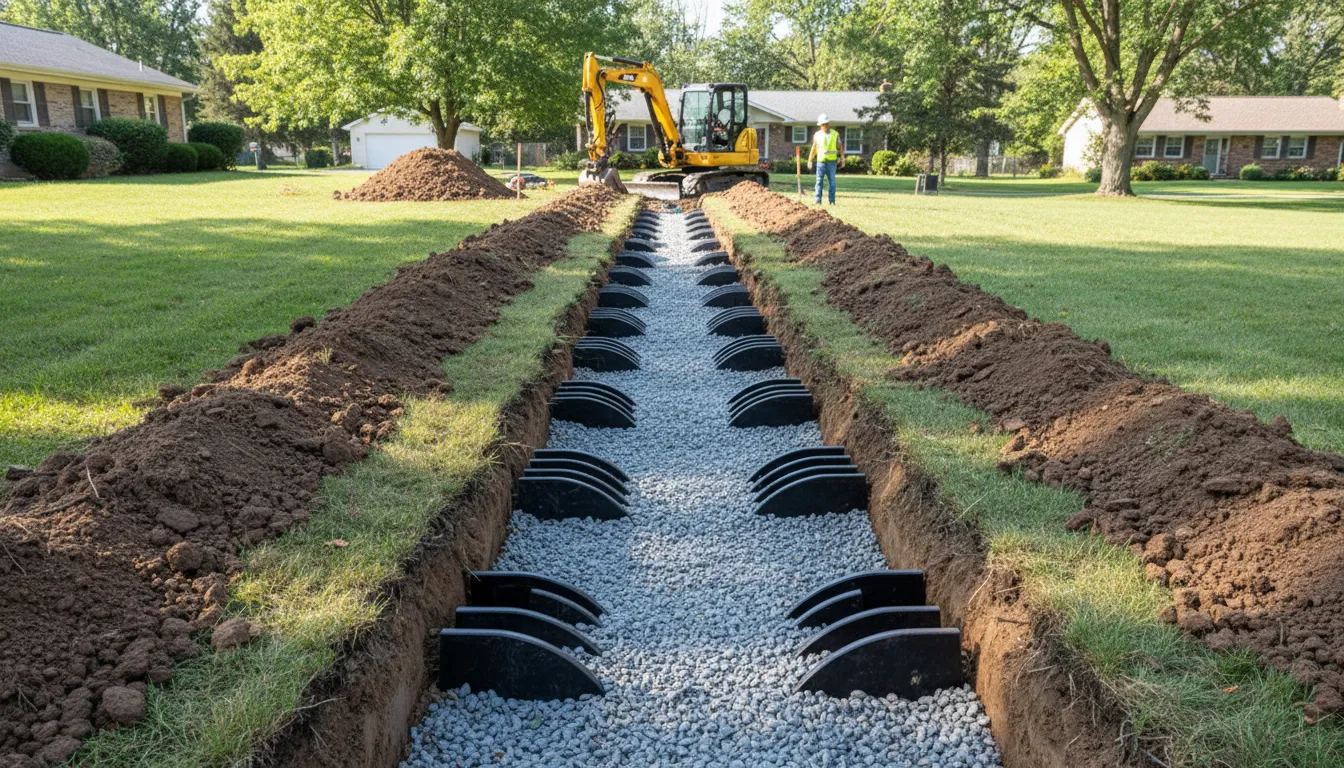
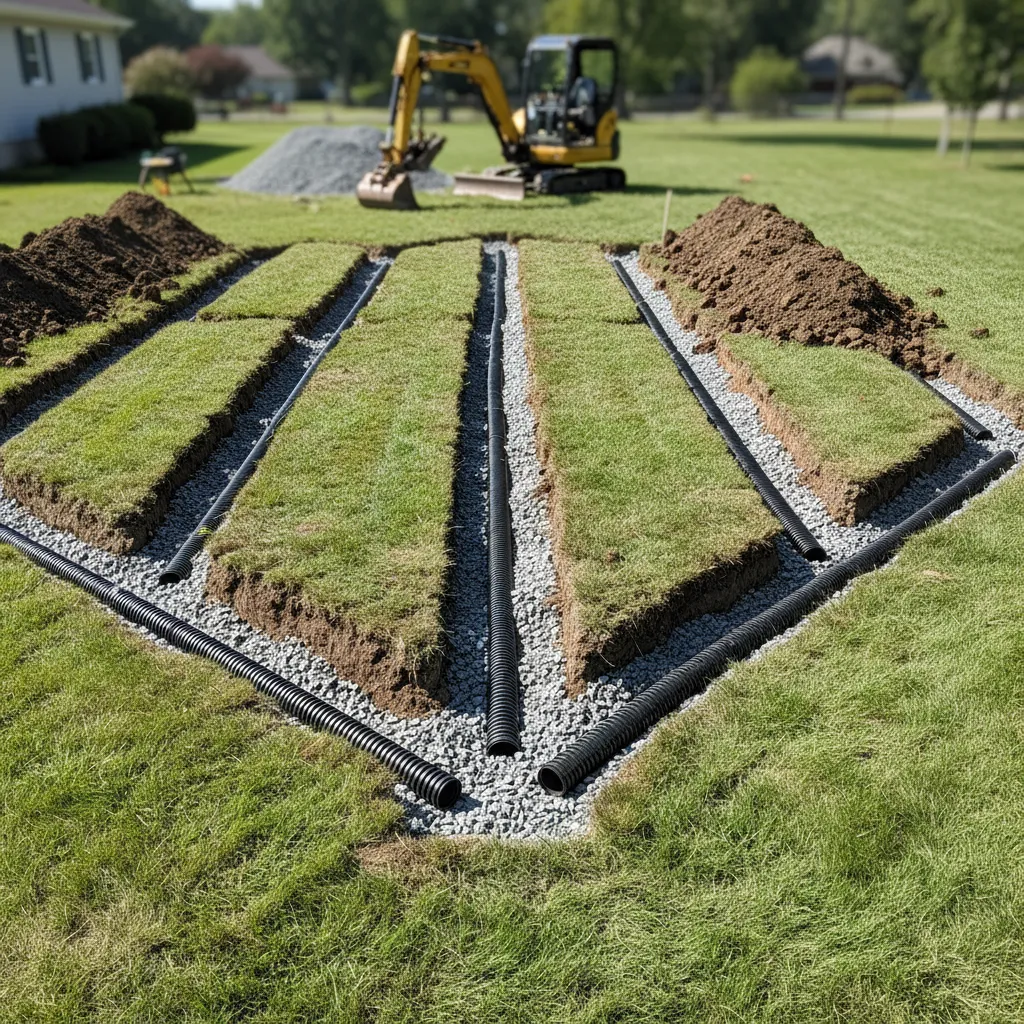
Our drain field expansion service adds new lateral lines, percolation trenches, and gravel beds to your existing leach field. We fill each trench with washed stone and properly designed distribution networks. This gives your septic system the additional square footage it needs to properly filter and distribute effluent into the surrounding soil.
Compliant Permitting and Soil Testing
We handle every perc test, soil evaluation, and health department permit before breaking ground. Our team will identify the exact soil type on your property and complete the required form for each permit application. Each expanded drain field meets local setback distance requirements, code compliance, and groundwater protection standards.
Engineered Distribution Systems
Our crews install new distribution boxes, perforated pipe networks, and header pipe connections that evenly dose effluent across the expanded absorption field. We control effluent flow using pressure dosing systems and gravity fed configurations depending on site conditions
Reserve Area Activation
Most properties have a designated replacement area or reserve area set aside during the original system installation. We survey the site, handle all digging and excavation, and activate that reserve area as part of your drain field expansion project.
Minimal Property Disruption
We use compact excavators, trenchers, and specialized equipment to extend your leach field with precision. Backfill, grading, compaction, and landscaping restore your yard and grass to a clean, finished condition once the expanded drain field is operational.
Need Immediate Septic Service?
Our team is standing by to help – same week appointments available.
Why Choose Our Drain Field Expansion Service
Drain field expansion is a specialized service that demands accurate soil analysis, precise excavation, and a thorough understanding of subsurface wastewater treatment. Action Septic Service has performed hundreds of successful leach field expansions across residential and commercial properties, working with every soil type from sandy loam to heavy clay. Our team holds current certifications and maintains direct relationships with county health departments to deliver prompt permitting and ensure long-term system performance.
We don’t subcontract the work. Our own licensed technicians operate every backhoe, trencher, and compactor on your job site. From plumbing connections to backfill operations, that means one crew, one point of contact, and full accountability from the initial site survey through final inspection.
Every drain field expansion project includes a written scope of work, an exact price estimate, and a completion timeline before we start. We stand behind our installations with a workmanship guarantee that covers pipe connections, distribution box fittings, and aggregate placement. You get lasting value from work done right the first time.
Action Septic Service also provides post expansion monitoring and future maintenance guidance. We’ll return to inspect your new lateral lines, check effluent levels in the pump chamber, and confirm that the expanded absorption field is percolating at the correct rate. A properly maintained drain field lasts for decades, and you get a trusted, qualified partner who stays involved well after the trenches are backfilled.
States Served Nationwide
Emergency Availability
Licensed & Insured
Hidden Fees – Ever
Signs You Need Drain Field Expansion
Drain field expansion becomes necessary when your existing leach field can no longer absorb the volume of effluent your household or business produces. The system struggles to treat and manage waste effectively. Here are five signs that your system needs more capacity.
Ponded Water Over the Drain Field:
Standing water or soggy patches directly above your lateral lines indicate a saturated absorption field. This is a clear sign of a serious issue. The soil and biomat layer have reached their filtration limit, and the damaged drain field cannot recover on its own. An expanded drain field adds fresh percolation trenches with clean aggregate and geotextile fabric to fix drainage and restore proper function.
Slow Drains and Toilet Backups:
When every fixture in the building drains slowly at the same time, the problem usually sits downstream in an overloaded leach field rather than in a single clogged pipe or sewer line. Simple drain cleaning will not solve it. The septic tank fills because effluent has nowhere to go, and waste starts backing up into the home. Expanding the drain field relieves that hydraulic bottleneck.
Septic Tank Pumping More Frequently:
A tank that needs desludging every year instead of every three to five years is compensating for a failing drain field. The effluent backs up, solids accumulate faster, and your septic hauler visits more often. Expanding the drain field corrects the cycle, helps you avoid repeated service calls, and can save thousands in long-term pumping costs. Proper expansion will prevent this pattern from continuing.
Property Additions or Increased Occupancy:
A new bedroom, bathroom, or accessory dwelling unit increases daily wastewater flow. Your original drain field was sized for the original structure. If you plan to build an addition, the health department will typically require appropriate drain field expansion before issuing a building permit for the project.
Strong Sewage Odor Near the Leach Field:
Foul smells at ground level mean effluent is surfacing instead of percolating downward through the soil profile. Shallow lateral lines may be overwhelmed, and the existing system cannot remove waste efficiently. Expanding the drain field distributes effluent across a wider area, eliminating surface discharge and protecting your property from the odor that comes with it.
Licensed & Bonded
Full compliance in all 50 states
Detailed Reports
Complete documentation every visit
Flat Rate Pricing
No hidden fees or surprises
Fast Scheduling
Same week appointments available
Our Drain Field Expansion Process
Drain field expansion follows a structured sequence of steps that protects your property and satisfies regulatory requirements at every stage.
Site Survey and Soil Evaluation
We survey the property to locate the existing septic tank, distribution box, and lateral lines. A soil test and perc test determine the percolation rate, water table depth, and soil composition in the proposed expansion area. We find the acceptable range for each measurement. Sandy, loamy, and gravelly soils each require different trench designs.
System Design and Permitting
Our team designs the expanded leach field layout, specifying new lateral line lengths, trench depths, aggregate volumes, and pipe diameters. We submit the engineered plan to the local health department and secure the required permit so your project is ready to proceed.
Excavation and Trenching
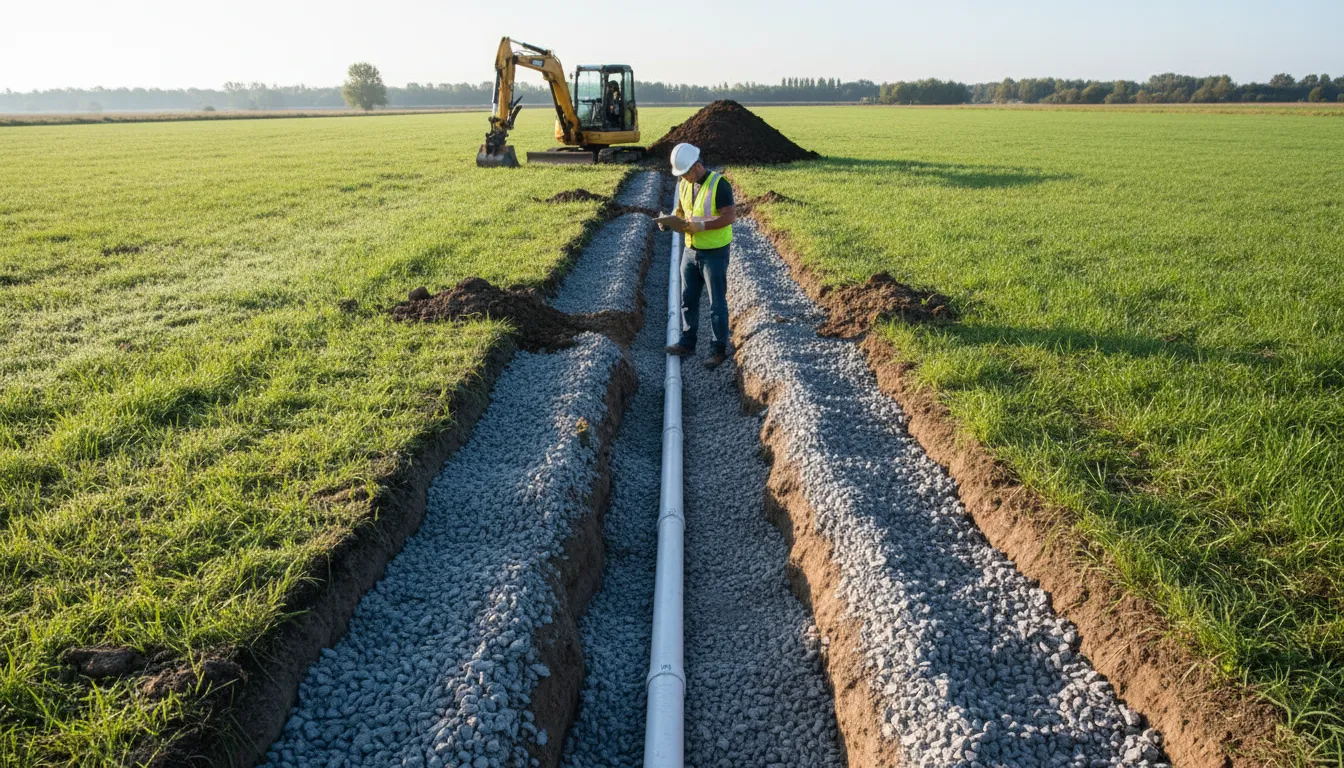
Crews excavate new percolation trenches using a trencher or compact excavator. We grade the trench bottoms to the correct slope, lay geotextile fabric, and place washed gravel or chambered infiltrator units. New drain fields and leach lines are positioned for optimal effluent distribution.
Pipe Installation and Connection
We install perforated PVC pipe in each new trench, connect them to a new or upgraded distribution box, and tie the entire network back to the existing septic tank outlet. Each sewer pipe segment is installed with watertight fittings. Float switches and dosing chambers are added when pressurized distribution is required. If needed, line replacement for damaged sections is completed at the same time.
Backfill, Compaction, and Inspection
We backfill the trenches with approved aggregate and topsoil, compact the surface, and schedule the final health department inspection. Once the inspector signs off, your expanded drain field is active and fully operational, ready to handle treated effluent at the increased capacity.
Brands We Use
Drain field expansion requires components built to last decades underground. Action Septic Service installs products from these trusted manufacturers.







Every product we install carries the manufacturer’s warranty.
Other Services
Drain field expansion
Leach field expansion
Extend septic drain field
Expand drain field
Enlarge absorption field
Add lateral lines to septic
Drain field expansion service
Septic field expansion
Increase leach field capacity
Residential drain field expansion
Expand leach field system
New percolation trenches
Drain field expansion cost
Drain field addition
Septic system capacity upgrade
FAQs About Drain Field Expansion
What is drain field expansion?
Drain field expansion is the process of adding new percolation trenches, lateral lines, and distribution piping to an existing leach field. The goal is to increase the total absorption area so your septic system can handle a greater volume of effluent. The benefits include improved drainage, reduced backups, and extended system lifespan. It’s a permanent upgrade to your wastewater treatment infrastructure.
When should I expand my drain field?
You should expand your drain field when you notice ponded water over the leach field, experience frequent backups, or plan to add bedrooms or bathrooms to your property. A failing perc test or a health department notice about an overloaded system also signals that expansion is overdue. In some cases, expansion is the best option to avoid a more costly full replacement.
Why can't I just repair the existing drain field?
Repair works when a single lateral line is clogged or a distribution box has failed. Routine maintenance, cleanout of roots, or fixing a damaged sewer connection can resolve isolated problems. If the entire absorption field is saturated and the soil’s biomat layer is too thick to remediate, the system needs more square footage. In these cases you cannot simply replace one component. Expansion gives effluent fresh soil to percolate through.
How long does a drain field expansion take?
Most residential drain field expansion projects take three to five working days from excavation through final inspection. Permitting can add one to four weeks depending on your county health department’s review timeline and current application rates. We answer your questions throughout the process and coordinate the schedule so there’s no gap between permit approval and construction.
Can I expand my drain field on any property?
Not every lot qualifies. The property needs adequate space outside existing setback distances from wells, property lines, and structures. You cannot simply dump effluent into unsuitable areas. Soil conditions must support percolation. We perform a full site survey and perc test before confirming that your property can accommodate a drain field expansion.
Does drain field expansion require a permit?
Yes. Every jurisdiction we serve requires a health department permit before any septic work begins. Action Septic Service prepares the application, submits the engineered design, and schedules the required inspections on your behalf.
Ready to Schedule Your Drain Field Expansion?
Call now for fast, professional service – available 24/7 across all 50 states.