Drain Field Restoration
Professional drain field restoration that returns your failing leach field to full function – reliable repairs without expensive full replacement
Licensed & Insured
NOWRA certified technicians on every job
24/7 Emergency Service
Available whenever you need us most
Nationwide Coverage
Serving all 50 states across the USA
Transparent Pricing
Flat rates with no hidden fees
Get Immediate Service
Speak directly with our team – no automated systems
24 Hours – 7 Days a Week
5 Highlights on Drain Field Restoration
Terralift soil fracturing
Our crews use pneumatic Terralift equipment to fracture compacted soil around lateral lines, breaking up biomat buildup and restoring percolation rates across your entire absorption field. This method works by using specialized equipment to inject high-pressure air underground, reducing clogging and allowing your drain fields to properly absorb waste again.
Bioaugmentation treatment
We introduce concentrated bacterial and enzymatic additives directly into the drain field to digest grease laden biomat, decompose organic solids, and rejuvenate saturated soil profiles. These biological treatments thrive in the existing underground environment, creating a long-term rejuvenation process that works to treat and clean contaminated soil without the need to dig or remove materials.
Camera inspection and diagnosis
Every drain field restoration begins with a thorough camera inspection of distribution boxes, header pipes, and perforated lateral lines to pinpoint clogged sections and confirm the scope of remediation. Our technicians check for damaged sewer pipe connections, crushed lines, and issues causing slow drainage to determine the exact situation and find what needs to be fixed.
Hydraulic load reduction
Our technicians assess your household water usage, inspect for backed up fixtures, and reconfigure dosing schedules or diversion valves to prevent overloaded conditions from recurring after restoration. Water conservation strategies and reducing hydraulic loads help ensure your system can handle the waste it receives without becoming overloaded.
Permit coordination
Action Septic Service handles all health department permit requirements, perc test documentation, and setback compliance so your restored leach field meets local and state onsite wastewater regulations. We obtain all appropriate approvals and ensure your property is protected with properly permitted work that meets all disposal and handling requirements.
Need Immediate Septic Service?
Our team is standing by to help – same week appointments available.
Why Choose Our Drain Field Restoration
Drain field restoration is a specialized service that demands hands on experience with soil science, wastewater hydraulics, and subsurface treatment systems. Action Septic Service has built a trusted reputation restoring failing absorption fields across residential and commercial properties. Our qualified technicians hold current certifications in onsite wastewater system repair, sewer line installation, and decentralized treatment design. We understand the impact a failing system has on your property and landscaping, and our goal is to save you the costs of full replacement whenever possible.
We don’t guess. We diagnose. Every project starts with soil profile analysis, effluent quality testing, and a full camera inspection of your distribution box and lateral lines. This data driven approach means we target the actual failure point – whether that’s biomat accumulation, compact clay layers, saturated gravel beds, or root intrusion into perforated pipes. We review all findings with you to create a clear restoration plan before any work is done.
Our drain field restoration work carries a written service guarantee. If your restored leach field doesn’t percolate within the parameters we establish during assessment, we return at no additional charge. We also provide a post restoration maintenance plan that includes scheduled pump outs, effluent filter cleaning, and bacterial treatment dosing to keep your system working properly and maintained for years. This care helps you avoid future issues and ensures the system can recover from normal use.
Action Septic Service operates a full fleet of vacuum trucks, hydrojetting rigs, and Terralift units. We’re not subcontracting your drain field restoration to someone else. Our expert crews handle every step from initial inspection through final grading and backfill. We use technology and minimal digging methods to deliver reliable results with reduced impact on your landscaping.
States Served Nationwide
Emergency Availability
Licensed & Insured
Hidden Fees – Ever
Signs You Need Drain Field Restoration
Drain field restoration becomes necessary when your leach field can no longer absorb and filter effluent at the rate your septic tank produces it. Here are five detailed warning signs that indicate your absorption field is failing and needs to be fixed.
Soggy ground over the drain field:
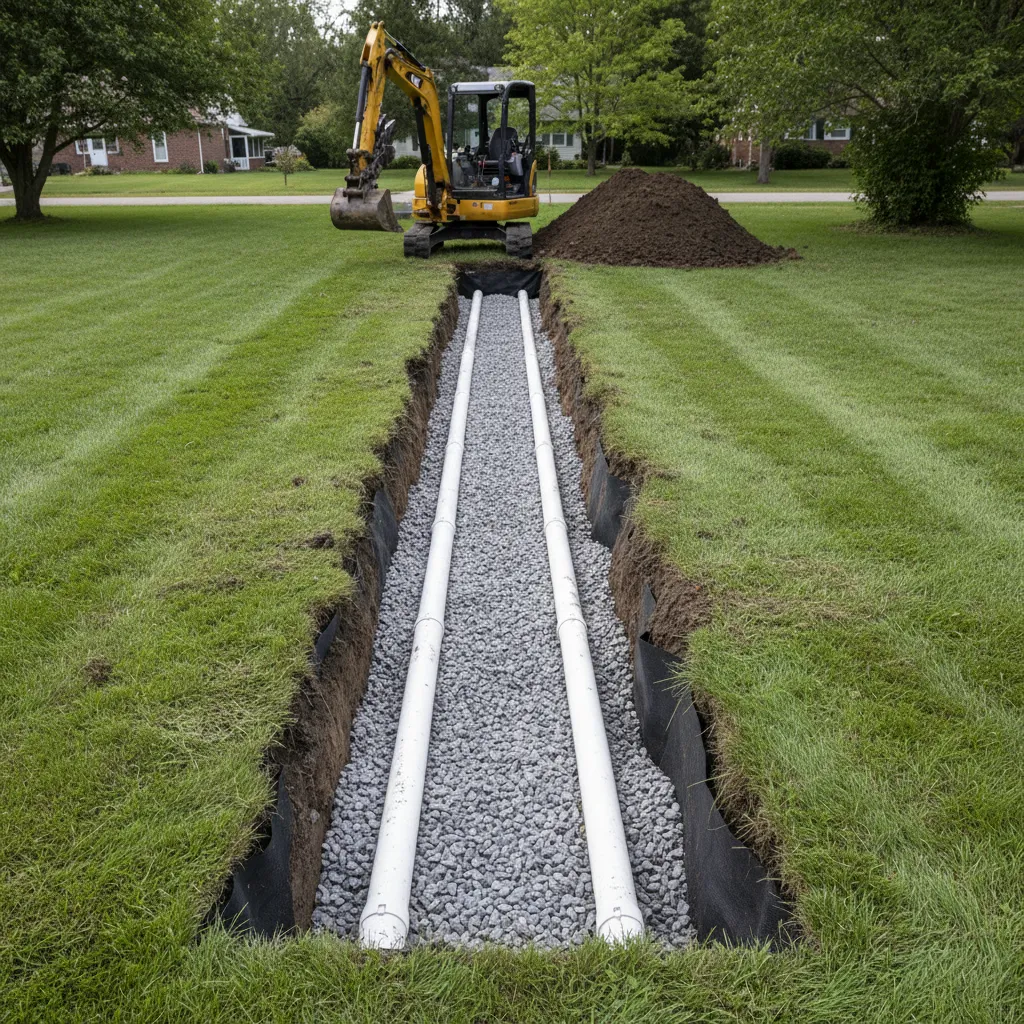
Waterlogged soil directly above your lateral lines signals that effluent isn’t percolating downward through the gravel bed and into the subsurface. You might notice standing water, spongy turf, or unusually green grass strips that follow the trench pattern of your leach field. This saturated condition means the soil has lost its absorptive capacity and may need digging to install new materials or direct intervention to open up flow pathways.
Sewage odor in the yard:
Foul, sulfurous smells near the drain field area indicate that anaerobic conditions have taken over. Biomat – a thick, sludgy bacterial layer – has likely sealed the soil interface around your perforated pipes, trapping septic gases that seep to the surface instead of dispersing through aerated soil. Storm water entering the system can make the situation worse by pushing waste toward the surface.
Slow drains and gurgling fixtures:
When every sink, shower, and toilet in the house drains sluggishly at the same time, the problem usually isn’t a single clogged pipe. It’s a backed up drain field that can’t accept more effluent. The waste has nowhere to go, so it stalls in the septic tank and backs pressure into your household plumbing. Running water becomes slow throughout the home, and the cause is often sewer lines connected to a failing leach field.
Effluent surfacing near the distribution box:
If you see grey or black liquid pooling around your D box or at the downslope end of your absorption field, the lateral lines are failing. Effluent is taking the path of least resistance – up and out – rather than infiltrating the surrounding soil. This form of release indicates that the shallow underground distribution network is not absorbing or treating the treated waste properly.
Septic alarm activating repeatedly:
A dosing chamber alarm or high water float switch that triggers frequently means your pump chamber is filling faster than the drain field can accept doses. The field is rejecting effluent, and the system is overloaded. When this happens, you need to request a professional inspection to understand the reason for failure and determine what steps are needed to resolve the issue.
Licensed & Bonded
Full compliance in all 50 states
Detailed Reports
Complete documentation every visit
Flat Rate Pricing
No hidden fees or surprises
Fast Scheduling
Same week appointments available
Our Drain Field Restoration Process
Drain field restoration is a multi step remediation process that Action Septic Service performs in a specific sequence to deliver lasting results. Each step is done using approved methods and appropriate materials to ensure the work is completed properly.
Full system pump out
We start by pumping the septic tank, dosing chamber, and distribution box completely. Desludging these components lets us inspect baffles, effluent filters, tee fittings, and outlet pipes for damage or blockage before we touch the drain field itself. The tank is pumped dry so we can check for damaged components that may need to be replaced or pull debris that has accumulated.
Camera inspection of lateral lines
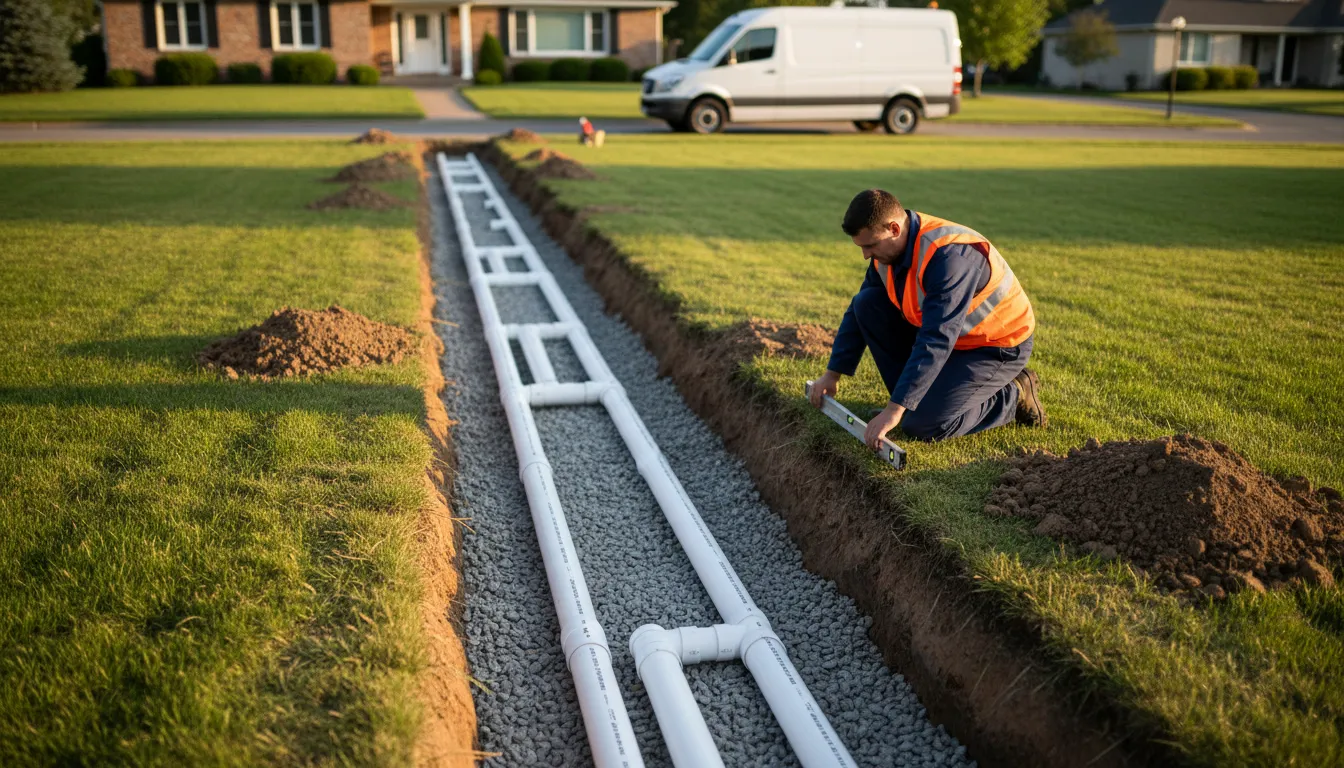
Our technicians feed a sewer camera through each perforated pipe in the leach field. We document biomat thickness, root intrusion, pipe collapse, and sediment accumulation. This inspection determines whether restoration is viable or if line replacement and replacing damaged sewer pipe sections is necessary. The camera helps us find the exact location of any issue.
Hydrojetting and backflushing
We jet high-pressure water through each lateral line to unclog perforations, flush accumulated solids back toward the distribution box for extraction, and restore flow capacity across the entire network of drainpipes. This clean and clear process uses specialized equipment to remove buildup causing blockages.
Terralift soil fracturing
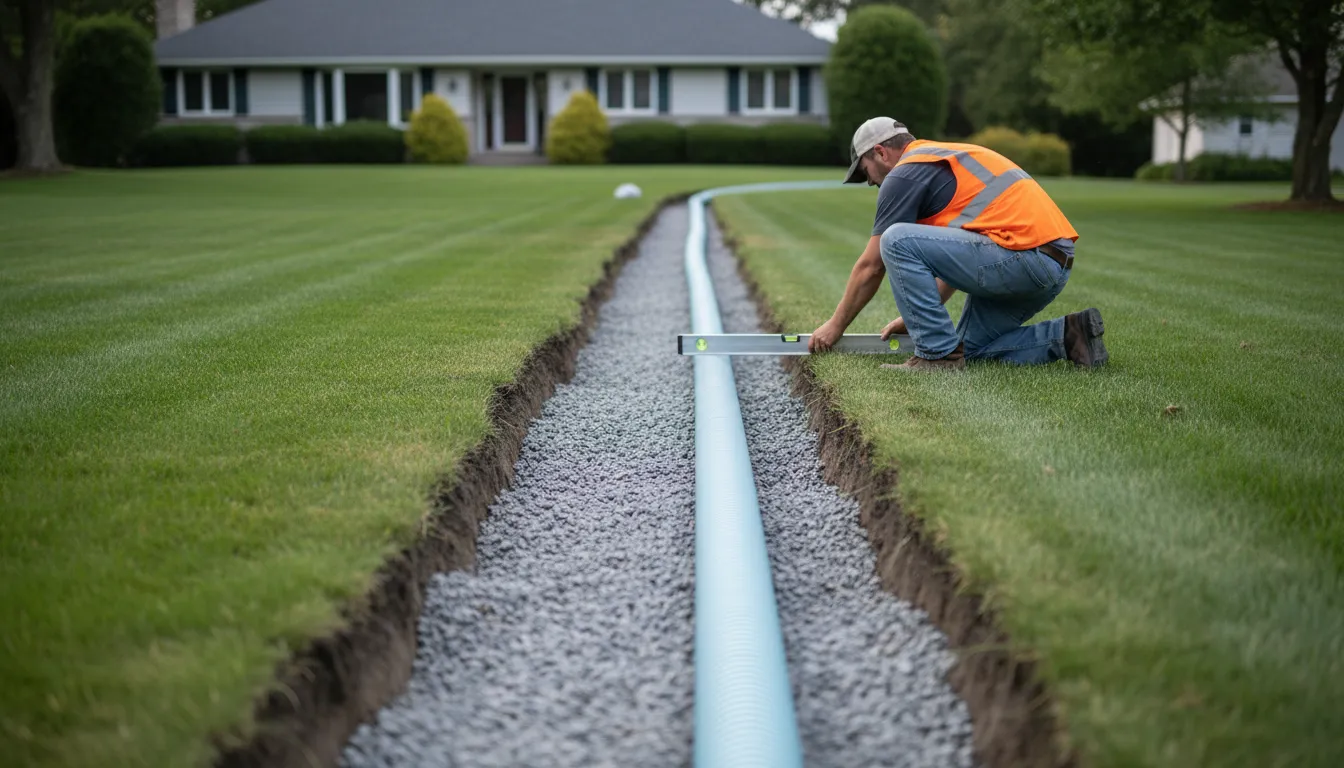
Our crew inserts the Terralift probe at intervals along each trench line and injects compressed air deep into the compacted soil. This fractures the biomat layer, aerates the surrounding earth, and restores the permeable pathways that allow effluent to percolate and disperse naturally. The process works to open up dry channels in the soil, reducing saturation and allowing the field to receive and release effluent properly.
Bioaugmentation and bacterial seeding
We dose the system with professional grade bacterial and enzymatic treatments that colonize the restored soil interface, digest remaining organic matter, and establish a healthy aerobic environment in the drain field. These treatments help ensure beneficial bacteria thrive in the existing soil to continue breaking down waste long after we leave.
System testing and grading
We run a controlled hydraulic load test, verify even distribution across all lateral lines, and confirm percolation rates. Any disturbed ground gets backfilled, graded, and compacted to proper elevation. Once the range of testing is complete and we confirm the system is ready and working, we install any needed access risers and ensure your property is ready to drive on if applicable.
Brands We Use
Drain field restoration requires professional grade equipment and treatment products. Action Septic Service uses only top rated, industry proven brands on every project.








All products we apply meet NSF and state health department standards for onsite wastewater treatment.
Other Services
Drain field restoration
Leach field restoration
Septic drain field repair
Drain field repair
Absorption field remediation
Failing leach field fix
Restore drain field
Rejuvenate leach field
Biomat removal drain field
Drain field remediation
Septic field restoration service
Terralift drain field treatment
Drain field restoration near me
Professional leach field restoration
Clogged drain field solution
FAQs About Drain Field Restoration
What is drain field restoration?
Drain field restoration is a professional remediation process that returns a failing or saturated leach field to functional condition. Technicians use a combination of hydrojetting, soil fracturing, bioaugmentation, and system reconfiguration to unclog perforated pipes, break apart biomat, and restore the soil’s ability to absorb and filter septic effluent. This method works to treat the existing underground system without the need to dump and replace the entire field.
When should I schedule drain field restoration?
Schedule a drain field restoration as soon as you notice soggy ground over the leach field, foul odors in the yard, slow drains throughout the house, or repeated septic alarm activations. Early intervention prevents complete field failure, which would require full excavation and full replacement at a much higher cost. Acting quickly can save you from needing expensive repairs or having the entire system replaced.
Why does a drain field fail?
A drain field fails when biomat accumulates on the soil interface around lateral lines, when the soil becomes compacted or waterlogged, or when the system receives more hydraulic load than it was designed to handle. Grease laden effluent, infrequent pump outs, and undersized septic tanks all accelerate drain field failure. Heavy loads from vehicles that drive over the field can also cause crushed pipes and compacted soil that prevents proper absorbing.
How long does drain field restoration take?
Most residential drain field restorations take one to two days. Larger commercial systems or severely clogged fields may require additional time for repeated Terralift treatments and extended bioaugmentation dosing cycles. The exact timeline depends on the situation and how much work is needed to get the system working again.
Can a completely failed drain field be restored?
It depends on the cause and extent of failure. If the perforated pipes are intact and the soil profile still has some permeability, restoration is usually successful. If pipes have collapsed or the water table has risen permanently into the trench zone, partial or full drain field replacement may be the only option. Action Septic Service provides an honest assessment before any work begins so you can understand what is needed and make an informed decision.
Does drain field restoration require a permit?
In most jurisdictions, yes. Health department permits are typically required for any septic system repair work that involves the drain field. Action Septic Service handles all permit applications and inspections as part of our restoration service so your project is done properly and meets all local regulations.
Ready to Schedule Your Drain Field Restoration?
Call now for fast, professional service – available 24/7 across all 50 states.