Grease Trap Pumping
Professional grease trap pumping keeps your commercial kitchen compliant, clean, and free from costly blockages. Our reliable team provides efficient grease collection services to help prevent plumbing issues and ensure your operations remain trouble-free.
Licensed & Insured
NOWRA certified technicians on every job
24/7 Emergency Service
Available whenever you need us most
Nationwide Coverage
Serving all 50 states across the USA
Transparent Pricing
Flat rates with no hidden fees
Get Immediate Service
Speak directly with our team – no automated systems
24 Hours – 7 Days a Week
5 Highlights on Grease Trap Pumping
Full FOG Removal
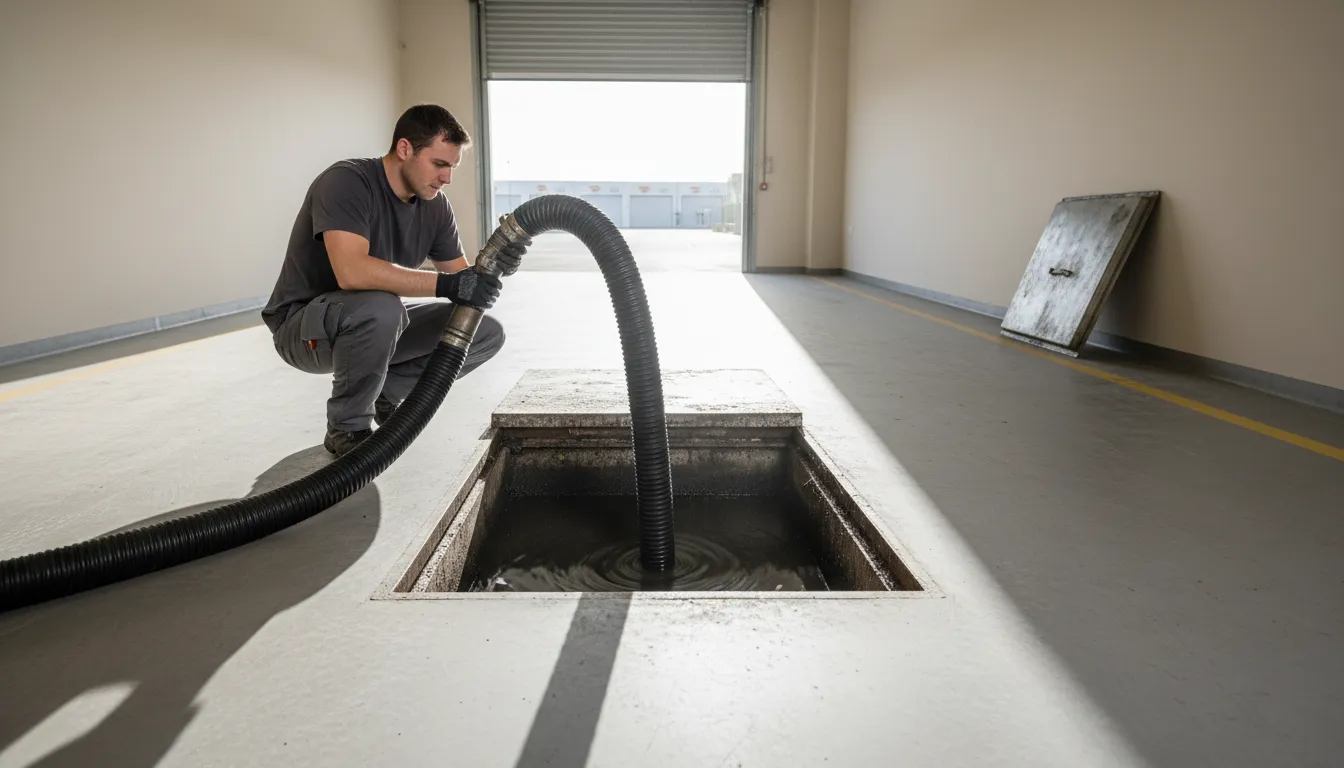
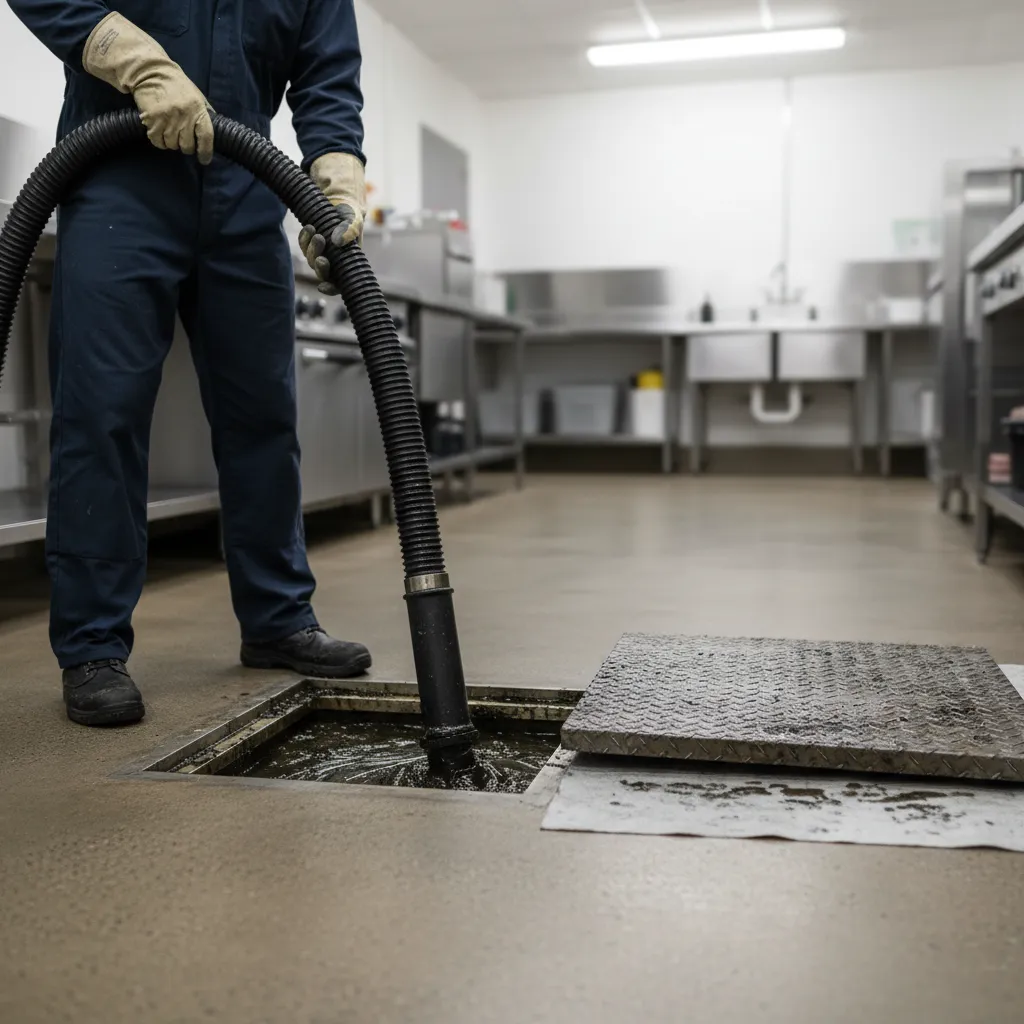
Our service trucks and vacuum equipment suction out all accumulated fats, oils, and grease from your interceptor, leaving the tank completely clean and watertight. We scrape and skim every baffle and interior wall, ensuring safe and environmentally responsible collection.
Compliant Disposal
We transport all grease waste and septage to licensed disposal facilities or a nearby processing plant for proper recycling. Every load meets EPA and local health department regulations. You receive a compliance report with each service visit.
Scheduled Pumping Programs
Action Septic Service sets up customized, routine pumping schedules tailored to your kitchen’s output volume. With our autopilot service approach, we track your collection schedule and maintenance log so you never worry about missed service dates. Regular maintenance prevents future problems.
Emergency Response
Backed up grease interceptor on a Friday night? Our support team responds to emergency calls, equipped to act quickly and address the affected area with heavy duty pump trucks ready to vacuum, jet, and restore flow before your next business day.
All Commercial Sizes
We serve customers with high capacity grease traps and small under sink interceptors alike at any location. Restaurants, hospitals, schools, hotels, and municipal kitchens all rely on our certified technicians for thorough grease trap pumping. We provide services to companies of all sizes.
Need Immediate Septic Service?
Our team is standing by to help – same week appointments available.
Why Choose Our Grease Trap Pumping
Grease trap pumping is a specialized service that demands licensed haulers, proper equipment, and strict regulatory knowledge. Action Septic Service brings all three to every job. Contact us to learn about our full range of grease collection services.
Our technicians are certified and trained specifically in grease interceptor maintenance. They understand the difference between a 50 gallon under sink unit and a 2,000 gallon in ground interceptor. That knowledge matters when determining pump frequency, access points, and disposal requirements to meet your specific needs.
We operate a distributed fleet of dedicated vacuum trucks equipped with hydro jetting systems. This means we don’t just pump the liquid. We scrape accumulated solids, flush inlet and outlet pipes, and clean baffles so your trap remains clean and functions at full capacity between service visits. Reducing grease buildup ensures your operations remain efficient.
Action Septic Service holds all required permits for grease waste hauling and disposal in your area. Established for over a decade, we have a growing base of satisfied customers. We maintain detailed records for every pumping event, providing documentation of volume removed, condition of the trap, and disposal destination. These records protect your business during health department inspections.
Our pricing is straightforward. No hidden fees for travel, disposal, or after hours calls. We offer basic service contracts and premium options with locked in rates for businesses that need quarterly, monthly collection, or biweekly grease trap pumping. Easy scheduling and a dedicated account manager who monitors your schedule and confirms every appointment in advance.
We stand behind our work with a satisfaction guarantee on every visit. Join the smart businesses already serving their customers with the best kitchen practices. Let us help you stay compliant.
States Served Nationwide
Emergency Availability
Licensed & Insured
Hidden Fees – Ever
Signs You Need Grease Trap Pumping
Grease trap pumping is overdue when your kitchen starts showing these five warning signs. Catching them early prevents expensive plumbing repairs and health code violations.
Slow Draining Sinks and Floor Drains:
When fats, oils, and grease accumulate past the trap’s working capacity, wastewater can’t flow freely through the outlet pipe. You’ll notice your three compartment sink takes longer to empty. Floor drains may pool with turbid, grease laden water during peak service hours. This buildup restricts flow through the baffle system and signals the trap needs immediate pumping. Washing large amounts of grease down the drain can lead to backups and costly downtime. Reduce the amount of FOG that enters your system with regular pumping.
Foul or Rancid Odors:
A properly maintained grease interceptor produces minimal smell. When putrid, sour odors drift into your kitchen or dining area, decomposing organic solids and rancid FOG have saturated the trap. The anaerobic bacteria breaking down this waste generate hydrogen sulfide gas. That smell won’t go away with cleaning products. This has a significant impact on your business. Only a full pump out eliminates the source.
Grease Visible in the Cleanout:
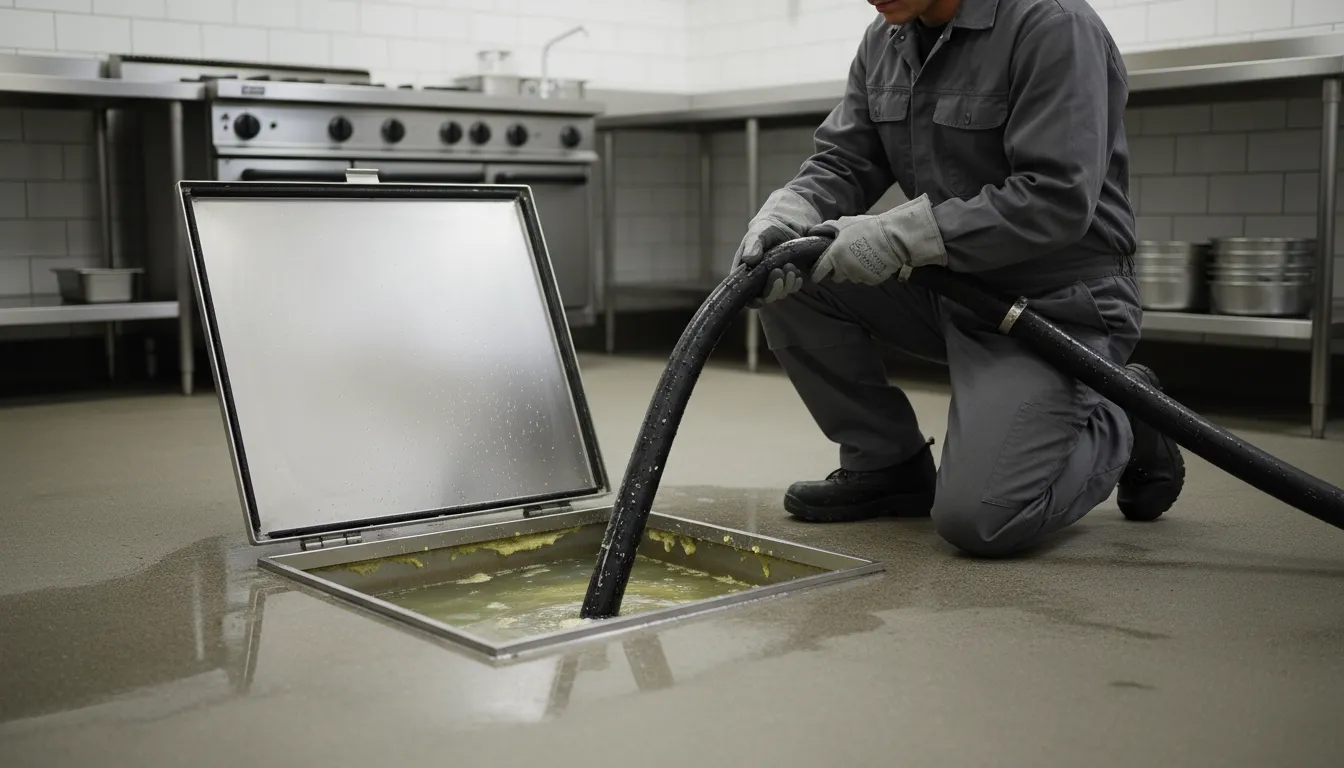
Open your trap’s access lid or cleanout port. If you see a thick scum layer covered by more than 25 percent of the liquid depth, the trap has exceeded its retention capacity. Pumping schedules vary by kitchen volume. Health codes in most jurisdictions mandate pumping before solids and grease reach this threshold. Getting ahead of this risk keeps your facility compliant.
Sewage Backup or Overflow:
Grease blockages in the inlet pipe, outlet pipe, or lateral lines cause raw wastewater to back up into sinks, floor drains, or even onto the kitchen floor. Overflows create an immediate health hazard and can trigger a shutdown order from your local health department, leading to potential damage and business closure. We provide rapid emergency service to minimize potential downtime. Overflow events require emergency grease trap pumping and a full line jetting.
Failed Health Inspection:
Inspectors check grease trap condition, maintenance logs, and pumping schedules. A missing or outdated compliance report, visible buildup, or corroded components will result in a citation. Failing to comply puts your business at risk. Scheduling preventive grease trap pumping on a regular cycle keeps your facility compliant and inspection ready, contributing to ensuring your business remains open and operational.
Licensed & Bonded
Full compliance in all 50 states
Detailed Reports
Complete documentation every visit
Flat Rate Pricing
No hidden fees or surprises
Fast Scheduling
Same week appointments available
Our Grease Trap Pumping Process
Grease trap pumping is a methodical process our technicians follow on every service call to deliver consistent, thorough results. Implementing best practices ensures quality work every time.
Inspection and Access
We locate your grease trap or interceptor, remove the access lid or riser cover, and visually inspect the scum layer, sludge depth, and baffle condition. We note any signs of corrosion, damage, or blockage before pumping begins.
Full Pump Out
Our vacuum truck connects to the trap and suctions all contents: liquid effluent, floating FOG, used cooking oil, and settled solids. We pump the unit completely empty, removing all kitchen waste. Nothing gets left behind.
Scraping and Cleaning
Technicians scrape the interior walls, baffles, and lid undersides to remove caked on grease residue. We flush the inlet pipe, outlet pipe, and any tee fittings with pressurized water to clear buildup from connected lines. This thorough clean up leaves your restaurant clean and helps decrease future accumulation.
Inspection and Documentation
With the trap empty, we inspect for cracks, corroded fittings, damaged baffles, and worn effluent filters. We photograph the interior and record the trap’s condition in your maintenance log. If components are still functional, you benefit from extended service life.
Reassembly and Reporting
We replace the access lid, seal all openings, and confirm the trap is watertight. You receive a detailed compliance report listing the date, volume pumped, trap condition, and recommended next service date. We can send this report via email upon request. All records are protected and reserved for your files. This document satisfies health department record keeping requirements. In short, we set you up for success.
Disposal
All collected grease waste travels in our permitted pump trucks to a licensed disposal facility or treatment plant. Our oil removal services and oil disposal process follow strict guidelines. Easy transport in our specialized vehicles means reducing turnaround time. We handle every step of the hauling chain so your business stays fully compliant.
Brands We Use
Grease trap pumping requires dependable equipment and quality replacement parts. Action Septic Service trusts these top rated brands for every job:







All equipment undergoes regular calibration and safety checks.
Other Services
Grease trap pumping
Grease interceptor pumping
FOG removal service
Grease trap cleaning
Grease trap maintenance
Commercial kitchen drain cleaning
Grease trap service
Grease interceptor service
Restaurant grease removal
Grease trap pump out
Grease waste hauling
Fats oils grease disposal
Grease trap inspection
Grease interceptor cleaning
Commercial grease trap compliance
FAQs About Grease Trap Pumping
What is grease trap pumping?
Grease trap pumping is the process of vacuuming out accumulated fats, oils, grease, and solid waste from a grease interceptor or trap. A licensed hauler uses a vacuum truck to suction all contents, then cleans the interior walls and baffles before transporting the collected waste to an approved disposal facility.
When should I schedule grease trap pumping?
Most commercial kitchens need grease trap pumping every 30 to 90 days. High volume restaurants may require biweekly service or schedule cooking oil pickup more frequently. Your local health department sets the minimum frequency, and the 25 percent rule applies: pump before the combined scum and sludge layers fill one quarter of the trap’s total liquid depth. Our maintenance services also include oil recycling and services for cooking oil collection.
Why does my grease trap smell so bad?
Rancid odors come from anaerobic decomposition of organic FOG, kitchen oil, and food solids trapped inside the unit. The longer you wait between pump outs, the worse the smell gets. A thorough pumping, scraping, and flushing eliminates the odor source completely. Contact us at our mailing address or call for service.
How long does a grease trap pump out take?
A standard service visit takes 30 to 60 minutes depending on the trap’s size and accessibility. Large in ground interceptors with heavy sludge accumulation may take longer. Emergency service calls may have different timing based on urgency. Our crew handles everything from lid removal to final documentation on site.
Can I clean my own grease trap instead of hiring a professional?
You can scrape surface grease between scheduled pump outs, but full pumping requires a permitted vacuum truck and licensed hauler for legal disposal. DIY disposal of grease waste violates EPA regulations and local ordinances. Professional grease trap pumping and cooking oil collection protects your business from fines and ensures proper waste handling. Our grease collection and oil collection services handle everything for you.
Does Action Septic Service provide compliance documentation?
Yes. We deliver a detailed compliance report after every grease trap pumping visit. Each report includes the service date, volume removed, trap condition notes, and recommended next pumping date. This service means you always have documentation ready. Regular grease trap maintenance keeps these records current and satisfies health department inspection requirements.
Ready to Schedule Your Grease Trap Pumping?
Call now for fast, professional service – available 24/7 across all 50 states.