Commercial Septic System Design
Expert engineering and design solutions for commercial onsite wastewater treatment systems built to handle high-strength flows, strict code compliance, and long-term operational demands. Our capabilities range from single-site production facility layouts to complex multi-building commercial installations.
Licensed & Insured
NOWRA certified technicians on every job
24/7 Emergency Service
Available whenever you need us most
Nationwide Coverage
Serving all 50 states across the USA
Transparent Pricing
Flat rates with no hidden fees
Get Immediate Service
Speak directly with our team – no automated systems
24 Hours – 7 Days a Week
5 Highlights on Commercial Septic System Design
Engineered for High-Capacity Demands
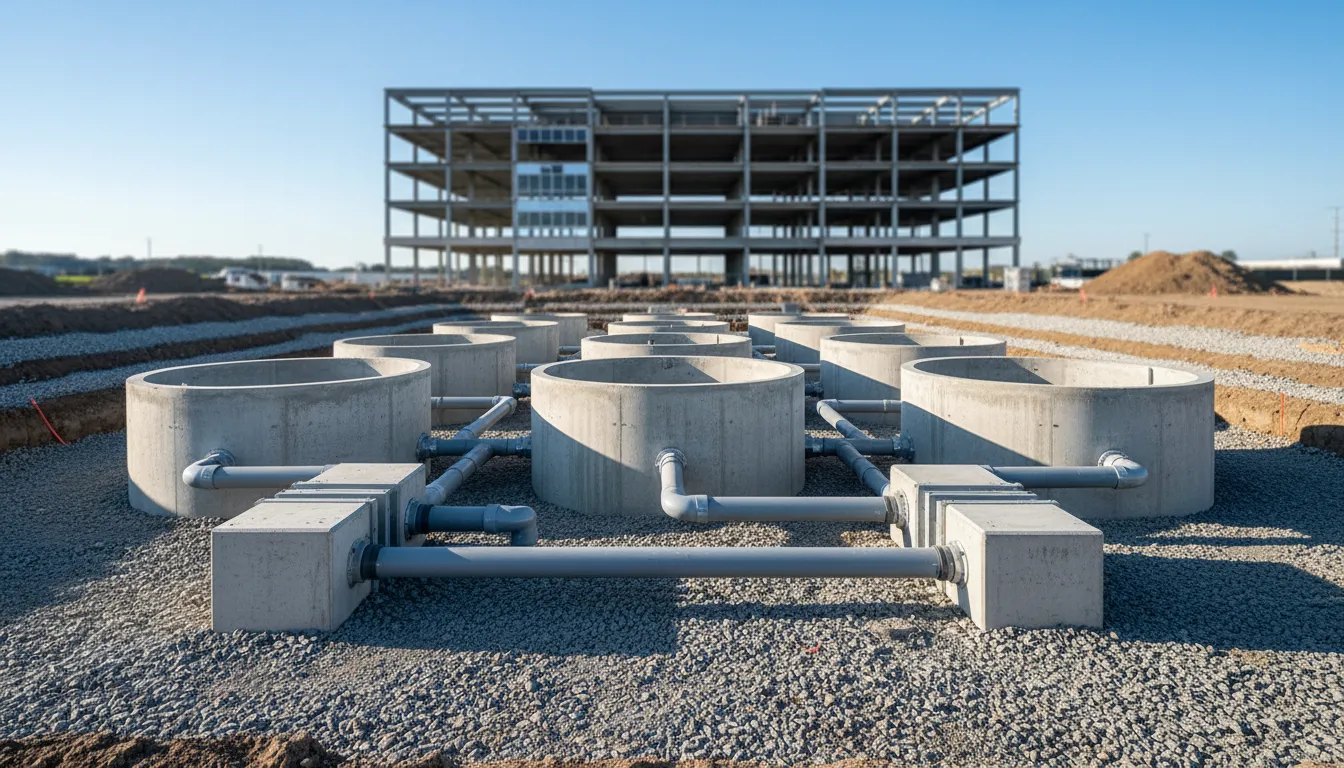
Commercial septic system design accounts for elevated biochemical oxygen demand, total suspended solids, and peak hydraulic loads that restaurants, hotels, office parks, and retail centers generate daily. Every design plan we produce addresses flow equalization, grease interception, and nitrogen-reducing treatment stages.
Full Permitting and Regulatory Coordination
Our septic designers coordinate directly with your local health department, state fire marshal, and sanitarian to secure every operating permit. We handle site plan submissions, engineering reports, new source review documentation, and as-built drawings from start to finish. This includes obtaining property owner consent and completing due diligence on all regulatory requirements.
Advanced Treatment Integration
We engineer systems that incorporate aerobic treatment units, recirculating sand filters, and pressure distribution systems when soil conditions or setback requirements demand alternative or advanced solutions.
Soil and Site Analysis Included
Each commercial design begins with percolation tests, soil borings, soil profile evaluation, water table mapping, and air emission sampling where required. We calculate absorption field sizing based on actual site data and ongoing monitoring protocols, not assumptions.
Reserve and Replacement Area Planning
Every design plan we deliver includes a designated reserve area and replacement area so your commercial property maintains code-compliant options for decades of uninterrupted operation. We also address prevention control measures to avoid significant deterioration and plan for eventual system take down and replacement when that time comes.
Need Immediate Septic Service?
Our team is standing by to help – same week appointments available.
Why Choose Our Commercial Septic System Design
Commercial septic system design is a specialized discipline that demands licensed engineering, deep knowledge of onsite wastewater treatment, and direct experience with commercial-scale flows. Action Septic Service brings all three to every project, backed by decades of combined experience.
Our septic engineers hold current certifications and carry years of field experience designing decentralized wastewater systems for restaurants, shopping centers, churches, schools, manufacturing facilities, and multi-tenant commercial properties. Our services range from initial site assessments to full system engineering, including hazard communication protocols and confined space entry procedures for tank inspections. We don’t repurpose residential templates. We engineer each system from scratch based on your building’s projected influent volume, waste strength, and the specific soil absorption capacity of your site – delivering professional results at a low-cost compared to many competitors.
We size primary tanks, secondary tanks, dosing chambers, pump chambers, and distribution boxes to match real-world commercial loading. When a conventional gravity-fed drain field won’t work, we design mound systems, drip distribution layouts, low-pressure pipe systems, or packed-bed media filters that satisfy your jurisdiction’s advanced treatment standards.
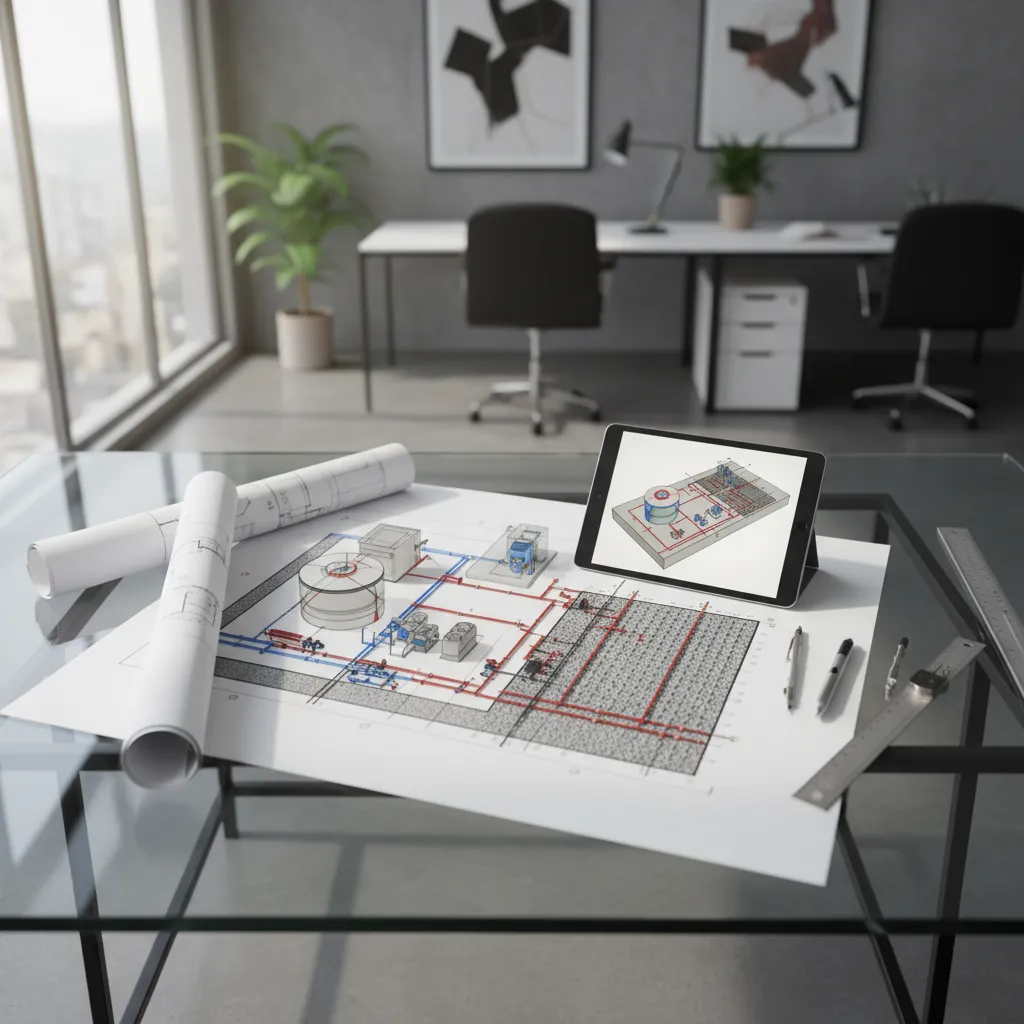
Our design process includes a written engineering report, a stamped site plan, and full coordination with your general contractor and local permitting authority. We stand behind every calculation, every pipe run, and every component specification. You receive a complete copy of all documentation for your records.
Action Septic Service also offers ongoing maintenance contracts and service agreements tied directly to the system we design. Our comprehensive services and support services mean you get one qualified team from design through commissioning and beyond – often at a lower total cost than working with multiple providers.

States Served Nationwide
Emergency Availability
Licensed & Insured
Hidden Fees – Ever
Signs You Need Commercial Septic System Design
Commercial septic system design isn’t just for new construction. Several conditions signal that your property needs a professionally engineered system — or a complete redesign of the one you have.
Your Property Is Changing Use or Expanding:
A building that once housed a small office now operates as a restaurant with a full kitchen. That shift dramatically increases grease loading, biochemical oxygen demand, and daily hydraulic flow. The existing septic tank and drain field were never sized for this. A new engineered design accounts for grease traps, grease interceptors, dosing schedules, and an appropriately sized absorption field.
Chronic Hydraulic Overload:
Effluent surfacing near the leach field, saturated soil around lateral lines, and persistent wet spots on the ground surface all point to an undersized or failing system. These symptoms indicate the current soil absorption system can’t handle the volume and may violate national pollutant discharge elimination system requirements. A professional redesign will calculate correct sizing, evaluate whether a pressure distribution system or mound system is needed, and specify the right pump chamber and float switch configuration to achieve proper pollutant discharge elimination.
Failed Percolation Test on a New Lot:
You’ve purchased commercial land, and the perc test results show slow infiltration rates or high seasonal water table. A conventional drain field won’t receive a permit. You need an engineered alternative system — possibly a recirculating sand filter, constructed wetland, or aerobic treatment unit paired with drip distribution.
Health Department Violations or Notices:
If your sanitarian has flagged groundwater contamination, surface water discharge, or coliform levels exceeding limits, your current system is failing and may pose a water pollution hazard. A certified septic designer can engineer a nitrogen-reducing or phosphorus-reducing system with proper discharge monitoring that brings your property back into compliance. We also help you develop a pollution prevention plan to address waste water management over the long term.
Aging System With No As-Built Records:
Commercial properties with abandoned or dormant systems and no existing design plan need a full survey, soil testing, and a new engineered layout before any renovation or reoccupation can proceed. We also help develop a facility response plan for emergencies and system failures.
Licensed & Bonded
Full compliance in all 50 states
Detailed Reports
Complete documentation every visit
Flat Rate Pricing
No hidden fees or surprises
Fast Scheduling
Same week appointments available
Our Commercial Septic System Design Process
Commercial septic system design follows a structured sequence that moves from site evaluation through final permitting. Here’s how Action Septic Service handles each phase. Call us to get started and learn more about the details of our process.
Initial Consultation and Site Survey
We visit your property, review the proposed building use, estimate daily wastewater flow, and identify waste characteristics including grease content, chemical discharge, and peak demand periods. We survey topography, measure setbacks from wells, property lines, and surface water bodies. Our reporting process documents any potential chemical exposure hazards and ensures all requirements are clearly defined from day one.
Soil Testing and Percolation Analysis
Our team performs soil borings to examine the soil profile, identify bedrock depth, and map the seasonal water table. We conduct perc tests at multiple locations across the proposed absorption area to determine infiltration rates. For systems requiring annual air quality monitoring, we factor those requirements into the design.
System Engineering and Sizing
Using test data and projected flows, we calculate tank compartment volumes, select treatment components, size the drain field or alternative absorption system, and specify every pump, valve, pipe diameter, and distribution method. We choose between serial distribution, parallel distribution, step systems, or drop box configurations based on site grade.
Design Plan and Engineering Report
We produce a stamped design plan with detailed specifications, a complete site plan, and a written engineering report. This package includes component schedules, electrical conduit routing for control panels and alarms, fire safety clearances, and material specifications. Advanced modeling helps us apply the right control technology for your specific conditions.
Permitting and Construction Support
We submit all documents to the health department, respond to review comments, and secure your operating permit. During installation, we provide construction oversight to confirm the septic installer follows every specification in the approved design. For details about our business hours or to experience our service firsthand, call our team directly.
Brands We Use
Commercial septic system design demands components from manufacturers with proven track records in commercial and industrial wastewater applications. Action Septic Service specifies these trusted brands in our design plans:






Every component we specify meets or exceeds local code-compliant standards and carries manufacturer warranties.
Other Services
Commercial septic system design
Commercial onsite wastewater system design
Engineered septic plan for commercial property
Commercial septic design services
Commercial wastewater treatment design
Septic engineer for commercial buildings
Commercial septic system engineering
Commercial decentralized wastewater design
Drain field design for commercial use
Commercial septic designer
Commercial septic system layout
Advanced treatment system design commercial
Commercial septic permit design
Engineered commercial septic system
Soil testing and perc test for commercial septic
FAQs About Commercial Septic System Design
What is commercial septic system design?
Commercial septic system design is the professional engineering process of planning an onsite wastewater treatment system for a commercial property. It includes soil analysis, flow calculations, component selection, absorption field sizing, and the production of a stamped design plan that meets all local and state regulatory requirements. The finished design specifies every tank, pump, pipe, and treatment unit the system requires to maintain free flow from inlet to outlet. Call us for more information or visit our website to review our privacy policy.
When does a business need a new commercial septic design?
A business needs a new design when constructing on undeveloped land, expanding an existing building, changing the property’s use, or replacing a failing system. Any increase in daily wastewater volume or waste strength – such as adding a commercial kitchen, laundry facility, or handling construction demolition debris – triggers the need for a redesigned and properly sized system with updated waste management protocols.
Why can't a commercial property use a residential septic design?
Commercial properties generate significantly higher flows and stronger waste than a single-family home. Residential designs lack the tank capacity, treatment stages, and distribution infrastructure to handle commercial hydraulic and organic loads. An undersized system will fail prematurely, break down under stress, contaminate groundwater, and violate health department regulations.
How long does the commercial septic design process take?
Most commercial designs take four to eight weeks from initial site survey through permit approval. Soil testing and percolation analysis require scheduling around weather and seasonal water table conditions. Health department review timelines vary by jurisdiction – for example, projects coordinated through an Illinois office may have different timelines than those in Ohio or other states.
Can an existing commercial septic system be retrofitted instead of redesigned?
Yes, in some cases. If the existing septic tank and site conditions support it, a septic engineer can retrofit the system with an aerobic treatment unit, recirculating sand filter, or pressure distribution network. A full site evaluation determines whether a retrofit or complete redesign is the better path.
Does Action Septic Service handle permitting for commercial designs?
We manage the entire permitting process. Our team prepares all required documents, submits them to the health department, and works directly with the sanitarian through approval. You receive a fully permitted, construction-ready design package with complete documentation.
Ready to Schedule Your Commercial Septic System Design?
Call now for fast, professional service – available 24/7 across all 50 states.