Mound Septic System Installation
Professional mound septic system installation for residential and commercial properties with high water tables, shallow bedrock, and challenging soil conditions. This type of septic systems is designed to handle sites where conventional options simply will not work.
Licensed & Insured
NOWRA certified technicians on every job
24/7 Emergency Service
Available whenever you need us most
Nationwide Coverage
Serving all 50 states across the USA
Transparent Pricing
Flat rates with no hidden fees
Get Immediate Service
Speak directly with our team – no automated systems
24 Hours – 7 Days a Week
5 Highlights on Mound Septic System Installation
Engineered for difficult sites
Our mound septic system installation addresses properties where conventional gravity systems fail – areas with high water table levels, clayey or silty soil profiles, clay and restrictive subsoil layers, and insufficient depth to bedrock. We design each elevated mound system to distribute effluent through a sand fill and gravel bed above the natural grade, giving wastewater the treatment distance it needs to ensure proper filtration before reaching groundwater.
Full site evaluation included
Every mound system installation begins with a percolation test, local soil profile analysis, and site survey conducted by a qualified soil scientist or site evaluator. We measure setback distances, map easements, assess topography and contour lines, and determine hydraulic loading rates before we excavate a single scoop of earth.
Permitted and code compliant
We secure all required permits through your local health department and build every mound system to meet or exceed state and county onsite wastewater regulations. Our as built drawings and approved engineering plan document each component from the septic tank to the pressure distribution system.
Precision pressure dosing
Our installations use timed dosing chambers with effluent pumps and float switches housed in a control box to deliver controlled, even distribution across the lateral lines within the mound. This pressurized approach prevents saturated zones, allows you to monitor system performance, and promotes consistent percolation through the absorption bed even in low permeability soils.
Built to last decades
We install precast concrete and polyethylene septic tanks, corrugated and PVC plastic pipe in the appropriate diameter, geotextile fabric barriers, and aggregate layers that resist compaction and degradation. Each mound system we build is a long term wastewater treatment solution designed for future maintenance access, not a temporary fix.
Need Immediate Septic Service?
Our team is standing by to help – same week appointments available.
Why Choose Our Mound Septic System Installation
Mound septic system installation is a specialized discipline. Not every septic installer has the training, equipment, or field experience to build an elevated mound system that performs reliably across seasons and soil conditions. Action Septic Service does, and we take care to deliver a better result on every project.
We have installed mound systems on properties that other contractors walked away from. Sites with perched water tables. Lots with shallow bedrock sitting just two feet below grade. Parcels where perc test results ruled out every conventional drain field option. Our team reads soil profiles the way a mechanic reads engine diagnostics – with precision and confidence. We view every job as an opportunity to face the specific challenges involved and take pride in dealing with the toughest conditions.
Our crews operate excavators, backhoes, loaders, and compactors daily. We grade sand fill to exact specifications using laser levels. We connect header pipes to pressure manifolds and wire float switches to alarm panels. Every component and all parts get inspected before we backfill, and every layer gets documented. We treat each job with the same attention to detail.
Action Septic Service carries full licensing and liability coverage. We stand behind our mound system installations with a workmanship guarantee. Our project managers coordinate directly with your local health department, your site evaluator, your engineer, and your general contractor when needed to ensure appropriate execution at every stage.
You will not get a generic bid from us. You will get a detailed scope of work based on your soil conditions, your property layout, and your household or commercial wastewater flow. That means you receive real value and the professional, qualified approach that separates a trusted mound system installer from a company just digging holes.
States Served Nationwide
Emergency Availability
Licensed & Insured
Hidden Fees – Ever
Signs You Need Mound Septic System Installation
Your perc test results disqualify a conventional system:
When a percolation test reveals that your soil absorbs water too slowly – or too quickly – a standard gravity fed drain field will not treat effluent properly. Clayey soils with slow infiltration rates, fine particle compositions, and sandy soils with rapid percolation both point toward a mound system as the best engineered alternative. In any case, if your site evaluator flags your perc test results and it is determined that conventional options are not viable, a mound installation is likely your path forward.
You have a high water table:
Properties where the seasonal water table sits within two to three feet of the surface cannot support a subsurface leach field. Groundwater would mix with partially treated wastewater, causing contamination of wells and nearby surface water. A mound system elevates the absorption bed above the saturated zone, creating the unsaturated soil depth needed for biological treatment and filtration before effluent reaches groundwater. This helps keep your water supply clean and avoid environmental hazards.
Bedrock sits close to the surface:
Shallow bedrock or stone layers leave no room for a conventional absorption trench. Wastewater needs vertical separation between the distribution pipes and any impermeable layer to allow microbial decomposition and natural filtering. Mound septic system installation solves this by constructing the treatment area above grade with imported sand fill and aggregate placed to specification, giving effluent the travel distance it requires.
Your existing septic system has failed:
Sewage surfacing in your yard, persistent wet spots over the drain field, sewer odors, and backed up drains inside the house or floor drains all signal system malfunction and failure. When the original leach field is beyond repair – whether from biomat buildup, soil saturation, or structural collapse – and the problem has been identified, replacing it with a mound system often provides the most reliable remediation, especially on lots where the original system was undersized or poorly sited.
You're building on a challenging rural lot:
New construction on rural or agricultural parcels with limiting soil conditions demands an alternative onsite wastewater solution from day one. If your soil scientist identifies loamy, silty, or otherwise restrictive layers during the site evaluation, specifying a mound septic system installation during the design phase prevents costly retrofits later. Keep trees and deep rooted vegetation away from the planned mound area. Installing the right system before the foundation goes in saves time, money, and headaches while helping reduce future complications.
Licensed & Bonded
Full compliance in all 50 states
Detailed Reports
Complete documentation every visit
Flat Rate Pricing
No hidden fees or surprises
Fast Scheduling
Same week appointments available
Our Mound Septic System Installation Process
Mound septic system installation is a sequenced, multi phase operation. Each step depends on the one before it, and a number of specialized tasks are involved. Here is how Action Septic Service builds your system from permit to final inspection.
Site evaluation and soil analysis
A soil scientist or licensed site evaluator conducts a perc test, examines the soil profile, and identifies the water table depth and bedrock elevation. We survey the property to establish setback distances from wells, property lines, structures, and surface water. Utility line locations are identified and any buried infrastructure is located before excavation begins.
System design and permitting
Our team designs the mound system based on your site data, household size, and projected wastewater flow. We submit engineered plans to the health department and secure all required permits before any equipment arrives on site. A reserve area is specified in case future expansion or repair is needed.
Septic tank installation
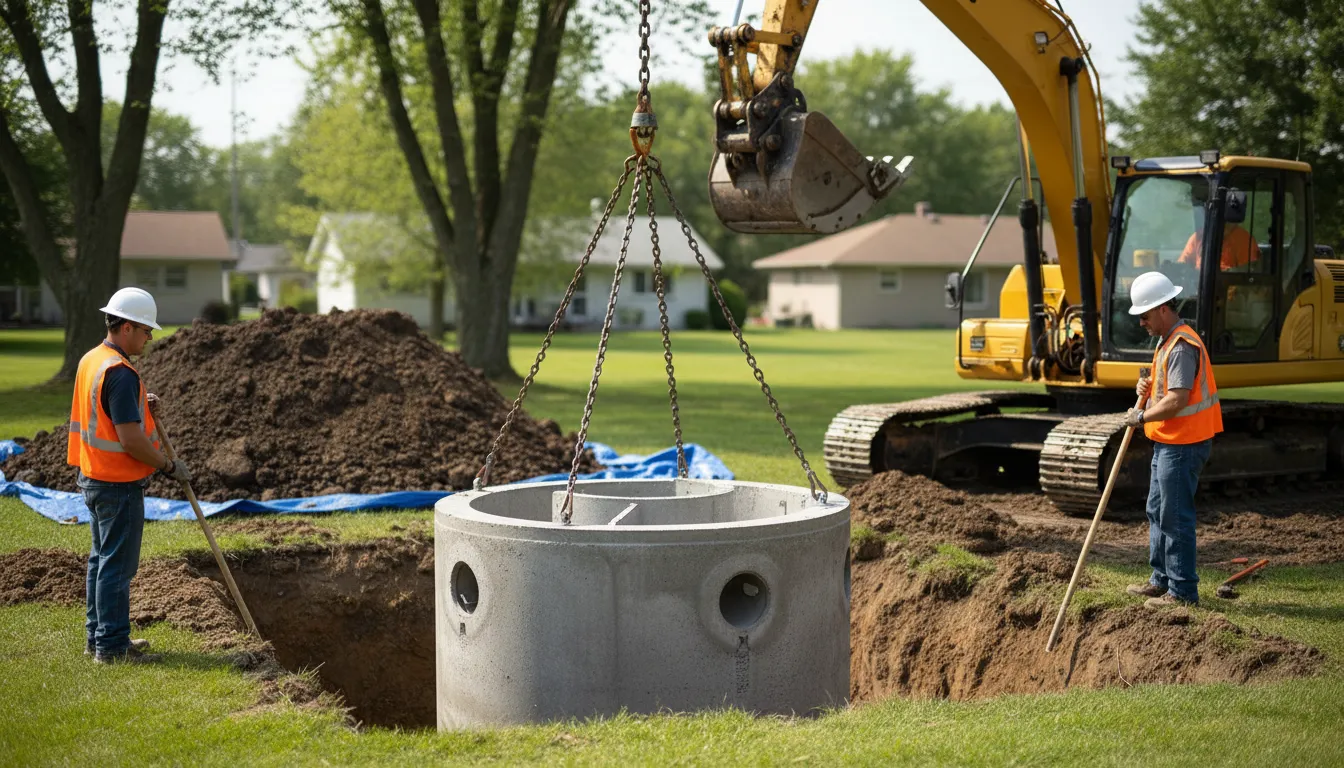
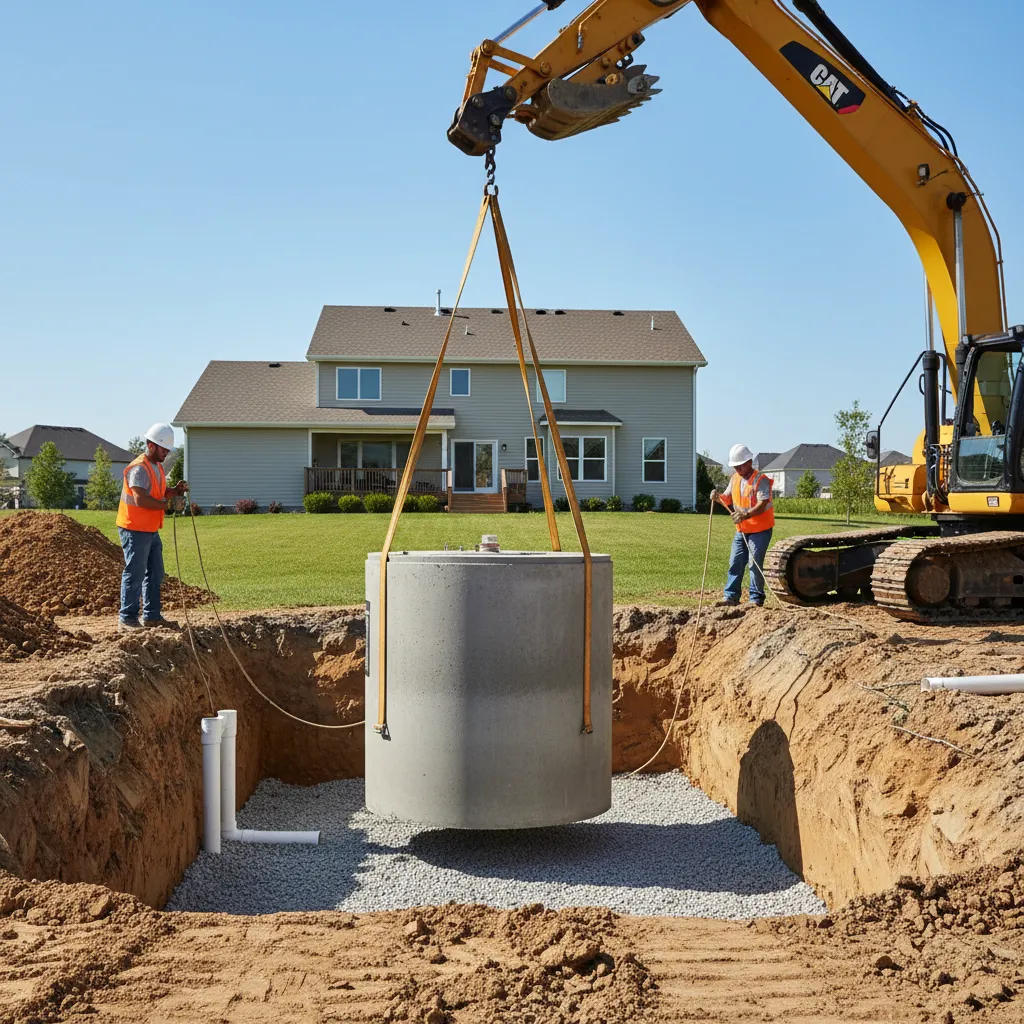
We excavate the tank pit, set a precast concrete or polyethylene septic tank, install inlet and outlet baffles, connect the inlet pipe from the house, and mount risers with septic riser lids for future access. The dosing chamber or pump chamber goes in at this stage too, and adequate space is left around the tank for future pumping and service access free of obstruction.
Mound construction
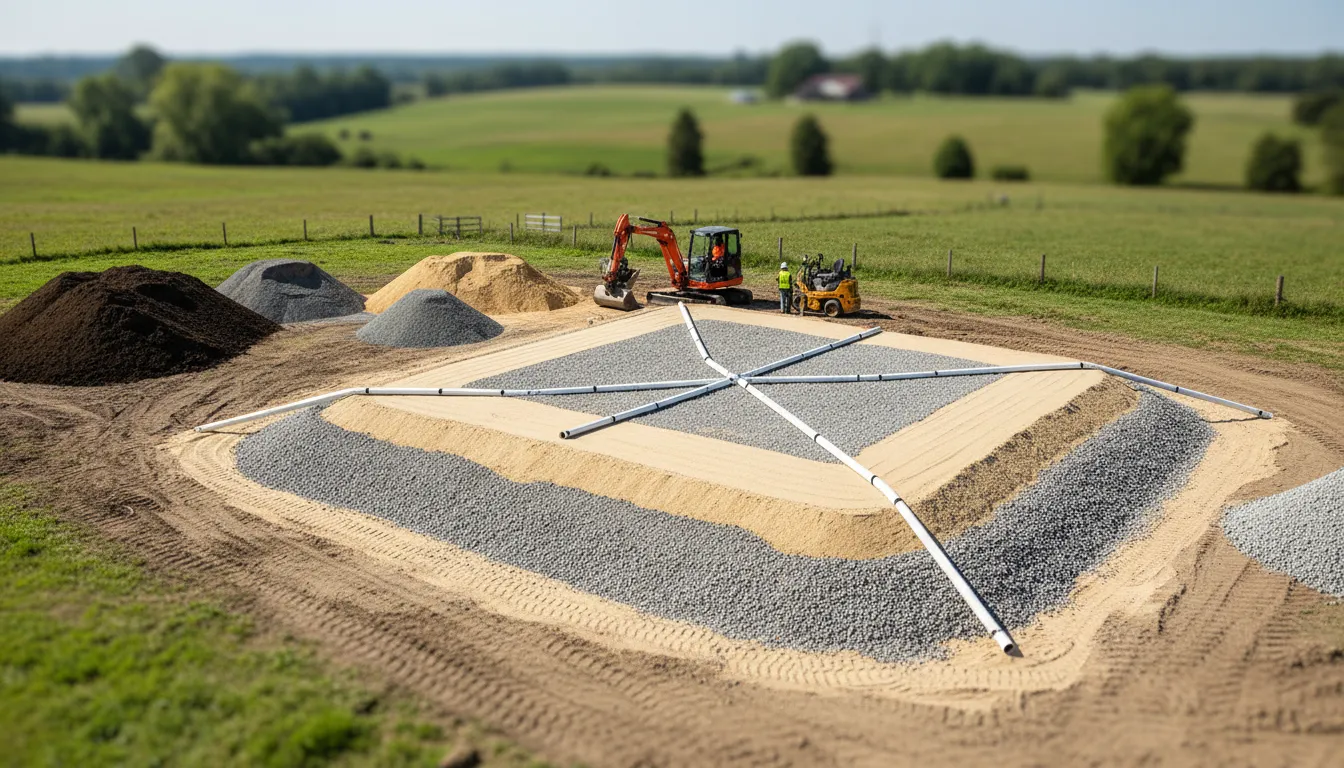
Our crew prepares the basal area by lightly scarifying the existing topsoil – the surface is tilled but never compacted. We move materials into position, place the sand fill layer to engineered depth, install the gravel bed and perforated lateral lines connected to the header pipe and pressure manifold, then wrap the aggregate in geotextile fabric to prevent soil migration.
Backfill, grading, and cover
We cap the mound with fill sand and topsoil, grade the top surface for proper runoff, and apply straw mulch and seed covering for erosion control. Grass, sod, or native grasses may be planted depending on your preference, though deep rooted plants should be avoided. We install observation tubes and monitoring wells where required.
Final inspection and commissioning
The health department inspector verifies all components. We test the effluent pump, float switch, alarm, and check valve. We walk you through the system, deliver the as built drawing, and schedule your first maintenance visit. We also review how to maintain your system and explain why you should never burn brush or fire debris over the mound area.
Brands We Use
Action Septic Service installs products from manufacturers known for durability, reliability, and code compliance in onsite wastewater systems. For our mound septic system installations, we specify components from these trusted brands:










Our technicians follow manufacturer specifications during installation to preserve warranty coverage and protect your investment in a properly built mound septic system.
Other Services
Mound septic system installation
Mound system install
Elevated septic system, raised bed septic, above grade wastewater system
Mound septic installer near me
Septic mound builder
Onsite wastewater contractor, licensed septic installer, septic system company
Mound septic system cost
Mound system pricing
Septic installation estimate, engineered septic system quote, sand mound cost
Mound septic system design
Engineered mound system
Pressure distribution septic, dosing septic system, alternative septic design
Mound septic system for high water table
Elevated drain field installation
Shallow bedrock septic solution, poor soil septic option, alternative drain field
FAQs About Mound Septic System Installation
What is a mound septic system?
A mound septic system is an engineered onsite wastewater treatment system that elevates the drain field above the natural soil surface. It uses a constructed mound of sand fill, gravel aggregate, and topsoil to treat and distribute effluent from a septic tank. The pressurized lateral lines inside the mound dose wastewater evenly across the absorption bed, where biological and physical filtration occurs before treated effluent percolates into the native soil below.
When do you need a mound septic system instead of a conventional one?
You need a mound system when site conditions prevent a standard subsurface drain field from functioning. High water tables, shallow bedrock, slowly permeable clayey soils, and rapidly draining sandy soils all create situations where a conventional gravity system can’t provide adequate wastewater treatment. A perc test and soil profile evaluation will confirm whether your property requires an elevated mound installation.
How long does mound septic system installation take?
Most residential mound system installations take five to ten working days from excavation to final grading. The timeline depends on weather, soil conditions, permit turnaround, and system complexity. Larger commercial mound systems or sites requiring extensive earthwork may take longer. Action Septic Service provides a project schedule during the planning phase so you know what to expect.
Can you install a mound septic system in winter?
Installation during winter months is possible in many regions, but frozen ground, snow cover, and wet conditions can delay excavation and grading work. Sand fill and aggregate placement requires dry conditions for proper compaction and layering. We’ll assess seasonal feasibility during your consultation and recommend the best installation window for your area.
How much does a mound septic system installation cost?
Mound systems cost more than conventional septic installations because they require imported sand fill, engineered design, pressure dosing components, and more extensive site work. Residential mound system installations typically range from $10,000 to $30,000 or more depending on system size, soil conditions, and local permit requirements. Action Septic Service provides detailed written estimates after completing the site evaluation.
Does a mound septic system require a pump?
Yes. Mound systems use an effluent pump housed in a dosing chamber to push wastewater uphill into the elevated mound. The pump operates on timed or demand based dosing cycles controlled by a float switch and alarm panel. This pressurized distribution ensures even delivery across all lateral lines in the absorption bed, which is what makes the mound system effective at treating wastewater in challenging soil conditions.
Ready to Schedule Your Mound Septic System Installation?
Call now for fast, professional service – available 24/7 across all 50 states.