Drain Field Maintenance
Professional drain field maintenance keeps your septic system functioning and your property protected year round. Whether you own a residential home or commercial facility, quality drain field service ensures your yard remains clean, your plumbing works properly, and your treatment system operates at top efficiency.
Licensed & Insured
NOWRA certified technicians on every job
24/7 Emergency Service
Available whenever you need us most
Nationwide Coverage
Serving all 50 states across the USA
Transparent Pricing
Flat rates with no hidden fees
Get Immediate Service
Speak directly with our team – no automated systems
24 Hours – 7 Days a Week
5 Highlights on Drain Field Maintenance
Thorough Lateral Line Inspection
Drain field maintenance from Action Septic Service starts with a complete camera inspection of every perforated pipe, lateral line, and distribution box in your absorption field. We identify biomat buildup, root intrusion, and soil saturation before small problems become costly failures. Our technicians get exact measurements and dig only when needed, using the best diagnostic tools available.
Biomat Removal and Soil Rejuvenation
Our technicians remediate clogged drain fields by breaking apart the biomat layer that forms along trench walls. We restore percolation rates and return absorptive capacity to your leach field soil profile. This process allows waste to be treated properly, and the result is improved water flow through the entire absorption area.
Distribution Box Balancing
A misaligned D-box sends effluent unevenly across your lateral lines. We inspect, level, and recalibrate every distribution box to disperse clarified wastewater evenly through your entire drain field. Balanced water flow helps distribute effluent properly and keeps your system running at peak performance.
Effluent Filter Servicing
We clean and replace effluent filters in your septic tank outlet to prevent solids from reaching the drain field. This single step dramatically reduces clogging in your percolation trenches. When filters are cleaned on schedule, you avoid costly repairs and keep your drain field free from damaging debris.
Percolation and Saturation Testing
Our crew samples soil conditions and tests percolation rates throughout your drain field. We monitor groundwater levels and check for saturated zones that signal an overloaded or failing absorption field. Deep testing from top to bottom at each location ensures that drainage capacity is accurately determined.
Need Immediate Septic Service?
Our team is standing by to help – same week appointments available.
Why Choose Our Drain Field Maintenance
Drain field maintenance is the most overlooked part of septic system care, and it is the service where Action Septic Service separates itself from every other provider in the area. People who call us for help experience a highly professional approach from start to finish.
We are a qualified, licensed septic service company with certified technicians who specialize in subsurface wastewater treatment. Our team does not guess. We know how to handle every drain field type because we understand the science behind wastewater disposal. We use camera inspection equipment, soil sampling tools, and percolation testing to diagnose drain field conditions with precision. Every maintenance visit produces a written report documenting the condition of your lateral lines, distribution box, gravel bed, and geotextile fabric. No guessing – just the best diagnostic work in the industry.
Action Septic Service carries full liability coverage and maintains all required health department permits. We follow every local, county, and state code governing septic system maintenance, and we keep your as-built drawings on file so each visit builds on the last. Following these standards is what our work requires to maintain compliance.
Our drain field maintenance plans include scheduled inspections, effluent filter cleaning, biomat monitoring, and soil percolation checks. We catch failing conditions early. That saves you thousands compared to a full drain field replacement or emergency excavation, saving you from unnecessary digging. We recommend additional service intervals based on your system usage.
We guarantee our work. If a drain field issue recurs within 90 days of our service, we return at no charge. Our technicians arrive on time, explain every finding in plain language, and leave your property clean. That is the standard at Action Septic Service, and it is why homeowners and commercial property owners trust us with their drain field maintenance year after year. Contact us any day to request a free quote for quality service.

States Served Nationwide
Emergency Availability
Licensed & Insured
Hidden Fees – Ever
Signs You Need Drain Field Maintenance
Drain field maintenance becomes urgent when your absorption field sends clear warning signals. Recognizing these signs early prevents sewage backups, groundwater contamination, and expensive system replacement. If you want your house and yard protected for the long term, keep these warning signs in mind.
Soggy or Standing Water Over the Drain Field:
Saturated soil above your leach field trenches means effluent is not percolating downward through the gravel bed and aggregate. The biomat layer may have thickened to the point where it blocks absorption entirely. You might notice spongy ground, puddles, or unusually green grass strips directly above your lateral lines. Surface water and excess water pooling in your landscaping near trees or plant beds signals trouble. This saturated condition demands immediate professional drain field maintenance.
Slow Drains and Gurgling Fixtures Inside the Home:
When your septic tank fills because the drain field cannot accept effluent, wastewater backs up through your sewer line. Toilets flush slowly. Sinks gurgle. Tubs drain at a crawl. Your toilet, sink, and tub may all show signs at once. These backed-up conditions often point to a clogged or overloaded drain field rather than a simple pipe blockage. When waste cannot flow out, it comes back through your plumbing.
Foul Odors Near the Absorption Field:
Septic or sewage smells near your drain field indicate that effluent is surfacing or that anaerobic conditions have degraded the soil treatment capacity. Pathogenic bacteria, disease-causing organisms, and untreated wastewater may be seeping to the surface. Foul air is a negative sign causing concern for anyone nearby. This is a health concern and a compliance issue.
Effluent Surfacing at the Distribution Box:
If you see liquid pooling around your D-box or notice the riser lid is wet, your drain field laterals may be failing. Check the cover for any opening that might indicate a damaged seal. The distribution box overflows when downstream perforated pipes cannot disperse effluent fast enough. A professional inspection will determine whether the problem is a clog, a collapsed line, or a saturated soil profile. Close monitoring of this area is essential.
Septic Alarm Activation or High Tank Levels:
A dosing chamber alarm or a septic tank that fills rapidly between pumpings signals that your drain field is not accepting effluent at the expected rate. The float switch triggers because liquid has nowhere to go. When levels fill beyond normal, the amount of waste backing up indicates prompt attention is needed. This is your system telling you the drain field needs maintenance now.
Licensed & Bonded
Full compliance in all 50 states
Detailed Reports
Complete documentation every visit
Flat Rate Pricing
No hidden fees or surprises
Fast Scheduling
Same week appointments available
Our Drain Field Maintenance Process
Drain field maintenance at Action Septic Service follows a structured, repeatable process that covers every component from the septic tank outlet to the last lateral line in your absorption field. We begin each visit working through a checklist designed to manage every aspect of your system. Our team will take the time to do the job right.
System Review and Access
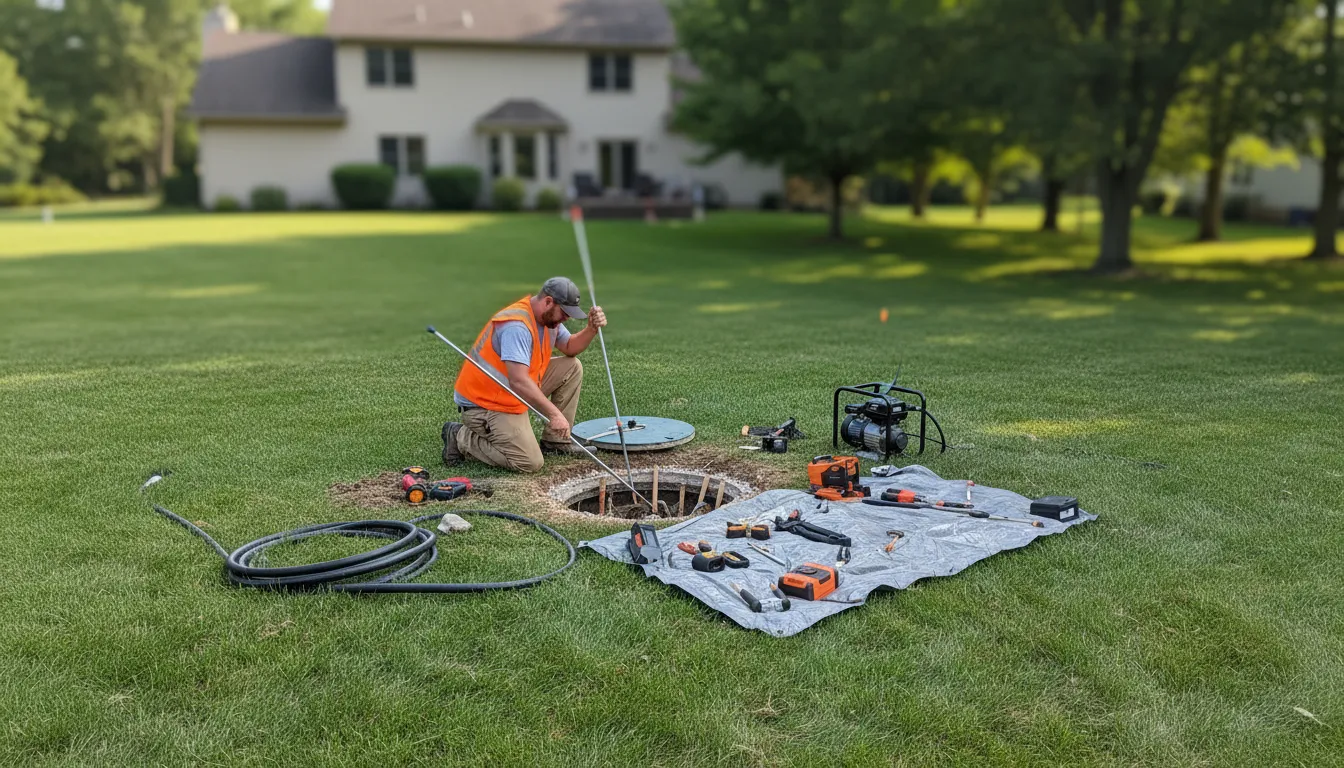
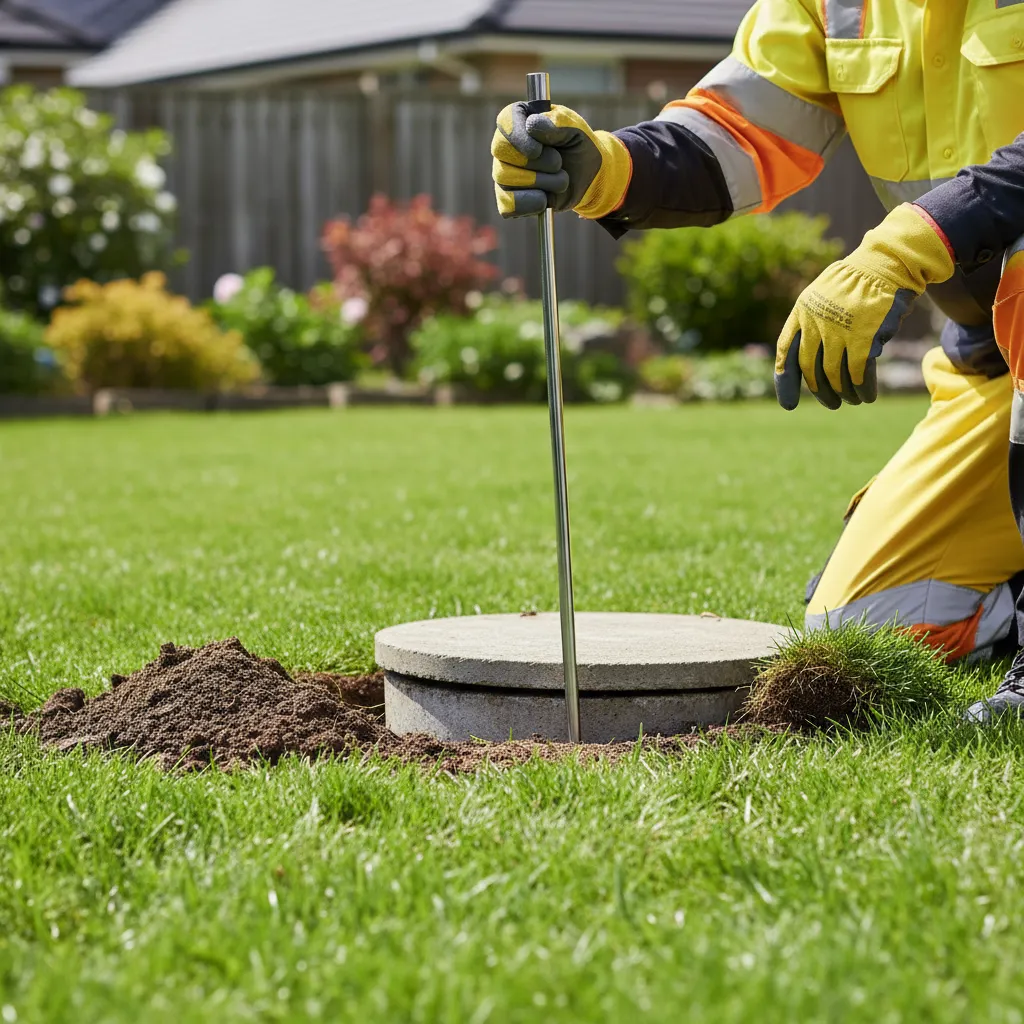
We pull your as-built drawing and septic permit records. Our crew locates and exposes all risers, access ports, and inspection ports across your drain field. We note the system type – conventional, mound system, chamber system, or drip irrigation system – and plan our approach accordingly. We review the original design to verify components are located and install properly according to specifications.
Septic Tank Outlet and Effluent Filter Inspection
We open the outlet baffle and remove the effluent filter. Our technicians clean the filter, inspect the baffle for cracks or displacement, and check the clarified zone for proper separation of the scum layer and sludge layer. Keeping the top of the scum layer and the bottom of the sludge layer where they should remain is critical to drain field health.
Distribution Box Evaluation
We inspect the D-box for level alignment, structural integrity, and even flow distribution. Each outlet port gets checked for blockages or root intrusion. Roots from nearby trees and shrubs are a common problem. We adjust or repair the box to restore balanced effluent dispersal. Any repairs are done on site when possible.
Lateral Line and Trench Assessment
Our team runs a camera inspection through each perforated pipe. We check for biomat accumulation, root penetration, crushed sections, and sediment buildup in the gravel bed. Rock and aggregate must stay in place to keep effluent flowing properly. We test percolation rates at multiple points along the drain field, getting accurate readings at each location.
Reporting and Recommendations
We document every finding with photos and measurements. You receive a written drain field maintenance report that includes current conditions, completed work, and a recommended service schedule. Our list covers everything from end to end. If we identify a failing section, we provide a detailed remediation plan with costs. We add notes to your file so future visits can continue building on what we learned.
Brands We Use
Drain field maintenance requires dependable equipment and proven products. Action Septic Service uses only professional grade brands trusted across the septic system service industry.



Every product we use meets or exceeds health department standards.
Other Services
Drain field maintenance
Leach field maintenance
Septic drain field service
Drain field repair
Absorption field repair
Failing drain field remediation
Drain field inspection
Leach field inspection
Septic system camera inspection
Drain field cleaning
Lateral line cleaning
Biomat removal service
Drain field restoration
Leach field rejuvenation
Drainfield percolation repair
FAQs About Drain Field Maintenance
What is drain field maintenance?
Drain field maintenance is the scheduled inspection, cleaning, and servicing of your septic system absorption field. It covers the distribution box, lateral lines, perforated pipes, gravel bed, effluent filter, and surrounding soil. The goal is to keep effluent percolating properly and prevent system failure. Your treatment system must treat waste effectively, and regular clean out of filters and pipes keeps everything working.
When should I schedule drain field maintenance?
You should schedule professional drain field maintenance every one to three years, depending on your system age, size, and usage. If you notice soggy ground, slow drains, or foul odors near your leach field, schedule a service visit right away. Remember that different times of year may affect drainage. Touch base with our team if anything seems off.
Why does my drain field clog?
Drain fields clog when the biomat layer – a bacterial film that forms along trench walls – thickens beyond the soil absorptive capacity. Solids escaping a neglected effluent filter, root intrusion into perforated pipes, and soil compaction from vehicles or heavy equipment also cause clogging. Parking on your drain field compacts soil and can decrease percolation. Items flushed down the toilet like paper products that do not break down contribute to clogs. Avoid drain cleaners that kill beneficial bacteria. Planting deep-rooted vegetation nearby invites root damage. Divert water runoff away from your absorption field. Regular maintenance prevents all of these problems.
How does a technician inspect a drain field?
Our technicians run a camera inspection through each lateral line to check for blockages, root penetration, and pipe damage. We test percolation rates, evaluate the distribution box for level flow, and sample soil conditions around the trenches. We look for any form of buildup that could build into a larger problem. Every inspection includes a written report. In turn, these records help track your system health over time.
Can a failing drain field be repaired without replacement?
Yes. Many failing drain fields respond to professional remediation. Techniques like Terralift aeration, jetting, bioculture inoculation, and effluent filter upgrades can restore percolation and extend drain field life by years. Action Septic Service evaluates your system and recommends the most cost effective solution before considering full replacement. Repairs can make a lot of difference and cost less than you might expect. Being hired to restore rather than replace saves you funding. Reducing extra water entering your system and protecting your water supply also helps extend drain field life.
Does drain field maintenance protect my property value?
A well maintained drain field keeps your septic system compliant with health department regulations and prevents contaminated groundwater, sewage surfacing, and structural damage to your absorption field. Documented maintenance records also satisfy buyer inspections during property sales. Buyers want to see that the system has been properly maintained and not filled with neglect. Protect your investment with routine care.
Ready to Schedule Your Drain Field Maintenance?
Call now for fast, professional service – available 24/7 across all 50 states.