Septic to Sewer Connection
Professional septic to sewer conversion for residential and commercial properties – serving customers nationwide with expert quality and years of experience
Licensed & Insured
NOWRA certified technicians on every job
24/7 Emergency Service
Available whenever you need us most
Nationwide Coverage
Serving all 50 states across the USA
Transparent Pricing
Flat rates with no hidden fees
Get Immediate Service
Speak directly with our team – no automated systems
24 Hours – 7 Days a Week
5 Highlights on Septic to Sewer Connection
Licensed and Permitted Work
Action Septic Service holds all required municipal permits and contractor certifications to tap into your local sewer main. Every septic to sewer connection we perform meets code compliant standards set by your health department and utility company. Contact us by phone or email to request a free estimate.
Complete Septic Tank Decommissioning
We don’t just connect your lateral line to the sewer stub. Our team pumps, cleans, and properly abandons your existing septic tank, backfills it with compacted fill, and grades the surface to prevent settling. The job is done right the first time.
Minimal Property Disruption
Our crews use precision excavators and trenchers to route your new sewer lateral with the smallest possible footprint. We restore landscaping, driveways, paving, and hardscapes once we compact and grade the trench. We keep working until your property looks right.
Gravity Fed and Pressurized Solutions
Some properties sit below the sewer main elevation. We install grinder pumps, force mains, and lift stations when a gravity fed connection isn’t feasible. Our pressure systems handle elevation issues well.
Turnkey Permit and Fee Coordination
Sewer tap fees, connection fees, impact fees, easement paperwork, and right of way access all require coordination with your municipality. We cover every step from the perc test documentation to the final free camera inspection. Get the help you need by filling out our form or giving us a call.
Need Immediate Septic Service?
Our team is standing by to help – same week appointments available.
Why Choose Our Septic to Sewer Connection Service
Septic to sewer connection is a specialized trade that sits at the intersection of septic contracting, plumbing services, and municipal utility work. Action Septic Service has performed hundreds of these conversions across residential and commercial properties. We specialize in this work and bring the equipment, the licensing, and the field knowledge that general contractors simply don’t carry. We are a top choice for property owners who need reliable sewer system solutions.
Our crews include licensed septic contractors and plumbers who understand both sides of the transition. They know how to disconnect your existing septic system, abandon the tank to code, and tie in a new sewer lateral to the municipal main without disrupting service to your house. That dual expertise means you save money by not having to hire multiple contractors to get the job done.
We own our own vacuum trucks, pump trucks, excavators, backhoes, and trenchers. No rental delays. No subcontractor markups. When your municipality announces a sewer extension project with a deadline, we mobilize fast. Our team is ready to start projects with same day availability for urgent situations.
Every septic to sewer conversion we complete comes with a written guarantee on workmanship. We also provide a post connection camera inspection to verify the new lateral line runs clean and watertight from your cleanout to the sewer tap. If the health department or code enforcement requires documentation, we supply it. Our satisfied customers share their experience in reviews after the project is completed.
Action Septic Service is fully insured, bonded, and trusted by local sanitarians and utility companies. We’ve built that reputation one connection at a time through great customer service. Property owners recommend us because we deliver on our promises.
States Served Nationwide
Emergency Availability
Licensed & Insured
Hidden Fees – Ever
Signs You Need Septic to Sewer Connection
Septic to sewer connection becomes the right move under specific, recognizable conditions. Here are five situations that signal it’s time to convert. Each situation requires a different approach, and our team is here to help.
Your Drain Field Is Failing:
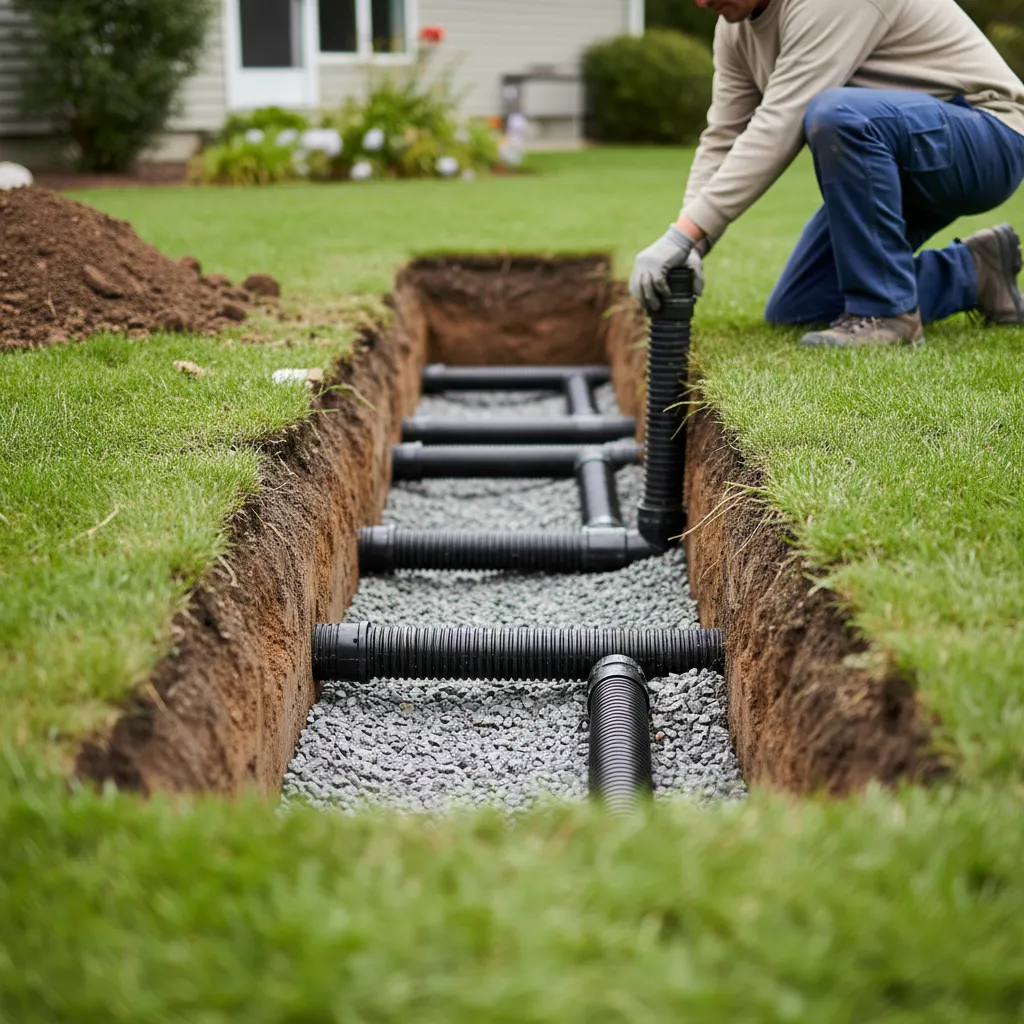
A saturated, clogged, or biomat choked leach field will push effluent to the surface. You’ll notice soggy patches, foul odors, and standing greywater or water in your yard. Replacing a drain field can cost as much as a full sewer connection, and a new absorption field still leaves you dependent on soil percolation. If a municipal sewer main runs within reach of your property, converting eliminates the leach field problem permanently. A sewer connection is a better fix than repeated drain field repair or replacement.
Your Septic Tank Is Deteriorated:
Cracked concrete tanks, corroded baffles, and collapsed inlet or outlet pipes create unsanitary conditions. A deteriorated septic tank can leach raw sewage into groundwater. When the tank itself has failed, connecting to the main sewer is often more cost effective than installing a new fiberglass or polyethylene tank and rebuilding the entire system. You can replace your failing sewer pipe and septic infrastructure with a direct connection to municipal utilities.
Municipal Sewer Has Reached Your Street:
Many local governments mandate septic to sewer conversion once the sewer main extends to your area. You’ll receive a notice with a compliance deadline. Delaying can result in fines from code enforcement. Don’t be caught by surprise – learn about upcoming requirements and avoid additional charge penalties by acting early.
You're Expanding Your Property:
Adding bedrooms, bathrooms, or commercial square footage increases wastewater volume. Your existing septic system may be undersized for the new load. A sewer connection removes capacity limits tied to tank size and drain field area. This is the time to make the switch and address your property’s growing needs.
Your System Is Non Compliant:
Health department inspections sometimes reveal setback violations, unpermitted cesspools, or systems that no longer meet current sanitary code. Converting to sewer resolves non compliant status and brings your property into full regulatory standing. Schedule a visit to get these issues fixed before they become larger problems.
Licensed & Bonded
Full compliance in all 50 states
Detailed Reports
Complete documentation every visit
Flat Rate Pricing
No hidden fees or surprises
Fast Scheduling
Same week appointments available
Our Septic to Sewer Connection Process
Septic to sewer connection is a multi phase project. Here’s how Action Septic Service executes each stage from start to end.
Site Assessment and Permit Application
We assess your property to locate the existing septic tank, distribution box, drain field, and the nearest sewer main or sewer stub near your home. We measure elevation to determine whether a gravity fed connection or a pressurized force main with a grinder pump is required. We then file all permit applications and pay the sewer tap and connection fees on your behalf. After the assessment, we provide detailed estimates with transparent pricing and a written quote.
Septic System Disconnection
Our vacuum truck pumps and desludges your septic tank completely using professional grade equipment. We disconnect the inlet and outlet pipes and cap them. The tank is either crushed in place and backfilled with approved material or removed entirely by excavator. We handle the total removal of your old system.
Trench Excavation and Pipe Installation
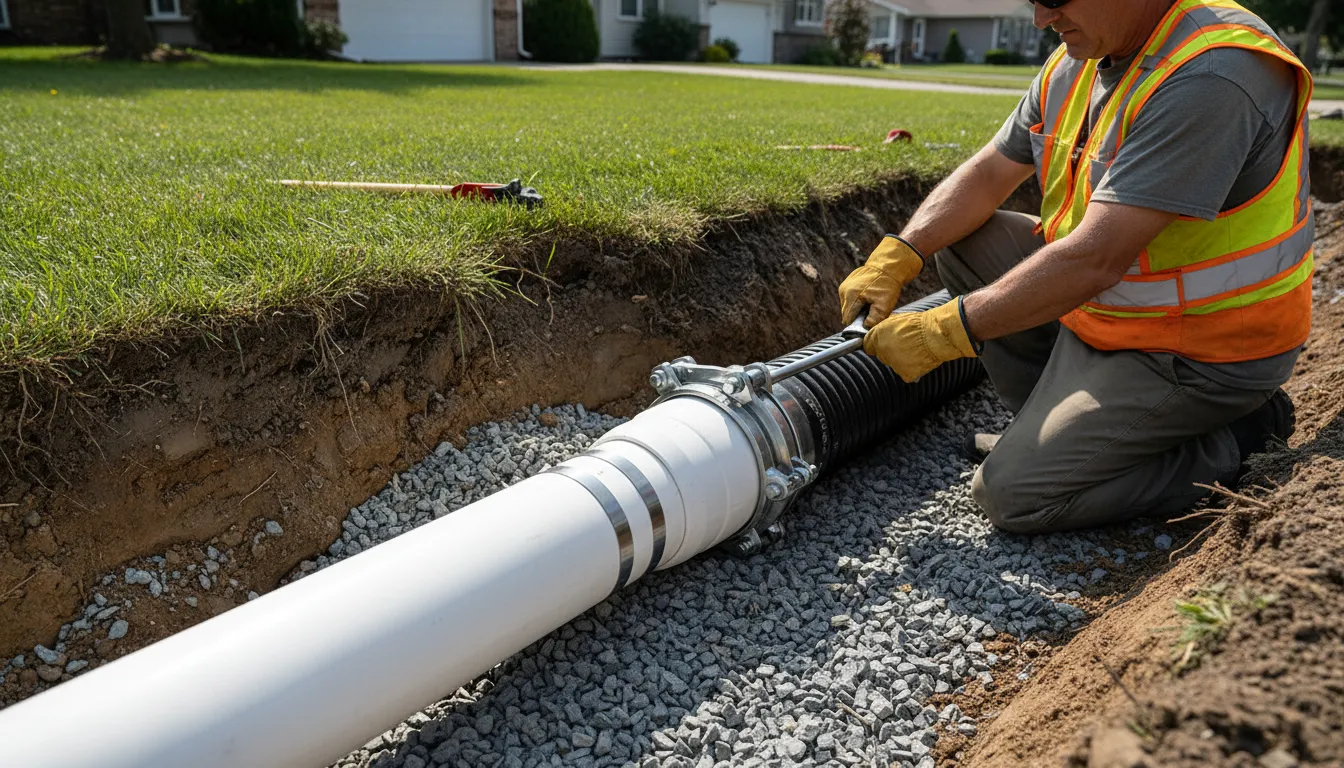
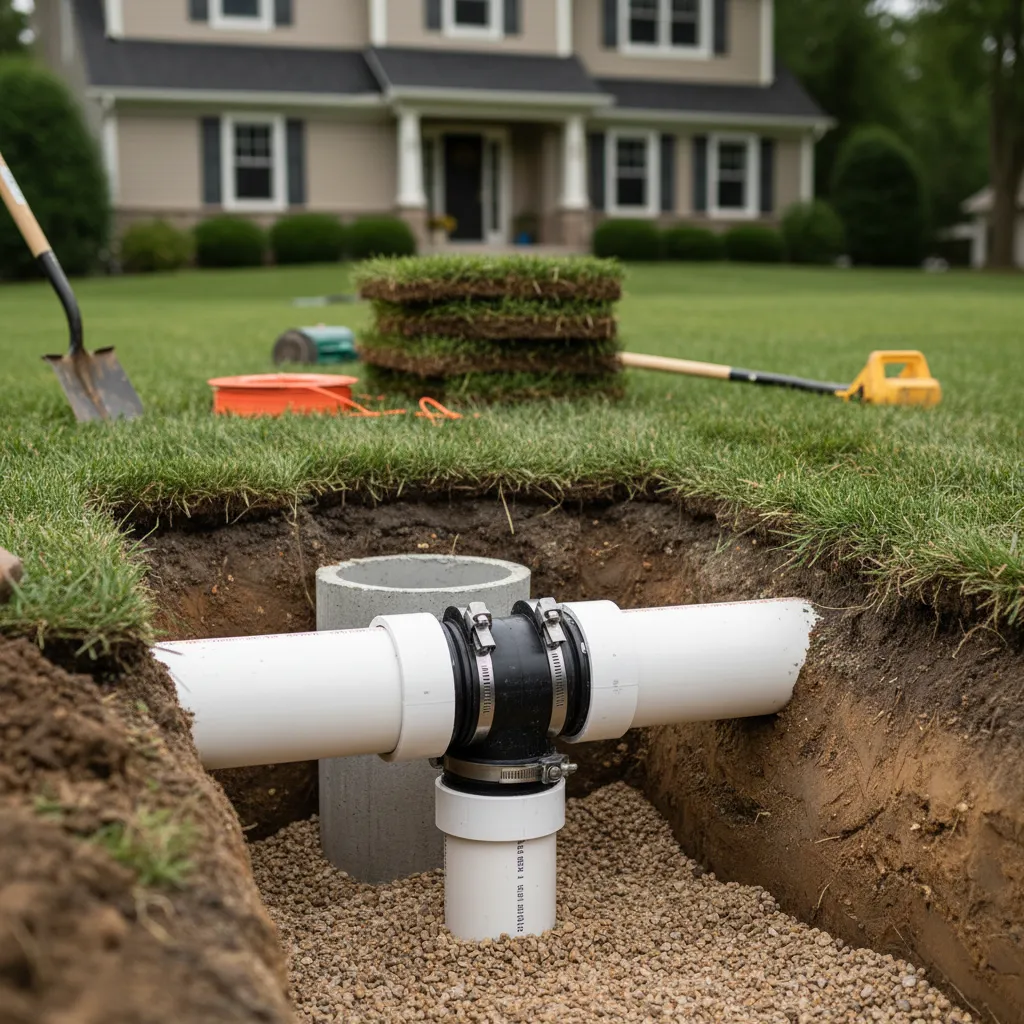
We trench from your home’s existing cleanout to the sewer main connection point. Our crew installs new PVC sewer lateral pipe at the proper grade, beds it in aggregate, and connects it to the municipal tap saddle or wye connection. Every fitting, coupling, and elbow meets local plumbing code. We handle both sewer line replacement and line repair to ensure everything is running properly.
Backfill, Compaction, and Grading
We backfill the trench in lifts, compacting each layer to prevent future settling. The surface is graded to match existing contours. We put everything back the way it was before we started.
Inspection and Certification
We schedule the required municipal inspection. Our crew performs a camera inspection of the full lateral line to confirm the pipe is watertight, properly sloped, and free of debris. We provide all certified documentation to the health department and utility company. You can see the footage yourself and we send copies of all paperwork for your records.
Brands We Use
Septic to sewer connection demands materials that last decades underground. Action Septic Service installs products from manufacturers with proven track records in municipal and residential sewer construction.





Every product we install carries a manufacturer warranty. We pair that with our own workmanship guarantee.
Other Services
Septic to sewer connection
Septic to sewer conversion
Convert septic system to city sewer
Sewer hookup from septic
Sewer tie in service
Abandon septic tank for sewer
Septic tank decommissioning
Septic system abandonment
Pump and fill septic tank
Sewer lateral installation
Sewer line connection
Tap into municipal sewer main
Residential sewer conversion
Commercial septic to sewer
Septic to sewer cost and permit
FAQs About Septic to Sewer Connection
What is a septic to sewer connection?
A septic to sewer connection is the process of disconnecting your home or business from a private septic system and routing your wastewater into the municipal sewer main. The work involves decommissioning your septic tank, excavating a trench, installing a new sewer lateral line, and tying into the public sewer at a tap saddle or wye connection. This means your property transitions from private waste management to public utility service.
When should I convert from septic to sewer?
You should convert when your municipality extends sewer service to your street, when your septic tank or drain field fails, or when you’re expanding your property beyond the capacity of your current system. Many local governments set mandatory deadlines once the sewer main is available. If you’ve heard that sewer service is coming to your area, contact us that day to get ahead of the deadline.
Can I connect to the sewer if my property sits lower than the sewer main?
Yes. We install a grinder pump and force main to pressurize the wastewater flow uphill to the gravity main. This setup works reliably for both residential and commercial properties with challenging elevation. Our crews have the hours of experience needed to handle complex installations. We offer low rates for these specialized services. We also provide water line repair if needed during the conversion process.
Does the old septic tank need to be removed?
Not always. Most jurisdictions allow the tank to be pumped, crushed in place, filled with clean compacted fill or grout, and abandoned. Some require full removal by excavator. We follow whatever your local health department and code enforcement mandate. Customers thank us for handling all the regulatory requirements on their behalf.
How much does a septic to sewer connection cost?
Costs vary based on distance to the sewer main, depth of excavation, permit fees, connection fees, and whether a grinder pump is needed. Action Septic Service provides a detailed written estimate after our site assessment so you know the full scope before work begins. Call us today to get started with a no obligation consultation.
Ready to Schedule Your Septic to Sewer Connection?
Call now for fast, professional service – available 24/7 across all 50 states.