Commercial Septic Tank Pumping
Our professional service team keeps your business running with scheduled commercial septic tank pumping and quality service you can trust
Licensed & Insured
NOWRA certified technicians on every job
24/7 Emergency Service
Available whenever you need us most
Nationwide Coverage
Serving all 50 states across the USA
Transparent Pricing
Flat rates with no hidden fees
Get Immediate Service
Speak directly with our team – no automated systems
24 Hours – 7 Days a Week
5 Highlights on Commercial Septic Tank Pumping
High capacity vacuum truck fleet
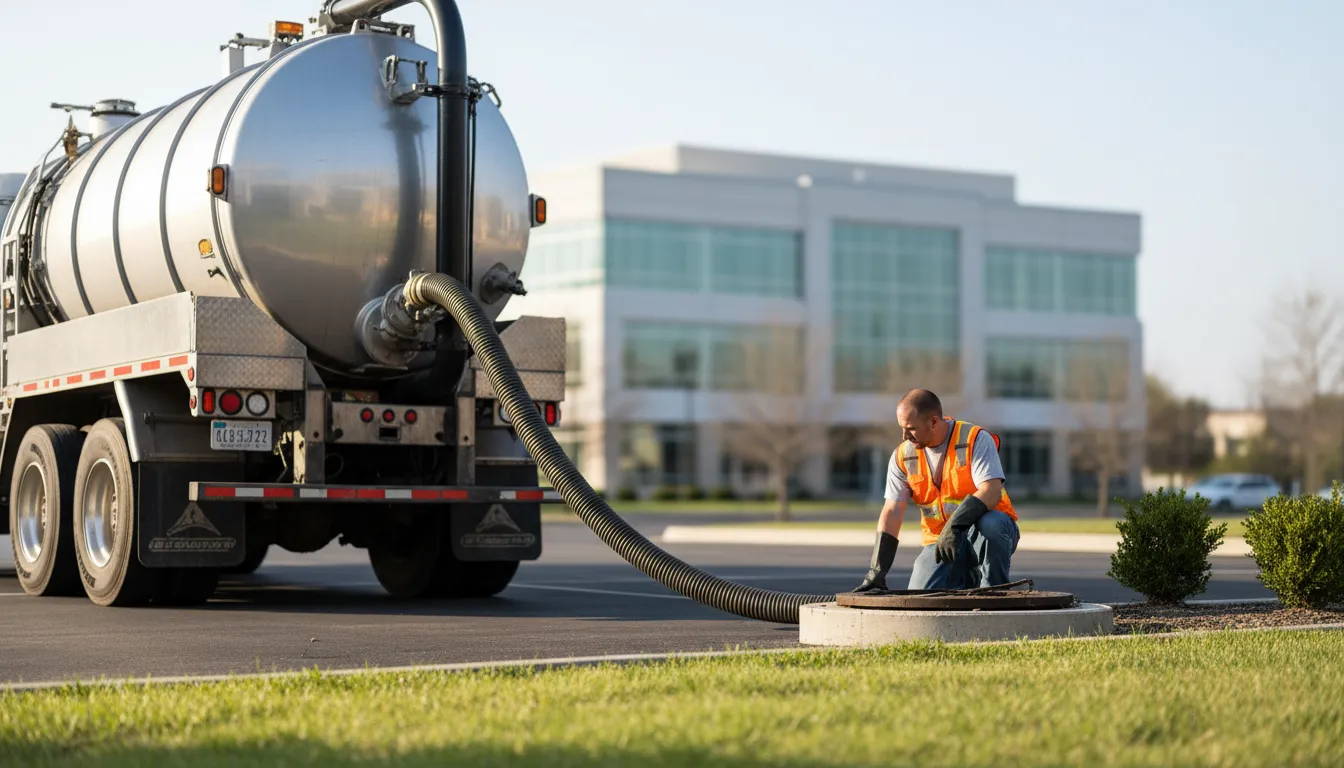
Our commercial septic tank pumping crews operate Class 8 pump trucks with 3,500 to 5,500 gallon tanks, suction hoses rated for deep riser access, and PTO driven vacuum systems that desludge large precast concrete and fiberglass tanks in a single visit. Fast turnaround means your job is done complete on the first service call.
Grease trap and interceptor service
We pump and degrease commercial grease traps and grease interceptors at restaurants, hotels, and food processing facilities, removing accumulated FOG (fats, oils, grease) and settleable solids before they clog your drain field laterals. We also clean out grease line and pipe buildup to keep your system working.
Compliance documentation on every job
Each commercial septic tank pumping includes a detailed service report with data on gallonage hauled, sludge layer and scum layer measurements, baffle condition notes, and effluent filter status for your health department records. This documentation helps you meet regulations and gives inspectors posted data to review.
Licensed disposal at approved receiving stations
All septage we haul goes to permitted wastewater treatment facilities and disposal sites, with manifest tracking from your tank lid to the receiving station. Proper water and waste disposal protects your well and groundwater.
Flexible pumping schedules for minimal disruption
We schedule commercial septic tank pumping during off peak hours, weekends, or overnight windows so your customers and employees never notice we’re on site. Request your service call online or call to schedule – easy booking works like you need it to.
Need Immediate Septic Service?
Our team is standing by to help – same week appointments available.
Why Choose Our Commercial Septic Tank Pumping
Commercial septic tank pumping is a regulated service that demands certified technicians, properly maintained equipment, and strict adherence to local health department requirements and regulations. Action Septic Service is a company that proudly holds all required state and county permits to pump, haul, and dispose of commercial septage. We serve businesses nationwide.
Our expert operators carry individual certifications and are fully insured. Every pump truck in our fleet passes annual DOT inspections. We maintain $2 million in general liability coverage on every commercial job. Our experienced team performs inspections on every service call.
We’ve pumped thousands of commercial septic tanks across restaurants, strip malls, office parks, churches, schools, and manufacturing facilities. That experience means we understand the difference between a 1,000 gallon single compartment tank under a small office and a 10,000 gallon dual compartment system designed for a busy truck stop. We size the truck, crew, and pumping schedule to your specific hydraulic load and organic load because every project has unique needs.
Action Septic Service also provides written maintenance contracts and service agreements with locked in pricing to help you save on costs. You’ll get automatic reminders before each scheduled pumping, and our dispatchers will confirm your preferred service window. No surprise fees. No hidden charges. The price we quote is the price you pay. Contact us for a free estimate.
We back every commercial septic tank pumping with a satisfaction guarantee. If something isn’t right, we come back and fix any issue at no additional cost. We deliver the best quality service in the industry.
States Served Nationwide
Emergency Availability
Licensed & Insured
Hidden Fees – Ever
Signs You Need Commercial Septic Tank Pumping
Commercial septic tank pumping becomes urgent when your system sends clear warning signals. Ignoring these signs and issues leads to drain field failure, system failure, health code violations, and costly emergency repairs and remediation.
Slow drains throughout the building:
When multiple fixtures drain sluggishly at the same time, your septic tank’s clear zone has likely shrunk. Accumulated sludge and scum layers are consuming tank capacity, leaving insufficient retention time for solids to settle before effluent reaches the distribution box. If you find this happening, help is needed right away.
Sewage odors near the tank or drain field:
Foul, rancid smells around access lids, risers, or the leach field indicate that anaerobic decomposition gases are escaping. A full tank forces gases backward through inlet pipes and cleanouts. Commercial septic tank pumping removes the overloaded solids, eliminates the source of odor, and restores proper venting. Additional repair may be needed if damage is found.
Wet or spongy ground over the absorption field:
Ponding and surfacing effluent mean the soil is saturated beyond its percolation rate. A tank that hasn’t been pumped pushes suspended solids into perforated distribution pipes, forming a thick biomat that seals the trench gravel bed and blocks infiltration. If your yard is getting wet or spongy, call for service immediately.
Plumbing backups during peak usage:
Restaurants and retail spaces that experience sewage backup during lunch rushes or high traffic periods are dealing with a tank at or beyond capacity. The hydraulic load exceeds what the overfull tank can accept, and wastewater has nowhere to go but back up through floor drains. Same-day and same day emergency service is available.
Health department notice or failed inspection:
If an inspector flags your system as non compliant, you need commercial septic tank pumping immediately. Inspectors perform sludge layer depth measurements with a sludge judge and will cite any tank where solids occupy more than one third of total capacity. The data is used to determine compliance status.
Licensed & Bonded
Full compliance in all 50 states
Detailed Reports
Complete documentation every visit
Flat Rate Pricing
No hidden fees or surprises
Fast Scheduling
Same week appointments available
Our Commercial Septic Tank Pumping Process
Commercial septic tank pumping at Action Septic Service follows a consistent, documented process on every job. We recommend this approach and start each service the same way.
Site arrival and tank location
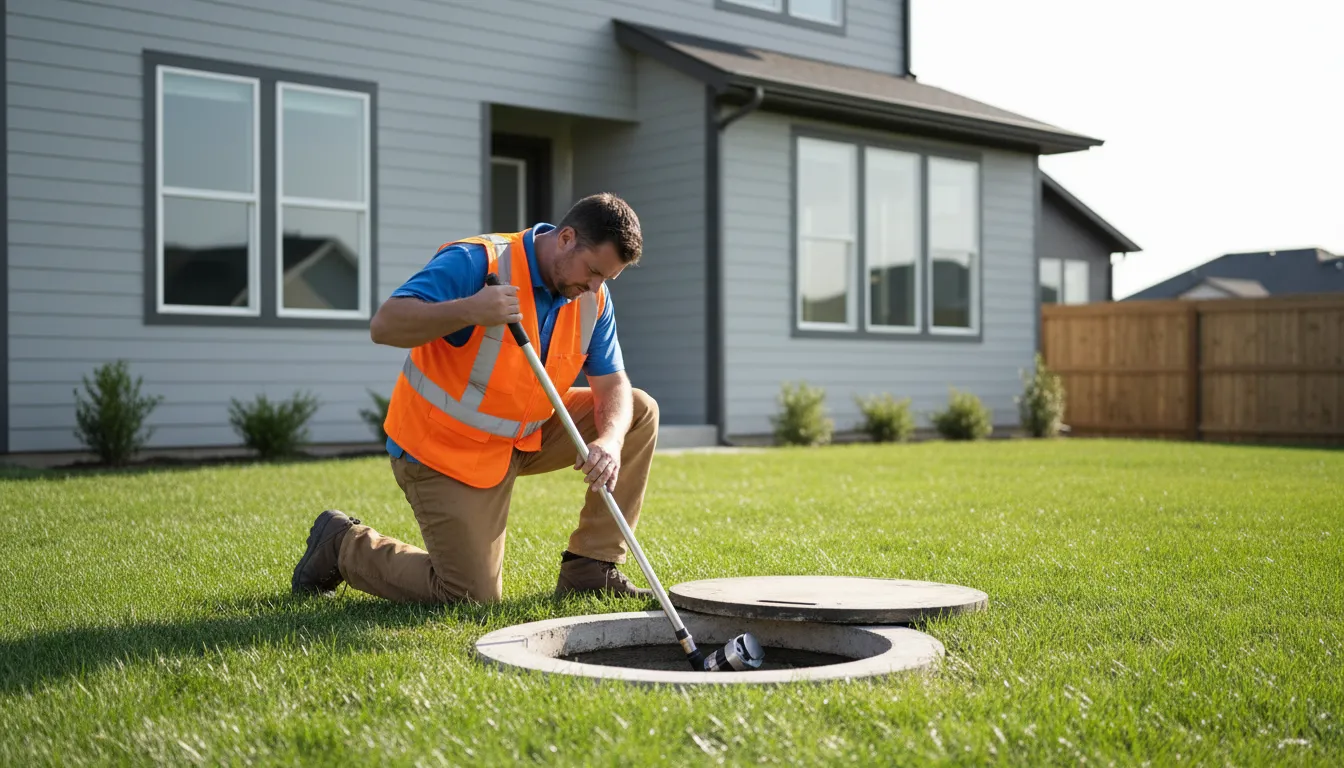
Our technician confirms the tank position using your as built drawing or site plan. If no records exist, we locate the tank with a probe rod and electronic locator, then expose the access lid or riser. Having accurate records made available helps speed up the process.
Initial inspection
Before pumping begins, we open the tank and measure the scum layer and sludge layer. We check the inlet baffle, outlet baffle, and effluent filter condition. We note the liquid level, which tells us whether the tank is holding properly or leaking. This inspection helps keep your system working properly.
Pumping and agitation
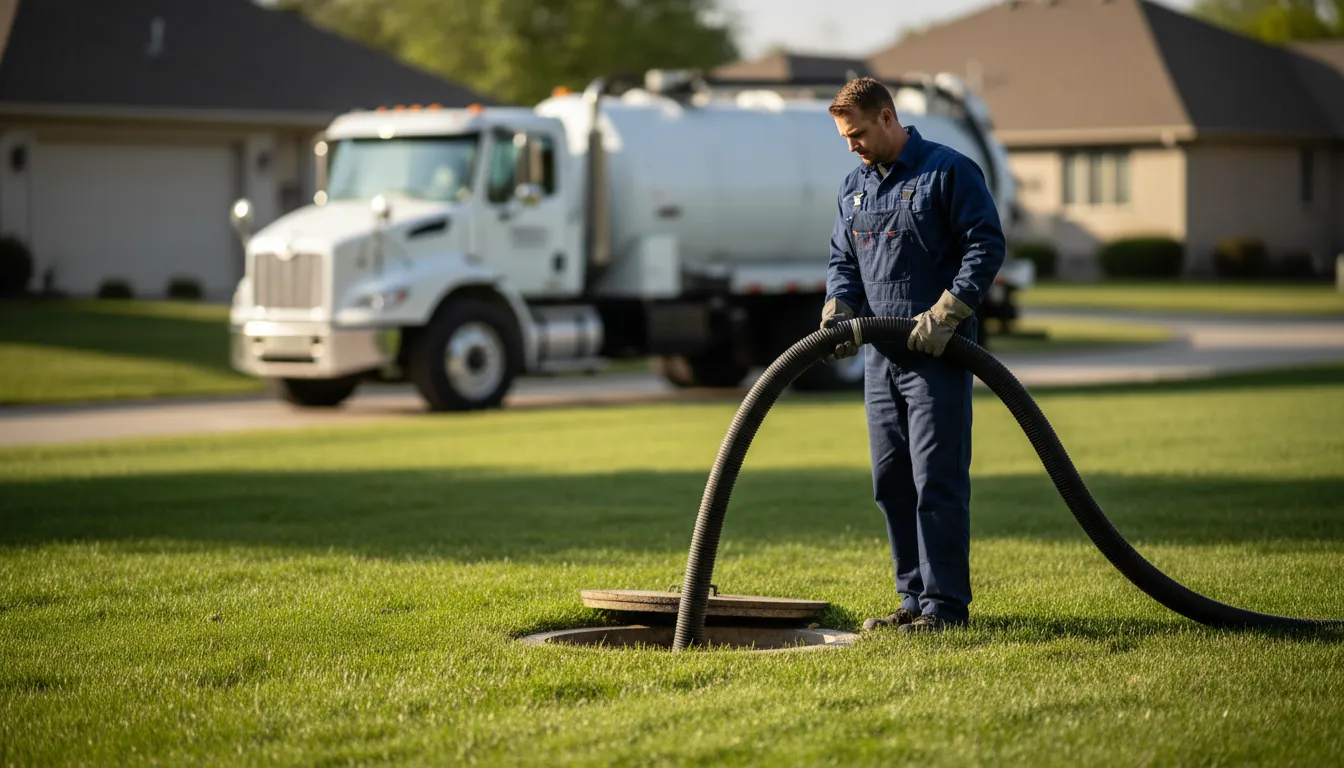
Our operator inserts the suction hose and begins vacuuming liquid, scum, and sludge into the pump truck. We agitate the tank contents with a backflush from the discharge hose to dislodge compacted solids along the bottom and dividing wall. This ensures a thorough desludging as intended, not just a surface skim.
Post pump inspection
With the tank empty, we inspect the concrete or fiberglass walls for cracks, corrosion, and deterioration. We check baffles, tee fittings, and compartment integrity. Any concerns go into your inspection report with photos. If repair or new installation is needed, we can provide recommendations.
Documentation and disposal
We seal the access lid, clean the work area, and provide your completed service report on site. Our hauler transports all septage to a permitted treatment plant, and we retain disposal manifests for regulatory compliance.
Brands We Use
Commercial septic tank pumping requires dependable equipment that performs under heavy daily use. Action Septic Service runs brand name components across our entire fleet and tool inventory.




We maintain, calibrate, and replace equipment on a strict schedule because your safety and ours depends on gear that works right.
Other Services
Commercial septic tank pumping
Commercial septic pumping service
Grease trap pumping for restaurants
Commercial septic service
Business septic tank cleaning
Vacuum truck septic service
Commercial septic tank cleaning
Commercial septage hauling
Pump and haul commercial wastewater
Commercial grease trap pumping
Commercial septic maintenance
Septic compliance for commercial property
Commercial septic system service
Commercial holding tank pumping
Scheduled septic pumping for businesses
FAQs About Commercial Septic Tank Pumping
What is commercial septic tank pumping?
Commercial septic tank pumping is the process of vacuuming sludge, scum, and liquid from a septic tank that serves a business, institution, or multi tenant property. A pump truck operator inserts a suction hose through the access lid or riser and removes all tank contents, which are then hauled to a permitted disposal site or wastewater treatment facility.
How often does a commercial septic tank need pumping?
Pumping frequency depends on tank capacity, daily hydraulic load, and the type of business. Restaurants with grease interceptors often need pumping every 30 to 90 days. Office buildings and retail spaces typically require service every 12 to 24 months. A maintenance contract with Action Septic Service sets your ideal pumping schedule based on measured sludge accumulation rates. Call for a free estimate.
Why can't I use the same pumping schedule as a residential system?
Commercial systems handle far greater wastewater volumes and higher organic loads than residential tanks. A busy restaurant may generate 500 gallons of FOG laden wastewater per day. That volume fills a tank and builds biomat in the drain field much faster than a household system ever would.
How long does commercial septic tank pumping take?
Most commercial jobs take 45 minutes to two hours, depending on tank size, access, and the number of compartments. A 1,500 gallon single compartment tank pumps quickly. A 10,000 gallon dual compartment system with a separate grease interceptor takes longer.
Can commercial septic tank pumping prevent drain field failure?
Yes. Routine pumping keeps suspended solids and FOG from migrating into the distribution box and lateral lines. Once solids reach the drain field, they form a dense biomat that reduces soil percolation and causes surfacing. Pumping on schedule is the single most effective way to protect your leach field investment.
Does Action Septic Service provide compliance documentation?
Every commercial septic tank pumping includes a written inspection report with sludge and scum measurements, component condition notes, gallonage hauled, and disposal facility information. These records satisfy health department requirements and support your permit renewal.
Ready to Schedule Your Commercial Septic Tank Pumping?
Call now for fast, professional service – available 24/7 across all 50 states.