Septic System Design & Permitting
Expert septic system design and permitting services built around your property’s unique soil conditions, local codes, and long-term wastewater needs. We provide comprehensive design services and ensure proper sewage disposal through every stage of the process, drawing on decades of experience to help you start your project right.
Licensed & Insured
NOWRA certified technicians on every job
24/7 Emergency Service
Available whenever you need us most
Nationwide Coverage
Serving all 50 states across the USA
Transparent Pricing
Flat rates with no hidden fees
Get Immediate Service
Speak directly with our team – no automated systems
24 Hours – 7 Days a Week
5 Highlights on Septic System Design & Permitting
Site-Specific Soil Testing and Perc Tests
Our licensed soil scientists and septic professionals conduct percolation tests and full soil profile evaluations as part of a comprehensive site evaluation to determine absorption rates, water table depth, and restrictive layers before any design work begins. Their knowledge of best practices ensures your system is properly sized from the start.
Engineered System Design for Residential and Commercial Properties
We design conventional gravity systems, mound systems, pressure distribution systems, chamber systems, and advanced treatment units. Tank size and field design are determined by your property’s daily flow, water usage, and hydraulic load requirements to support a long-lasting system installation.
Full Permit Application Preparation and Submission
We prepare complete permit applications including site plans, as-built drawings, engineering reports, setback distance calculations, and well separation distance documentation for health department review. Our quality control process includes verifying all details before submission to streamline the inspection process.
Variance and Alternative System Expertise
Properties with clayey soils, high water tables, or tight lot lines often need a variance or alternative system design. We understand the complexity of these factors and work within your state’s regulations to submit compliant solutions that local sanitarians approve.
Coordination from Design Through Certified Installation
Our team manages the entire process from the initial soil test through final health department inspection. We coordinate every step and maintain control over project management, ensuring your septic system meets every code requirement before a single trench gets dug.
Our Septic System Design & Permitting Services:
Commercial Septic System Design
Expert engineering and design solutions for commercial onsite wastewater treatment systems.
Percolation Testing (Perc Test)
Professional perc test services and geotechnical solutions
Need Immediate Septic Service?
Our team is standing by to help – same week appointments available.
Why Choose Our Septic System Design & Permitting
Septic system design and permitting is the foundation of every reliable onsite wastewater system. A poorly designed drain field fails. A missing permit creates legal liability. Working with the right contractor can help prevent both problems.
Action Septic Service employs licensed designers and certified installers who’ve permitted hundreds of residential and commercial septic systems across our service area. We don’t guess at soil conditions. We test them. Every project starts with a thorough perc test, a detailed soil profile analysis, and a review of your property’s topography, bedrock depth, and native soil composition. Contact us to request a free consultation or schedule inspections at your convenience.
Our design engineers calculate design flow, peak flow, and loading rates specific to your household or commercial operation. We size septic tanks, select the right distribution box configuration, and specify whether your property needs a gravity-fed system, a low-pressure pipe system, a mound system, or an advanced aerobic treatment unit. Understanding your property’s key characteristics is central to planning the right septic tank installation. Each design accounts for setback distances from property lines, wells, and surface water, with tank installation placed for optimal access.
We handle every piece of the permit application. Site plans get drawn to scale. Engineering reports document soil data and system specifications. We submit directly to your local health department and work with the assigned sanitarian through the approval process. Our team can guide you with clear direction if your lot requires a variance or easement documentation – we prepare and file that too.
Our clients don’t chase paperwork. They get a permitted, code-compliant septic system designed to perform for decades. We remain dedicated to providing support through every step, and we’re not satisfied until your system is functioning properly for the long-lasting results you expect.


States Served Nationwide
Emergency Availability
Licensed & Insured
Hidden Fees – Ever
Signs You Need Septic System Design & Permitting
Septic system design and permitting isn’t just for new construction. Several situations demand professional design work and fresh permits. Here are the key signs that point out when being proactive about your system pays off.
You're Building on Undeveloped Land:
Any new home or commercial building on a lot without municipal sewer requires a permitted onsite septic system. Before you pour a foundation, you need a soil test, a perc test, and an engineered system design that your local health department approves. It’s best to begin the process early to allow time for review. Skipping this step means no building permit gets issued. Contact us for an estimate when needed.
Your Existing System Has Failed Beyond Repair:
A failing drain field that’s saturated, a septic tank with compromised tank integrity, or a system that overflows repeatedly often can’t be repaired. Even with proper maintenance, cleaning, and care, some systems don’t last. Replacement requires a new design. The original system’s footprint, the biomat buildup in the old absorption bed, and current code changes all mean your replacement system needs fresh engineering and a new permit. We help you keep the process on track.
You're Adding Bedrooms or Expanding Square Footage:
Design flow calculations tie directly to bedroom count and fixture units. Adding a bedroom, a guest house, or converting a commercial space increases your hydraulic load. Your existing system may not handle the added wastewater volume. Even a small addition can change the equation. A licensed designer must recalculate loading rates and determine whether your current leach field and tank compartments can absorb the increase or need an upgrade. We recommend taking a careful view of your expansion plans so you know what’s required.
Your Property Has Challenging Soil or Topography:
Sandy soils percolate too fast. Clayey soils drain too slowly. High water tables and shallow bedrock create restrictive layers that limit conventional system placement. Ground conditions, grading, and gravel content all factor into the design. These conditions require an engineered alternative system – a mound system, a recirculating sand filter, a drip irrigation system, or a denitrification system – each needing specialized design and permitting. We serve properties across a wide range of terrain and soil types at every level of complexity.
Local Regulations Have Changed Since Your System Was Installed:
Health departments update septic codes regularly. Setback requirements shift. Nitrogen reduction mandates get added. If you’re selling your property or refinancing, an outdated or non-compliant system may need a new design to meet current standards and receive certification. Even if your system has been properly maintained and used without issue, changes related to local codes may require updates. Consult with our team to understand your options.
Licensed & Bonded
Full compliance in all 50 states
Detailed Reports
Complete documentation every visit
Flat Rate Pricing
No hidden fees or surprises
Fast Scheduling
Same week appointments available
Our Septic System Design & Permitting Process
Septic system design and permitting follows a structured sequence that moves your project from raw land to an approved, buildable plan. Here are the steps we follow.
Initial Site Assessment
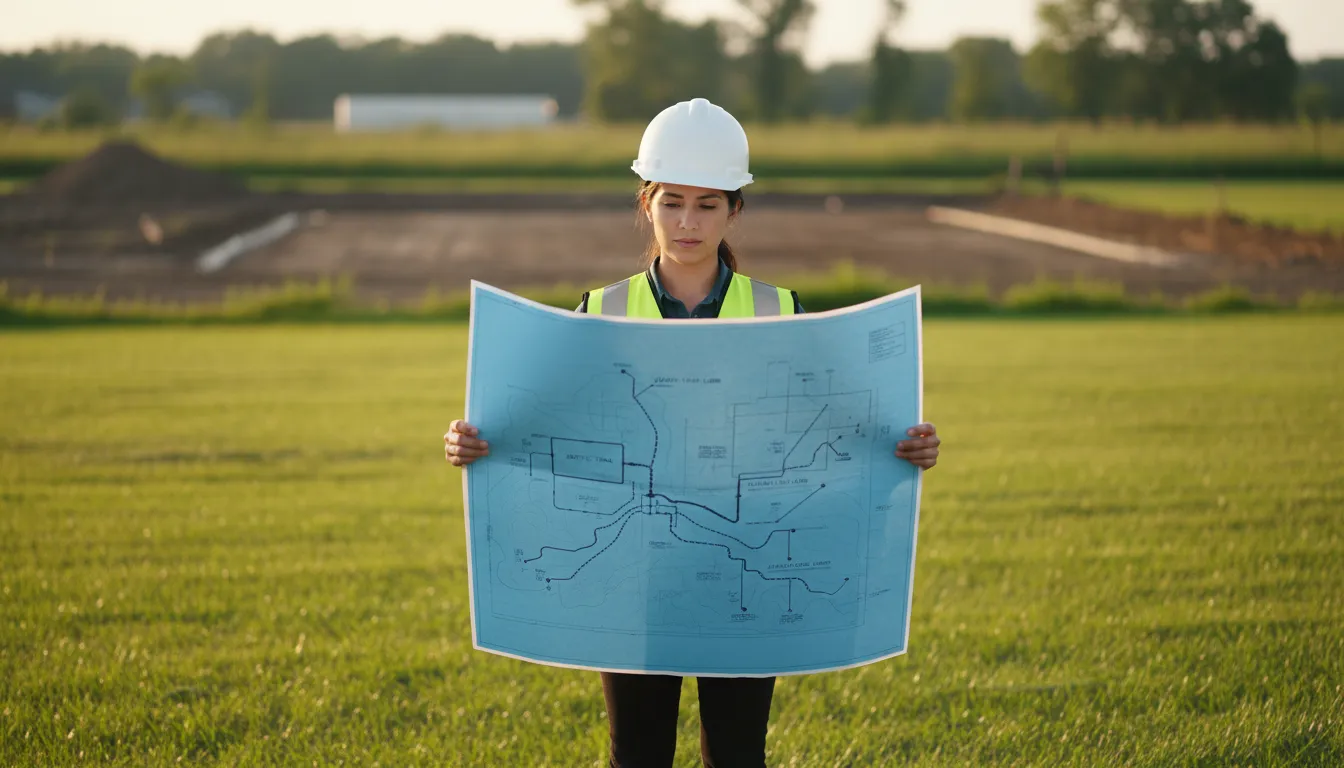
We visit your property to survey the terrain, identify slopes, locate wells, and note existing structures. We measure setback distances from property lines, water sources, and any curtain drains or diversion swales that affect drainage patterns. We also assess access to the site, the point of connection, and any grass or vegetation that may need to be cleared. From there we draw up the preliminary layout.
Soil Testing and Percolation Testing
Our soil scientist excavates test pits to examine the soil profile – layer by layer. We identify native soil types, check for saturated zones, and measure depth to bedrock or any restrictive layer. We then run perc tests to establish the percolation rate at your proposed drain field location. Accurate testing helps us avoid a rough start and deliver better results.
System Design and Engineering
Using soil data, lot dimensions, and your building’s projected daily flow, we design the complete system. This includes septic tank sizing, distribution box placement, lateral line layout, and drain field dimensions. We select the appropriate system type – conventional, mound, pressure distribution, chamber, or advanced treatment unit – based on your site’s specific conditions. Every component is specified and set to accommodate the intended use. We answer any questions along the way.
Permit Application and Submission
We compile the site plan, engineering report, soil test results, and all required documentation into a complete permit application. Every form is reviewed for accuracy. We submit it to your local health department and respond to any questions the reviewing sanitarian raises. If additional information is requested, we handle it promptly so delays remain limited. We keep you informed of known timelines throughout.
Approval and Pre-Construction Review
Once the health department grants approval, we review the permitted design with your excavation crew or our own licensed installers to confirm equipment needs, material specifications, and the construction timeline. We coordinate closely to ensure everyone is working off the same plan. Please contact us with any final questions before construction begins.
Brands We Use
Septic system design and permitting specifications call for components from manufacturers with proven field performance. We specify and install products from these trusted brands:







Every component we specify meets local code requirements and carries manufacturer warranties.
Other Services
Septic system design
Onsite wastewater system design
Soil profile evaluation
Septic system permitting
Septic permit application
Health department approval
Septic design engineer
Licensed septic designer
Engineering report for septic
Perc test for septic
Percolation test services
Soil absorption rate testing
Septic system site plan
Septic as-built drawing
Setback distance calculation
FAQs About Septic System Design & Permitting
What is septic system design and permitting?
Septic system design is the engineering process that determines the type, size, and placement of an onsite wastewater treatment system based on your property’s soil conditions, lot size, and projected wastewater flow. Permitting is the regulatory approval process where your local health department reviews the design, confirms code compliance, and authorizes construction. We help property owners navigate both.
When do I need a new septic system design?
You need a new design when building on undeveloped property, replacing a failing system, increasing your home’s bedroom count, or converting a property’s use from residential to commercial. Any change that affects daily flow or hydraulic load triggers a design review.
How long does the septic permitting process take?
Timelines vary by jurisdiction. Most health departments process permit applications within two to six weeks after receiving a complete submission. Incomplete applications, variance requests, or sites requiring alternative system designs can extend the timeline.
Can I design my own septic system?
Most states require a licensed designer, professional engineer, or certified soil scientist to prepare septic system designs. DIY designs won’t pass health department review and won’t receive a building permit. Working with qualified professionals is the best way to ensure your project moves forward properly.
How much does a perc test cost?
Perc test costs depend on the number of test holes required and your property’s accessibility. Most residential perc tests range between $500 and $1,500. Properties with difficult terrain or multiple proposed drain field areas may cost more. Contact us to request a detailed estimate.
Does my septic design need to account for future expansion?
Yes. A qualified designer calculates design flow based on current and potential future use. Designating a reserve drain field area on your site plan is a code requirement in many jurisdictions and protects your investment if the primary absorption bed ever needs replacement.
Ready to Schedule Your Septic System Design & Permitting?
Call now for fast, professional service – available 24/7 across all 50 states.