Grease Trap Repair
Professional grease trap repair that keeps your commercial kitchen running and your plumbing code compliant – call us for help today
Licensed & Insured
NOWRA certified technicians on every job
24/7 Emergency Service
Available whenever you need us most
Nationwide Coverage
Serving all 50 states across the USA
Transparent Pricing
Flat rates with no hidden fees
Get Immediate Service
Speak directly with our team – no automated systems
24 Hours – 7 Days a Week
Our Grease Trap Repair Services:
Residential Septic Tank Pumping
Complete pumping services for homeowners with any tank type or size.
Commercial Septic Tank Pumping
High-capacity pumping for businesses, restaurants, and commercial properties.
Emergency Septic Tank Pumping
24/7 emergency response for urgent septic issues and backups.
Need Immediate Septic Service?
Our team is standing by to help – same week appointments available.
Why Choose Our Grease Trap Repair
Grease trap repair is a specialized skill that demands hands on experience with commercial interceptors, municipal codes, and wastewater systems. Action Septic Service has built a reputation as a trusted, top rated contractor in the septic system service industry by focusing on exactly this kind of work. We specialize in grease trap and interceptor systems, and our experienced team is ready to serve commercial kitchens across the country with quality workmanship you can trust.
Our technicians hold current certifications and train specifically on grease interceptor systems found in restaurants, cafeterias, hospitals, and food processing facilities. We don’t subcontract. Every repair job is handled by our own qualified crew using our own equipment, including vacuum trucks, hydro jetters, and televising cameras. We’re fully equipped for all plumbing services related to commercial grease management.
We stand behind every grease trap repair with a written guarantee. If a component we installed fails within the warranty period, we come back and fix it at no charge. That’s a promise most competitors won’t make. We offer this benefit because we understand how critical your grease interceptor is to daily operations.
Pricing is straightforward. We believe in fair pricing and transparency. We inspect the unit first, provide a detailed estimate that itemizes parts and labor, and don’t start work until you approve it. No hidden fees. No surprise charges. Contact us for a free estimate.
Action Septic Service also coordinates directly with local health department inspectors when your repair requires a permit or re inspection. We handle the paperwork so you can focus on running your business. From a cracked concrete interceptor to a non compliant installation that needs a full retrofit, we’ve got the tools and the expertise to get it done right.
States Served Nationwide
Emergency Availability
Licensed & Insured
Hidden Fees – Ever
Signs You Need Grease Trap Repair
Grease trap repair becomes unavoidable when your interceptor shows clear signs of failure. Catching these issues early saves money and prevents health code violations. Ignoring the risk of a failing trap can result in costly emergency shutdowns.
Persistent foul odors near the trap:
A properly sealed and functional grease interceptor shouldn’t produce a strong, rancid smell during normal operation. Malodorous gases escaping from the unit usually indicate a cracked lid, a deteriorated gasket, or a damaged seal that no longer contains the anaerobic decomposition happening inside the compartment. These odors won’t go away with cleaning alone. The hardware itself needs repair.
Slow draining sinks and floor drains:
When greywater backs up into your kitchen, the grease trap is often the source. A clogged or blocked baffle, a collapsed inlet pipe, or accumulated FOG that’s hardened beyond what a standard pumpout can remove – all of these point to a unit that needs professional repair, not just servicing. Drain and sewer line blockages often trace back to a failing grease interceptor.
Grease or wastewater pooling around the unit:
Visible leaking around the access lid, riser, or piping connections means the trap’s structural integrity has failed. Corroded concrete tanks and cracked fiberglass or polyethylene units develop fractures over time. Saturated soil near a subsurface interceptor is another red flag. Our leak detection methods help pinpoint exactly where waste is escaping.
Health department violation notices:
If an inspector flags your grease interceptor as non compliant, you need a qualified contractor to diagnose the defect and complete the repair before your next scheduled inspection. Ignoring the notice risks fines and potential closure.
Frequent pumpouts with no improvement:
A functional grease trap should maintain proper retention time between scheduled service intervals. If you’re pumping the unit every few weeks and still experiencing overflow or blockage, internal components like baffles, tee fittings, or the solids separator are likely defective and need replacement. You cannot keep a failing interceptor operational with pumpouts alone.
Licensed & Bonded
Full compliance in all 50 states
Detailed Reports
Complete documentation every visit
Flat Rate Pricing
No hidden fees or surprises
Fast Scheduling
Same week appointments available
Our Grease Trap Repair Process
Grease trap repair at Action Septic Service follows a structured, step by step process designed to diagnose the problem accurately and fix it permanently. We ensure every repair meets local code requirements and delivers a lasting result.
Initial inspection
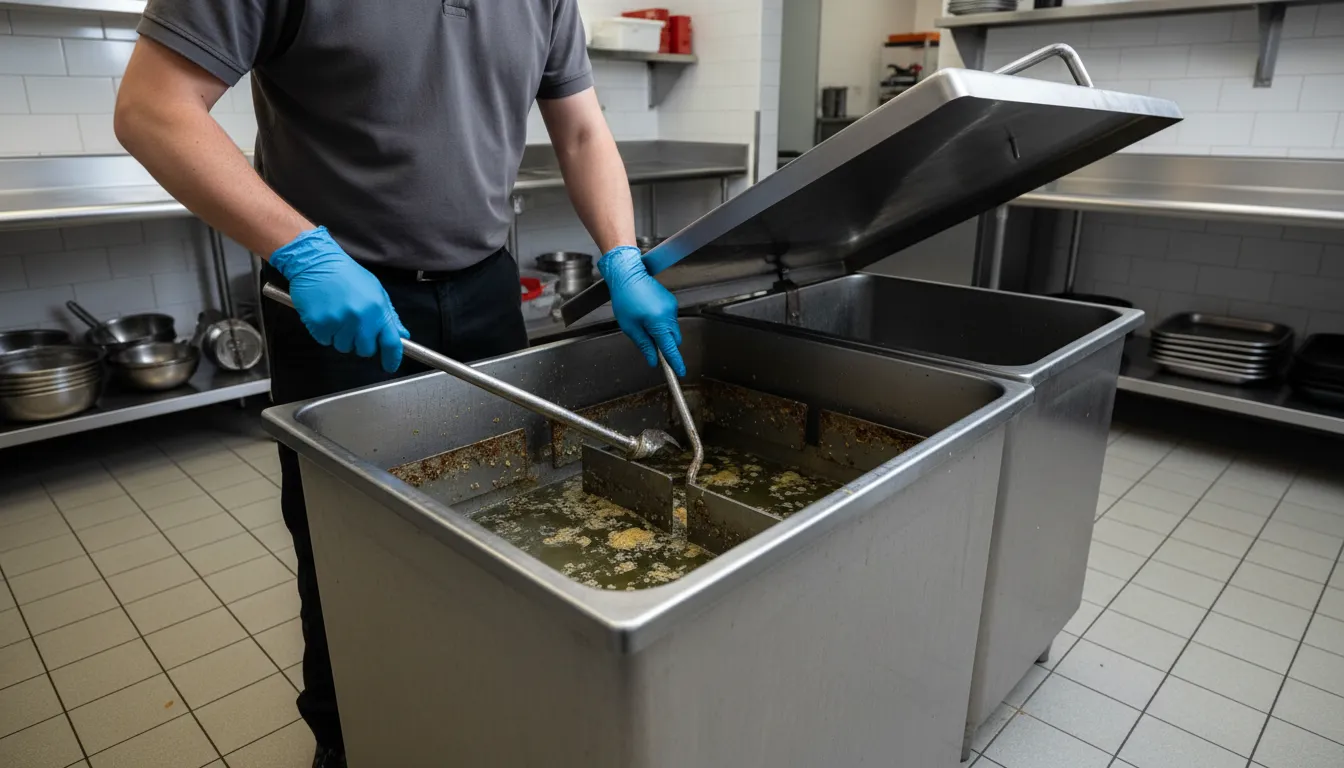
A technician arrives on site, removes the access lid, and performs a visual assessment of the grease interceptor. We measure sludge and scum levels with a dipstick, check the condition of baffles and fittings, and note any visible corrosion, cracking, or leaking.
Camera diagnosis
For problems hidden below the surface, we televise the interior of the trap and connected drainpipes using a waterproof inspection camera. This lets us locate blockages, detect pipe deterioration, and identify exactly where the failure is occurring.
Pumpout and cleaning
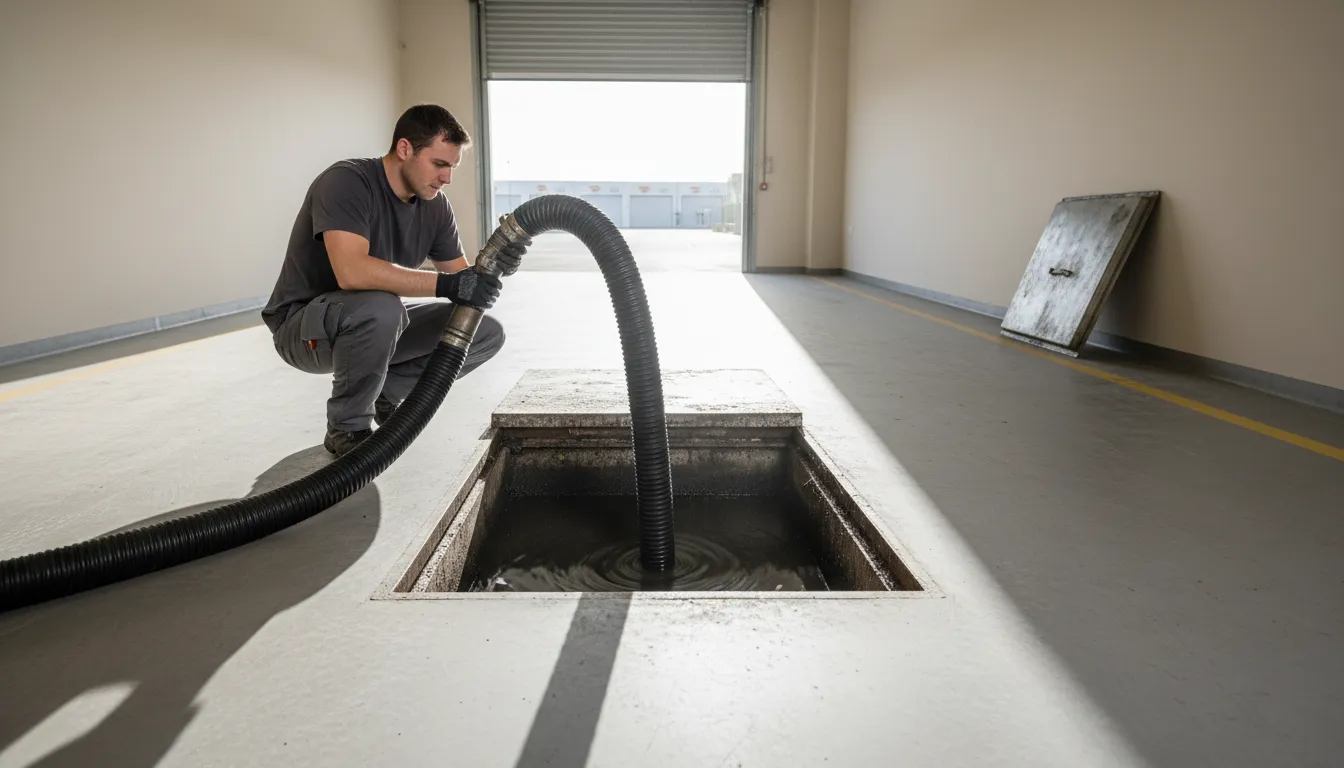
Before any repair begins, we vacuum out all fats, oils, grease, sludge, and wastewater using our pump truck. We then perform thorough trap cleaning by scraping and degreasing the interior walls and components so we can work in a clean, visible environment.
Repair and replacement
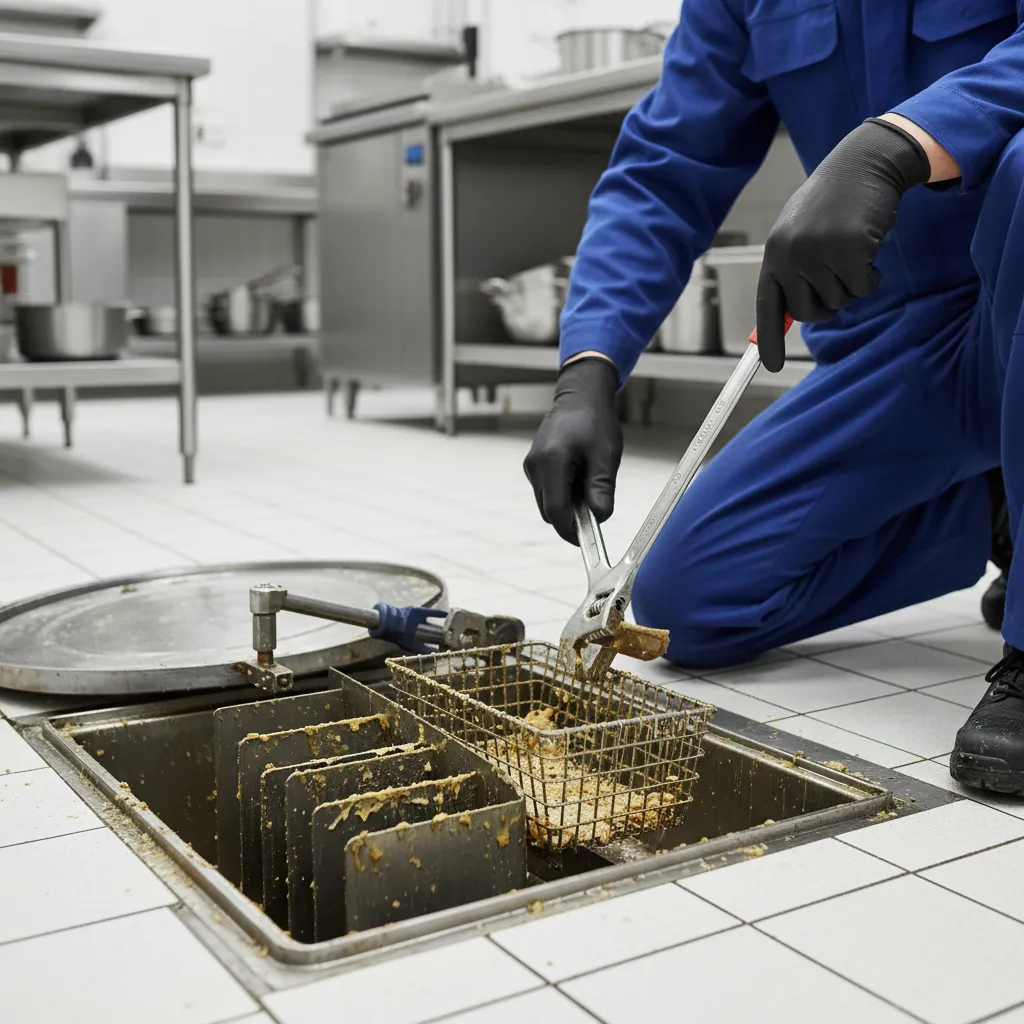
Our crew replaces damaged baffles, corroded tee fittings, cracked lids, worn gaskets, and any other defective components. If the tank itself has structural damage, we either reline the interior or install a new unit depending on the severity.
Testing and documentation
We fill the trap, run water through the system, and verify proper flow, drainage, and seal integrity. You receive a written report detailing all work performed, parts installed, and recommendations for your next service interval.
Brands We Use
Grease trap repair requires commercial grade parts and equipment from manufacturers known for durability and code compliance. Action Septic Service stocks and installs components from these trusted brands:







We only use materials rated for commercial grease interceptor applications — never residential substitutes that could fail under heavy FOG loads.
Other Services
Grease trap repair
Grease interceptor repair
Fix broken grease trap
Grease trap repair service
Commercial grease trap fix
Grease trap baffle replacement
Emergency grease trap repair
Grease trap leak repair
FOG trap component repair
Grease trap repair near me
Restaurant grease trap repair
Corroded grease interceptor fix
Professional grease trap repair
Grease trap restoration
Grease trap inspection and repair
FAQs About Grease Trap Repair
What is grease trap repair?
Grease trap repair is the process of diagnosing and fixing mechanical or structural failures in a grease interceptor. This includes replacing corroded baffles, cracked compartments, deteriorated gaskets, broken inlet or outlet tees, and faulty lids or seals. The goal is to restore the unit to full operational condition so it properly separates fats, oils, and grease from wastewater before it enters the sewer or septic system.
When should I schedule a grease trap repair?
Schedule a repair as soon as you notice slow drainage, persistent odors, visible leaking, or wastewater pooling around the interceptor. Don’t wait for a health department violation. Early repair prevents contamination, avoids fines, and costs far less than a full unit replacement.
Why do grease traps fail?
Grease traps fail due to corrosion from FOG and acidic wastewater, physical damage from heavy traffic above underground units, improper installation, and neglected maintenance. Concrete tanks deteriorate over time. Baffles rust out. Gaskets dry and crack. Without routine inspection and pumpouts at proper service intervals, even a well built interceptor will eventually need repair.
How long does a grease trap repair take?
Most repairs take between two and six hours depending on the scope. A simple baffle or gasket replacement can be completed in under two hours. A full retrofit involving excavation, tank access, and multiple component replacements may take a full day.
Can a grease trap be repaired instead of replaced?
Yes. Many grease interceptor problems are component level failures that a qualified technician can repair on site. Cracked lids, worn seals, blocked piping, and damaged baffles are all repairable. If the tank shell itself has severe structural failure, replacement becomes the better option. Action Septic Service always recommends the most cost effective solution after a thorough inspection.
Does grease trap repair require a permit?
It depends on your municipality. Minor component repairs typically don’t require a permit. Larger jobs involving excavation, new piping, or unit replacement often do. Action Septic Service checks local health department requirements for every job and handles permit coordination on your behalf.
Ready to Schedule Your Grease Trap Repair?
Call now for fast, professional service – available 24/7 across all 50 states.