Septic System Installation
Professional septic system installation for residential and commercial properties across your service area. Our company provides expert solutions for homes, businesses, and agricultural facilities nationwide.
Licensed & Insured
NOWRA certified technicians on every job
24/7 Emergency Service
Available whenever you need us most
Nationwide Coverage
Serving all 50 states across the USA
Transparent Pricing
Flat rates with no hidden fees
Get Immediate Service
Speak directly with our team – no automated systems
24 Hours – 7 Days a Week
5 Highlights on Septic System Installation
Septic system installation is the foundation of reliable, long-term wastewater management for any property without municipal sewer access. Here are five reasons homeowners and business owners trust Action Septic Service:
Engineered Site Plans and Soil Testing
Every installation begins with a thorough perc test, soil profile analysis, and site survey. We assess clay content, loam depth, bedrock proximity, soil type, and water table levels before correctly designing your system, ensuring the right solution for your property.
Full Permit Coordination
We handle all permit applications, health department submissions, and code compliance documentation so you don’t have to navigate the regulatory process alone. Our team efficiently obtains all required permits and ensures full compliance with local regulations.
Conventional and Alternative Systems
From gravity-fed septic tanks with drain fields to mound systems, aerobic treatment units, and chambered drainfield designs, we install the right configuration for your soil type, slope, and lot conditions. Our modern solutions address every challenge.
Precast Concrete and Fiberglass Tanks
We install watertight, reinforced tanks built with durable materials to last decades. Each tank includes properly placed baffles, inlet and outlet tees, effluent filters, and riser lids with secure covers for easy access and long-term longevity.
Certified, Insured Installers
Our licensed septic contractors and trained technicians carry full insurance and maintain current certifications. Every license is up to date, and every installation meets or exceeds local and state health department standards, ensuring safe, reliable systems.
Our Septic System Installation Services:
Conventional Septic System Installation
Installation services for residential and commercial properties
Aerobic Septic System Installation
Professional aerobic treatment unit installation service
Mound Septic System Installation
Designed to handle sites where conventional options simply will not work.
Chamber Septic System Installation
Professional chamber septic system installation for residential and commercial properties.
Drain Field Installation
Professional drain field installation for residential and commercial
Commercial Septic System Installation
Professional commercial septic system installation services.
Need Immediate Septic Service?
Our team is standing by to help – same week appointments available.
Why Choose Our Septic System Installation
Septic system installation is a significant investment that affects your property’s value, safety, and daily function for the whole lifespan of your home – typically 25 to 30 years. Action Septic Service brings decades of hands-on experience to every residential and commercial project, ensuring your future needs are met.
We don’t subcontract. Our own skilled crews operate every backhoe, trencher, and excavator on your job site using professional-grade equipment. That means direct accountability from the first soil test to the final backfill and grading. You’ll work with the same project lead from start to finish.
Our installations follow engineered designs created specifically for your property’s soil conditions, lot size, setback requirements, and household capacity. We account for well locations, property lines, easements, and future access needs before we break ground. Every distribution box, lateral line, piping connection, and absorption trench gets placed according to the as-built drawing – based on precise measurements with no shortcuts.
We stand behind our work with a written warranty and guarantee on all installed components. Tank seams, pipe connections, pipes, and drainfield chambers all receive a final inspection before we consider the job complete. Our technicians inspect every detail. We also schedule a follow-up visit to confirm proper effluent flow and system function.
Action Septic Service holds active certifications and maintains strong relationships with local health departments. When you need a qualified, trusted provider who treats your property with respect, we’re the team to call. Contact us by phone for friendly support and a free estimate.
States Served Nationwide
Emergency Availability
Licensed & Insured
Hidden Fees – Ever
Signs You Need Septic System Installation
Septic system installation is necessary in several common situations. Recognizing these signs early saves you money, protects groundwater and the environment, and keeps your property compliant with public health codes. Avoid costly water contamination issues by addressing problems promptly.
You're Building on Undeveloped Land:
New construction on rural or suburban lots without municipal sewer access requires a permitted septic system. Before your foundation goes in, you’ll first need a perc test, soil test, and engineered site plan. The absorption area, tank placement, and setback distances from your well and property lines must all be established and put in place before any building permit gets approved. This step is needed to ensure compliance.
Your Existing Cesspool or Cesspit Is Failing:
Older properties sometimes rely on cesspools or seepage pits that no longer meet code. Soggy ground, odors in your yard, and sewage surfacing near the cesspit all indicate failure. If waste begins to surface, it can cause serious damage. Most health departments now require full septic system installation as a replacement – not just repairs.
You're Adding Living Space or Bedrooms:
A home addition, in-law suite, or extra bathroom increases your daily wastewater volume and house usage. Your current system may lack the capacity to treat and distribute that additional effluent efficiently. A new or expanded septic tank and drain field installation brings your property into compliance with current load requirements.
Your Drainfield Has Permanently Failed:
When a leach field develops a thick biomat layer, saturated soil, or persistent backflow into the tank, remediation isn’t always possible. Lateral lines that stay clogged with recurring clogs after jetting, drain cleaning, and clearing root removal often signal the need for a completely new dispersal field installation in a different absorption area.
Your Property Is Converting From Sewer to Septic:
Occasionally, properties disconnect from aging or decommissioned municipal sewer lines. This transition demands a professionally designed and permitted underground septic system installation from scratch, including tank, pump chamber, distribution box, and drainfield. Trust our expert team to handle every line connection.
Licensed & Bonded
Full compliance in all 50 states
Detailed Reports
Complete documentation every visit
Flat Rate Pricing
No hidden fees or surprises
Fast Scheduling
Same week appointments available
Our Septic System Installation Process
Septic system installation is a multi-phase project that requires precision and attention at every stage. Here’s how Action Septic Service effectively completes each job, ensuring the work is done correctly:
Site Evaluation and Soil Testing
We survey your property, perform a percolation test, and analyze the soil profile. We check the water table depth, measure setback distances from your well and property lines, and find the best location for the tank and absorption area before we dig.
System Design and Permitting
Our team prepares an engineered site plan specifying tank size, drainfield type, pipe layout, and grading requirements. We submit all documents to the health department, request approval, and obtain the required permit before any excavation begins.
Excavation and Tank Placement
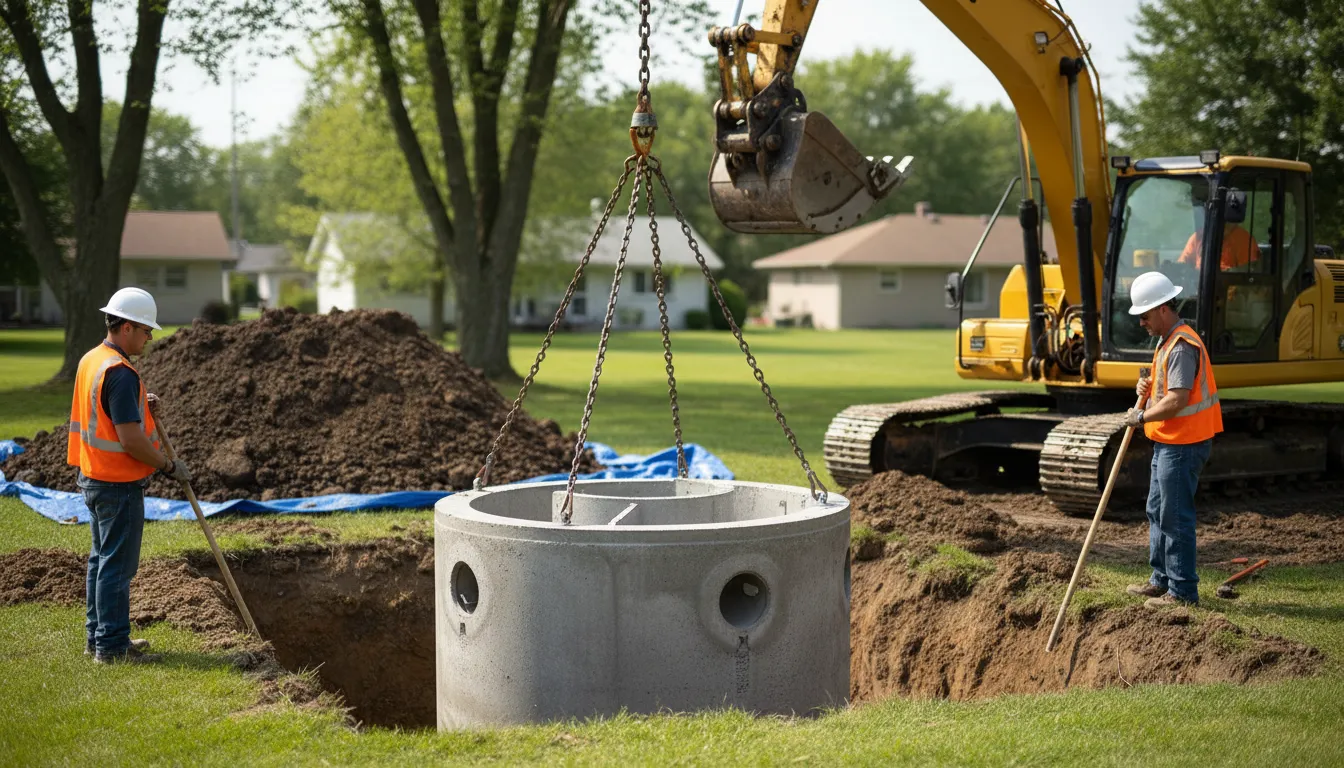
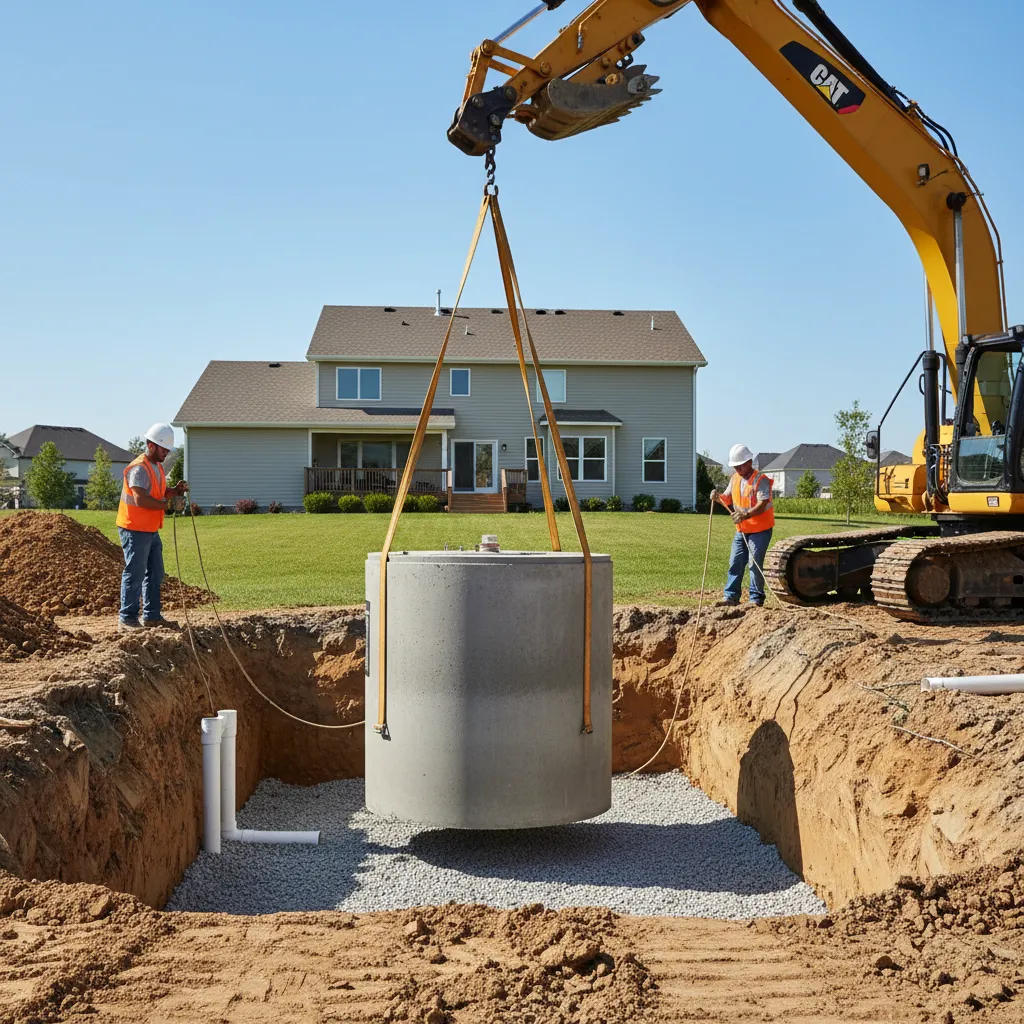
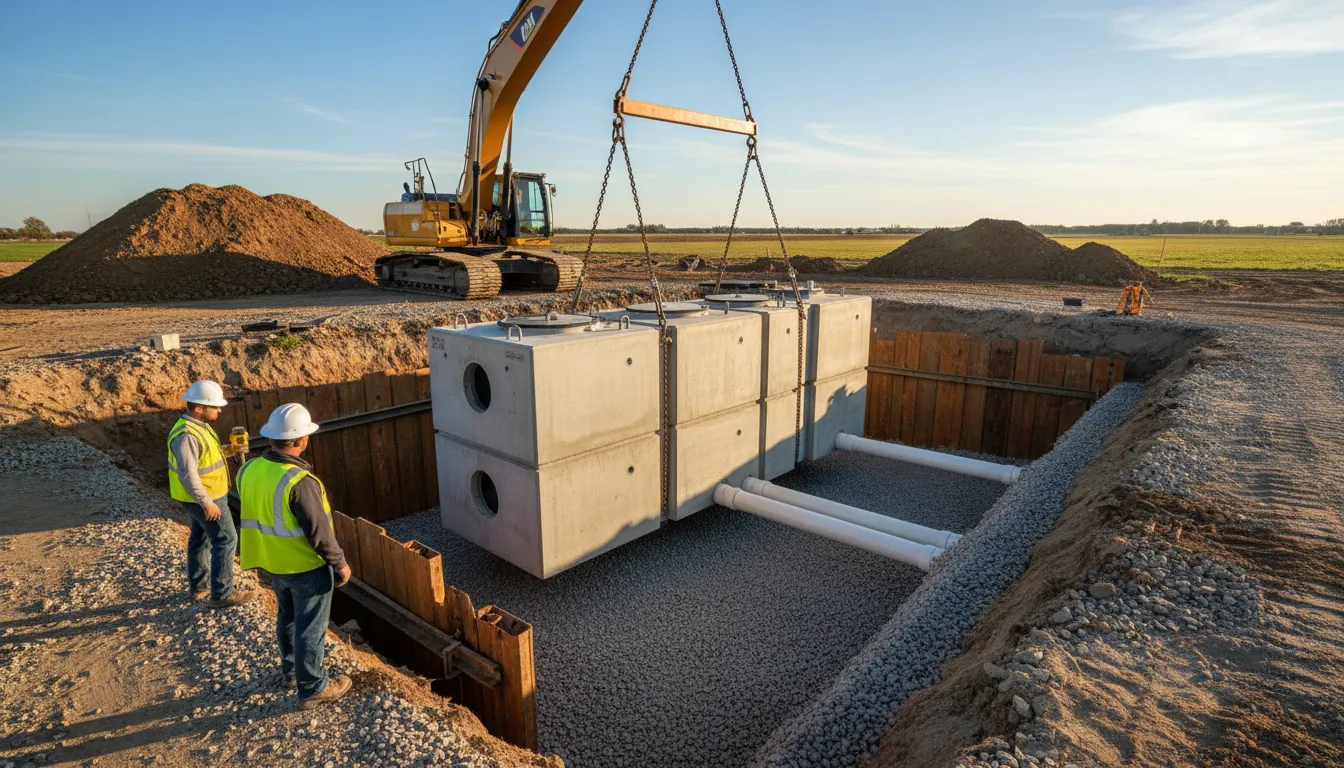
We excavate the tank pit hole and trenches using backhoes and trenchers sized for your lot. The precast concrete or fiberglass tank gets set level and placed correctly, with baffles, tee fittings, and risers installed and sealed watertight.
Distribution and Drainfield Construction
We install the distribution box, header pipe, lateral lines, and drainfield chambers or gravel bed. Perforated PVC pipe gets laid on proper grade over aggregate and geotextile fabric to ensure even effluent dispersal. This ensures smooth flow and keeps debris from entering the system.
Connection, Backfill, and Inspection
We connect the building sewer line to the tank inlet, test all joints and seals, and schedule the required health department inspection. After approval, we backfill, compact, and grade the site. You receive a complete as-built drawing, routine maintenance recommendations, and details you can view to learn how to care for your system.
Brands We Use
Septic system installation quality depends directly on the components installed underground. Action Septic Service uses only proven, top-rated products from manufacturers known for durability and performance:






Every product we install meets ASTM, IAPMO, or NSF standards.
Other Services
Septic system installation
Septic tank installation
Install septic system cost
New septic system install
Residential septic installation
Perc test and septic design
Septic system installer near me
Licensed septic contractor
Drainfield installation service
Commercial septic installation
Engineered septic system
Septic permit and soil test
Septic drain field installation
Leach field installation
Septic tank and distribution box
FAQs About Septic System Installation
What is septic system installation?
Septic system installation is the process of designing, permitting, excavating, and constructing an underground wastewater treatment system. A standard installation includes a septic tank, distribution box, and drain field with lateral lines. The system collects, treats, and disperses household waste and wastewater into the surrounding soil through natural filtration and bacterial decomposition. This process works to keep your water clean and treated before it returns to the environment.
When do I need a new septic system installed?
You need a new installation when building on land without sewer access, replacing a failed cesspool or non-compliant system, expanding your home’s bedroom count, or converting from a decommissioned municipal sewer line. Your local health department can confirm when a new permitted system is required. If you don’t know what you need, contact us and we can help guide you through the process.
How long does septic system installation take?
Most residential installations take three to five days once the permit is approved. The permitting process itself can take two to six weeks depending on your county and the time of year. Complex sites requiring mound systems, pump chambers, or alternative treatment units may add a day or two to the construction timeline. Our crews work fast to get your system running smoothly.
Can I install a septic system on any property?
Not every lot qualifies. The soil must pass a percolation test, and the property needs adequate space for required setbacks from wells, property lines, buildings, and water features. High water tables, shallow bedrock, and heavy clay soils may require alternative or engineered system designs rather than conventional gravity-fed installations. Certain regulations may apply depending on your area, and options may be limited. We help you understand your property’s unique requirements.
How much does septic system installation cost?
A conventional residential septic system installation typically ranges from $5,000 to $15,000. Mound systems, aerobic treatment units, and advanced designs with dosing pumps and control panels can run $15,000 to $30,000 or more. Soil conditions, system size, and local permit fees all affect the final costs and pricing. Action Septic Service provides detailed written estimates and a free quote before any work begins. Request your estimate today.
Does a new septic system need maintenance right away?
Your new system won’t need pumping for several years, but you should schedule a professional inspection within the first 12 months. We recommend a maintenance contract that includes annual effluent filter cleaning, tank level checks, and pump or alarm testing to keep your system compliant and functioning at peak efficiency. Proper care ensures your system remains maintained and performing well. Our team offers prompt 24/7 emergency support if issues arise.
Ready to Schedule Your Septic System Installation?
Call now for fast, professional service – available 24/7 across all 50 states.